Summary:
Most people searching for landscaping costs in Suffolk County aren’t just curious — they’ve already gotten a quote that surprised them, or they’ve heard a neighbor’s story about a project that went sideways. You want to know what’s fair, what’s realistic for this market, and whether the cheaper option is actually a deal or a risk you’ll regret by next spring. This page gives you straight answers. We’ll cover what landscaping typically costs in the Hamptons and surrounding Suffolk County communities, what drives those numbers, and why the licensed vs. unlicensed question isn’t just about price — it’s about what happens when something goes wrong.
Landscape Design Cost in Suffolk County
Before a single plant goes in the ground, there’s a design phase — and in a market like the Hamptons, skipping it is one of the more expensive mistakes you can make. A proper landscape design includes a site assessment, a plant selection plan suited to your property’s specific exposure and soil conditions, and an understanding of what permits your project may require before work begins.
Design fees vary depending on property size and project complexity, but for most residential projects in Southampton, East Hampton, and Bridgehampton, expect this phase to represent a meaningful portion of your overall budget. It’s not a luxury add-on. In coastal Suffolk County, where sandy soil, salt air, and proximity to water all affect what will actually survive on your property, a design plan is what separates a landscape that matures beautifully over time from one that needs to be replaced within two seasons.

What Landscape Design Actually Includes — and Why It Affects the Final Cost
A landscape design isn’t just a sketch of where the plants go. Done correctly, it accounts for your soil composition, drainage patterns, sun exposure, proximity to the water, and the specific microclimate of your property. In the Hamptons, that last part matters more than most homeowners expect.
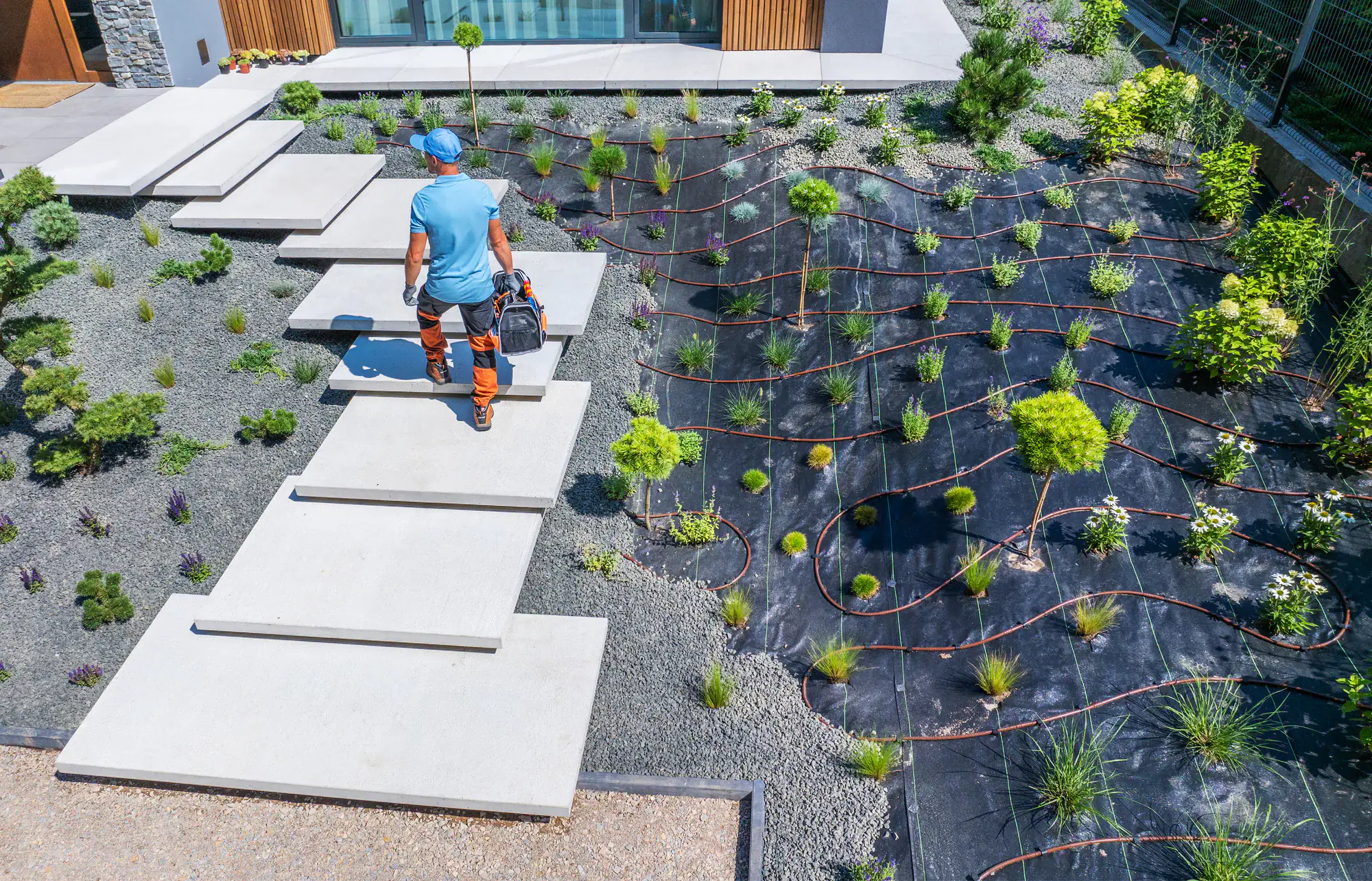
Suffolk County’s coastal soils are predominantly sandy and nutrient-poor — a direct result of the glacial geology that formed Long Island. That means plants that look healthy at the nursery may struggle or die within a season if they’re placed in unamended soil without proper irrigation support. A good design plan identifies which plants are actually suited to your conditions, where soil amendment is needed before planting, and how your irrigation system needs to be configured to keep everything alive through a dry Hamptons summer.
This is also where permit identification happens. Retaining walls over certain heights, significant grading work, and irrigation connections to main water lines all require permits from the local building department — and in Southampton and East Hampton, that means working through the town’s own permitting process, not just the county level. A contractor who skips this step doesn’t save you money. They transfer the risk to you, because if the work fails inspection, you’re the one paying the fines and remediation costs.
The design phase is also where our one-job-at-a-time approach makes a real difference. When we’re not juggling multiple projects simultaneously, we have the time to actually think through your property — to catch drainage issues before they become expensive problems, to notice that the corner of your yard near the bay gets more wind exposure than the rest, to recommend a plant palette that will still look good in year five, not just year one. That kind of attention doesn’t happen when a contractor is spread across a dozen sites at once.
How Coastal Conditions in Suffolk County Push Landscape Design Costs Higher Than State Averages
The average landscaping cost across New York State sits around $1,700 to $1,847, according to data from over 100,000 completed projects. That number is almost irrelevant if you own property in Southampton or East Hampton.
Hamptons landscaping costs more for concrete, documentable reasons. Sandy soil requires amendment — organic matter, compost, and nutrients need to be worked into the ground before planting, which adds both material and labor costs. Salt-tolerant plant species, which are non-negotiable for properties within a mile or two of the ocean or bay, carry a price premium over standard nursery stock. Coastal-grade materials for masonry and hardscaping — the kind that hold up in salt air rather than degrading within a few seasons — cost more than what you’d use in an inland project. And the elevated expectations of the Hamptons market, where properties routinely sell for $2 million and up, mean that design standards are simply higher.
None of this is a reason to avoid investing in your landscape. It’s a reason to understand what you’re actually paying for. When you see a quote that’s significantly lower than others you’ve received, it’s worth asking what’s been left out — because in this market, the corners that get cut are usually the ones you’ll notice two or three seasons from now. A properly designed and installed landscape on a Hamptons property can increase its value by 15% to 20%, according to the American Society of Landscape Architects. On a $2 million property, that’s $300,000 to $400,000 in added value. The design cost looks different when you frame it that way.
Landscaping Installation Cost: What You're Really Comparing When Quotes Don't Match
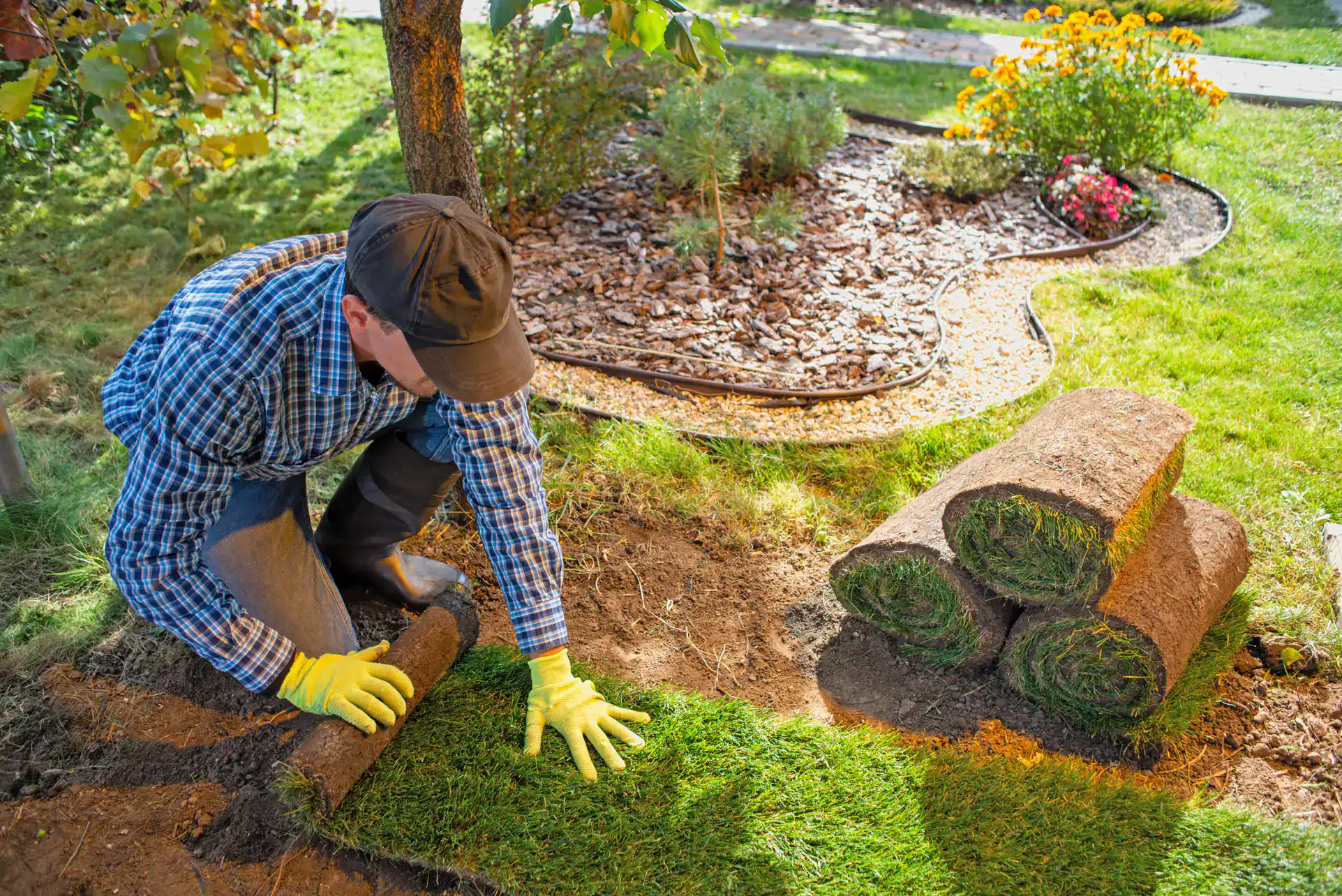
For most residential landscaping projects in Suffolk County, installation costs range from $5,000 to $25,000 or more depending on scope, with per-square-foot pricing typically falling between $5 and $20 for standard work and up to $40 for complex remodels involving significant hardscaping or grading. Softscaping — planting, sod, flower beds — generally runs $800 to $10,000 depending on the size and plant selection. Sod installation specifically runs $0.90 to $1.80 per square foot.
These ranges are wide because the variables are real. Property size, soil conditions, proximity to the water, the complexity of your irrigation needs, and whether your project involves masonry or structural elements all move the number significantly. What matters more than the range, though, is understanding what’s driving the difference between the quotes sitting on your kitchen table right now.
Licensed vs. Unlicensed Contractor Pricing in Suffolk County: What the Gap Actually Represents
This is the part most landscaping cost guides skip entirely. The price difference between a licensed contractor and an unlicensed one isn’t arbitrary — it reflects real costs that the unlicensed contractor simply isn’t carrying.
In Suffolk County, landscaping is legally classified as home improvement work requiring a Home Improvement Contractor license issued by the county. But here’s what most homeowners don’t know: if your property is in the Town of Southampton or the Town of East Hampton, your contractor also needs a separate town-level license — in addition to the county license. Working without both voids the contractor’s legal right to payment. More importantly for you, it means you have no formal recourse if the work fails, because the contractor was never legally authorized to do it in the first place.
A licensed contractor carries general liability insurance — Suffolk County requires a minimum of $500,000 — plus workers’ compensation coverage. That matters because under New York law, if you hire an uninsured worker and they’re injured on your property, you may be liable as their de facto employer. Medical and legal costs from an on-site injury can run $30,000 to $100,000 or more. The unlicensed contractor’s cheaper quote doesn’t account for that risk. You absorb it.
We back every project with a one-year warranty on both labor and materials — which is significantly longer than the 30 to 90 days most contractors offer, if they offer anything at all. If a masonry joint fails in month eight, or an irrigation component malfunctions in month ten, we come back and fix it. That commitment costs something to honor, which is part of why our pricing reflects it. A contractor who offers no warranty has no such cost — and no such obligation to you after the job is done.
The cheaper quote often looks like savings. In practice, it’s a transfer of risk from the contractor to you.
Landscape Maintenance Cost in Suffolk County — and the Local Rules That Affect Your Schedule
Ongoing maintenance is where many homeowners underestimate their total landscaping investment. In Suffolk County, full-service landscape maintenance typically runs $100 to $200 per month for average-sized properties, with larger or more complex Hamptons properties reaching $350 per month or more. Individual lawn mowing visits for a standard residential lot run $30 to $90, and fertilization applications cost $150 to $500 depending on the size of the area and the product used.
What most national cost guides won’t tell you is that Suffolk County has a legally enforceable fertilizer restriction: no fertilizer application is permitted between November 1 and April 1. This isn’t a suggestion — it’s a regulation, and it affects how your maintenance contract needs to be structured. Fall fertilization has to be completed before that November 1 cutoff, which means if you’re starting a maintenance relationship with a new contractor in October, the timing matters. A contractor who doesn’t know this — or doesn’t mention it — is either unfamiliar with the local regulations or not paying close attention to your project.
There’s also a practical timing reality for Hamptons properties that makes maintenance planning more important than it might seem elsewhere. Many properties in Southampton, East Hampton, and Bridgehampton are seasonal — occupied primarily in summer, when the landscape needs to be performing at its best. That compressed window means there’s no room for a maintenance contractor who shows up inconsistently or deprioritizes your property when things get busy. Our one-job-at-a-time approach exists precisely because of situations like this: your property gets consistent attention, not whatever’s left over after larger accounts get serviced first.
Irrigation is also a maintenance factor that’s easy to overlook in the budget. Suffolk County’s sandy, fast-draining soil means that without a properly functioning irrigation system, even well-chosen, well-planted landscapes struggle through dry stretches. Irrigation system startup, mid-season checks, and winterization are recurring costs that should be factored into your annual maintenance budget — and they’re services where cutting corners on the contractor you use tends to show up as an emergency repair call in July, right when you need everything working.
How to Get the Best Value from Your Landscaping Investment in Suffolk County
The short version: the landscaping cost that matters isn’t the number on the quote — it’s what you’re left with two or three seasons from now. A lower price from an unlicensed contractor with no warranty and no insurance isn’t a deal. It’s a deferred cost that usually lands at the worst possible time.
Quality contractors in the Hamptons book up quickly, especially heading into spring. If you’re planning a landscaping, masonry, or irrigation project for this season, the time to have the conversation is now — not after the installation window has passed and you’re waiting another year.
We’ve been working in Southampton, East Hampton, and the surrounding Hamptons communities for over 20 years. We’re licensed, insured, and we back every project with a one-year warranty on both labor and materials. Reach us at (631) 678-5629, Monday through Friday, 9:00am to 5:00pm. We’re at 396 N Main St, Southampton, NY 11968 — and we’d be glad to talk through what your project actually needs.
Frequently Asked Questions
What does landscaping typically cost in Suffolk County in 2026? Most residential landscaping projects in Suffolk County range from $5,000 to $25,000 or more, depending on scope and complexity. Smaller softscaping work — planting, sod, flower beds — can start around $800 to $10,000, while full installations involving masonry, irrigation, and significant hardscaping push well above that. In Suffolk County specifically, the statewide average doesn’t apply: coastal properties near Southampton and East Hampton face higher costs due to sandy soil amendment requirements, salt-tolerant plant premiums, and the two-tier licensing structure (county plus town permits) that licensed contractors must navigate.
Why do licensed contractors charge more than unlicensed workers in the Hamptons? Because we’re carrying real costs that unlicensed contractors aren’t. A licensed contractor in Suffolk County maintains general liability insurance (minimum $500,000 required by the county), workers’ compensation coverage, licensing fees at both the county and town levels in municipalities like Southampton and East Hampton, and warranty obligations that require us to stand behind our work after the job is done. When an unlicensed contractor quotes you less, those costs don’t disappear — they just shift to you. If a worker gets injured on your property, if the work fails without a warranty, or if unpermitted work triggers fines from the building department, you’re the one absorbing those costs.
What factors affect landscaping costs on Long Island properties specifically? Several factors are unique to this market. Sandy glacial soil requires amendment before planting, which adds material and labor costs. Salt-tolerant plant species — essential for properties near the ocean or bay — carry a price premium over standard nursery stock. Coastal-grade masonry materials cost more than inland alternatives. And the two-layer licensing requirement in Southampton and East Hampton (county license plus town license) means that fully compliant contractors have overhead that others don’t. Seasonal demand also plays a role: quality contractors in the Hamptons book up quickly heading into spring, which can affect both availability and pricing for late-season inquiries.
How much should I budget for a complete landscape renovation in the Hamptons? For a full renovation — design, installation, irrigation, and any masonry or hardscaping — budgeting $15,000 to $40,000 or more is realistic for most Hamptons properties, with larger or more complex projects running higher. The more useful frame, though, is ROI: professional landscaping can increase property value by 15% to 20% according to the American Society of Landscape Architects. On a $2 million Hamptons property, that’s $300,000 to $400,000 in potential added value. The renovation cost looks different when you account for what a well-executed landscape actually does for the property long-term.