Summary:
You close up the house after Columbus Day, head back to the city, and figure the irrigation system will be fine until spring. It’s the Hamptons — how cold does it really get? The answer: cold enough to crack pipes, split sprinkler heads, and damage your backflow preventer. And because the Hamptons’ sandy soil drains so fast, you won’t see the evidence until you fire the system up in April and find dead zones, dry patches, and a repair bill that could have been avoided entirely. Here’s what you actually need to know about lawn sprinkler service before the fall window closes.
Irrigation System Maintenance: What Actually Needs to Happen Season to Season
Irrigation system maintenance isn’t a single event — it’s a rhythm. Spring startup gets the system running after winter, mid-season checks catch coverage gaps and leaks before they waste water all summer, and fall winterization closes everything down before the ground freezes. Each step matters, but the fall piece carries the most risk if it’s skipped or done poorly.
A properly maintained system can run cleanly for 15 or more years. Systems that skip winterization tend to show their age fast — not always dramatically, but in the kind of slow, compounding damage that shortens lifespan and quietly inflates repair costs year after year.

What Does Irrigation Maintenance Include Beyond Just Turning Off the Water?
This is where a lot of homeowners get tripped up. Shutting off the water supply to your irrigation system is step one — but it’s nowhere near the whole job. Water stays trapped in valves, sprinkler heads, and low points throughout the line long after the supply is cut. When temperatures drop below freezing, that trapped water expands. That expansion is what cracks pipes, shatters heads, and damages backflow preventers.
Proper irrigation maintenance in the fall means a zone-by-zone compressed air blowout — running air through each zone sequentially until nothing but air exits the heads. It means draining and inspecting the backflow preventer, which in Suffolk County is actually subject to annual testing requirements if your system is connected to a municipal water supply. It means shutting down and adjusting the controller, not just switching it off. And it means a full visual inspection while you’re at it — checking for heads that deer hooves cracked over the summer, salt-air corrosion on metal fittings, or any wear that will turn into a bigger problem if it sits unaddressed through winter.
The reason compressed air is required — and not just a drain valve — is that even systems with automatic drains retain water in specific components. Irrigation manufacturers, including Weathermatic, specifically recommend the blowout method performed by a qualified contractor. The pressure used during a blowout has to be calibrated to your pipe material. PVC tolerates less pressure than polyethylene, and using the wrong setting on either damages the very system you’re trying to protect. This is not a job for a rented compressor and a YouTube tutorial.
For Hamptons properties specifically, there’s another layer worth mentioning: estate-scale systems with 10, 15, or 20-plus zones take meaningful time to clear properly. A contractor running multiple jobs simultaneously and rushing through your property is not doing this correctly. Each zone needs to run until only air comes out — not until the clock says it’s time to move on.
Why the Hamptons' Sandy Soil Makes Freeze Damage Harder to Detect
The Hamptons sits on some of the most well-drained, fast-permeating sandy soil on the East Coast — the same soil characteristic that makes irrigation so essential here in the first place. Grass and ornamental plantings in Southampton and East Hampton dry out faster than in clay-heavy inland markets, which means irrigation systems work harder and matter more.
But that same sandy soil creates a specific problem when a pipe bursts from freeze damage: the water disappears. In a yard with heavy clay soil, a burst irrigation line shows itself — you get pooling, soft spots, soggy turf. In Southampton and East Hampton, the water disperses rapidly downward through the sand and vanishes. You won’t see a flooded yard. What you’ll see in April, when you run the system for the first time, is a zone that doesn’t perform, dry patches where plants should be thriving, and roots that drowned in water you never knew was there.
By the time that’s visible, the damage has been done through the whole winter. Excavation may be required to reach the broken line. Surrounding plantings may need to be replaced. And the repair cost — which typically runs between $300 and $1,200 for a single burst pipe, plus $30 to $100 per damaged sprinkler head — dwarfs what a proper fall service would have cost.
There’s also the salt air factor. Coastal exposure accelerates corrosion on metal irrigation components — fittings, backflow preventers, controller housings — faster than you’d see in inland markets. An annual fall inspection catches that corrosion before it becomes a failure. A quick DIY blowout, even if you get the pressure right, won’t catch what a trained eye is looking for.
Sprinkler Maintenance in the Hamptons: What the Booking Window Really Looks Like
Southampton and East Hampton sit in USDA Hardiness Zones 7a and 7b. Minimum winter temperatures in these zones reach 0°F to 10°F. The Atlantic moderates things somewhat — the Hamptons is warmer than upstate by a meaningful margin — but hard freezes are a documented annual reality, not a rare event. The first frost typically arrives in late October, with hard freezes possible from November onward.
That makes the optimal sprinkler maintenance window mid-September through mid-October. Six weeks. And in a market where quality, licensed contractors are in high demand during a narrow fall season, that window books up faster than most homeowners expect.
What Happens If You Wait Until After Columbus Day Weekend to Schedule?
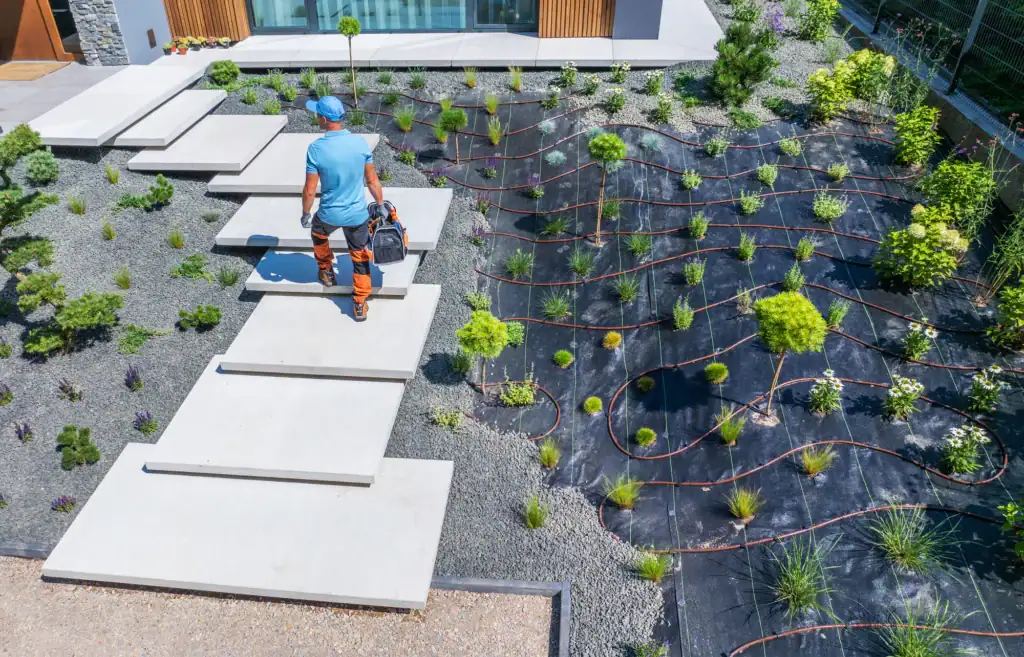
Columbus Day is the unofficial close of the Hamptons season for a lot of property owners. It’s when the house gets locked up, the caretaker gets a call, and everyone heads back to the city with a mental checklist that may or may not include the irrigation system. The problem is that every other homeowner on the East End is thinking the same thing at the same time.
Contractors who do this work properly — licensed, insured, experienced with estate-scale systems — are not sitting idle in October waiting for calls. We fill up fast. When you call after Columbus Day because you just remembered, you’re often looking at a two-week wait or more. And if the first hard freeze comes before your appointment, you’re no longer winterizing a functioning system. You’re starting the spring repair process early.
The homeowners who book in September — before the urgency feels real — are the ones who close out the season without a problem. The ones who wait are the ones calling in April wondering why zone four isn’t working.
For absentee owners especially, this matters. If you’re not going to be at the property in October, you need a contractor you trust to access the property, do the job correctly, and let you know it’s done — without requiring you to be there. That’s a specific kind of working relationship, and it’s worth establishing before the window gets tight.
Does It Matter Whether Your Sprinkler Contractor Is Licensed in Suffolk County?
Yes — and not just for the obvious reasons. Suffolk County requires home improvement contractors to be licensed. That’s not a formality. An unlicensed contractor who damages your property or has a worker injured on your premises leaves you with limited legal recourse and potentially exposed to liability you didn’t sign up for. At Hamptons property values, that is not a theoretical risk.
Beyond the legal piece, a licensed contractor in Suffolk County understands the local regulatory requirements that an unlicensed operator simply won’t navigate. Irrigation systems connected to municipal water require annual backflow preventer testing by a certified tester — this is a Suffolk County regulatory requirement, not optional maintenance. A contractor who doesn’t know this, or doesn’t handle it, is leaving a compliance gap in your seasonal service.
We’ve been working in Suffolk County for twenty years. We know what the East Hampton and Southampton building departments require, we carry comprehensive liability insurance on every job, and we back our work with a one-year warranty on both labor and materials. If something fails after a properly performed winterization, you are covered. That is not common in this industry.
Our approach means that when we’re at your property, we’re at your property. Not half there while a crew is pulled to the next job. Every zone gets cleared properly. Every head gets checked. The backflow preventer gets the attention it needs. It takes longer to work that way, but it’s the only way to do it right — and in the Hamptons, where the systems are larger and the stakes are higher, cutting corners shows up fast.
Lawn Sprinkler Service in Southampton and East Hampton: The Short Version
Winterization is not optional in Zone 7. The Hamptons freezes, the sandy soil hides the damage, and by the time you discover a burst pipe in April, the cost is already five to ten times what prevention would have run. The booking window is six weeks in a market where licensed contractors fill up fast.
If you own a home in Southampton, East Hampton, Bridgehampton, or anywhere on the East End, the time to schedule fall sprinkler service is before the season feels urgent — not after. The math is straightforward: roughly $85 to $144 for a proper winterization, versus $300 to $1,200 or more to repair what a freeze does to an unprotected system.
We’ve been handling lawn sprinkler service, irrigation maintenance, and seasonal property care on the East End for twenty years. If you want to get on the schedule before the October window closes, give us a call.