Summary:
Memorial Day is closer than it feels. If your outdoor space isn’t where it needs to be — cracked concrete, bare ground where a patio should be, or a half-finished project from last fall — you already know the pressure. Guests are coming. Maybe a rental is starting. The window to get it done is real and it’s short.
A well-installed paver patio changes how a Hamptons property looks and feels. It also holds its value in ways that a poured concrete slab simply doesn’t, especially on the South Fork where the soil, the salt air, and the winters all work against shortcuts. Here’s what you need to know before you start.
What Patio Installation Actually Involves in the Hamptons
Most people focus on the surface — the pattern, the color, the material. That stuff matters, but it’s the last ten percent of the job. What determines whether a paver patio lasts a decade or starts sinking after two winters is everything underneath it.
In the Hamptons, that means dealing with sandy South Fork soil that doesn’t compact the way inland soil does, a water table that can sit surprisingly high near the ocean, and freeze-thaw cycles that will find every weakness in a poorly prepared base. A proper installation here starts with 8 to 10 inches of excavation, a compacted gravel base, a level sand setting bed, and edge restraints that actually hold in sandy conditions. Skip any of that and you’re looking at shifting pavers, pooling water, and weeds pushing through the joints before the summer’s over.
Which Paver Materials Hold Up to Coastal Salt Air
This is a question that matters more in the Hamptons than almost anywhere else on Long Island. Salt air off the Atlantic isn’t just a weathering issue — it actively degrades inferior materials. Standard concrete pavers that perform fine in inland markets can show surface deterioration within a season or two when they’re a half mile from the ocean.
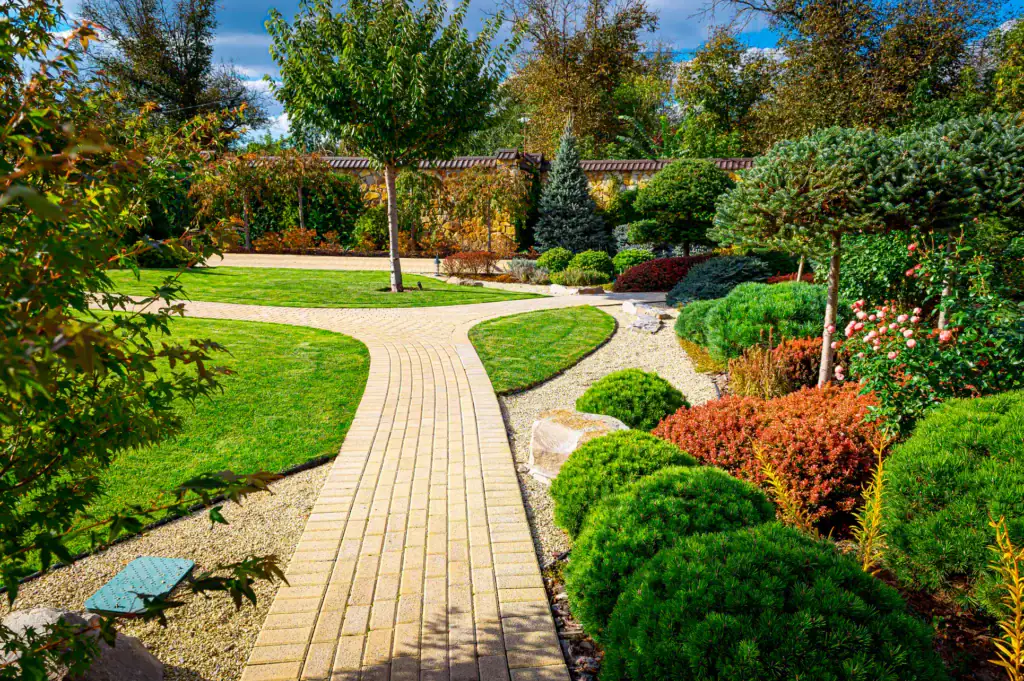
Bluestone is the traditional choice in the Hamptons, and for good reason. It’s dense, it handles coastal exposure well, and it fits the aesthetic of shingle-style properties in a way that generic concrete pavers simply don’t. Natural Pennsylvania bluestone has been the go-to for decades — you see it on patios in Bridgehampton and East Hampton that have been there for thirty years and still look right. Porcelain pavers that mimic bluestone have become more popular recently, mostly because they’re lower maintenance and highly resistant to staining and salt exposure.
Natural fieldstone and tumbled travertine are also used on higher-end properties, particularly for pool surrounds where heat retention and slip resistance matter. Brick pavers are less common in this market but work well for certain architectural styles.
The key point is that material selection here isn’t just an aesthetic decision. It’s a durability decision. A contractor who recommends the same product for a beachfront property in Amagansett as they would for a suburban backyard inland isn’t paying attention to where they’re working. We select materials specifically for coastal exposure because we’ve seen what the wrong choice looks like after a few winters.
Polymeric sand — a joint filler with binding additives that activate with water — is the professional standard for finishing a paver installation. It locks the joints, resists weed growth, and holds up to rain and freeze-thaw movement in a way that regular sand doesn’t. We use it on every project because it’s the only way to ensure your patio stays tight and weed-free through multiple seasons.
How Long Does Paver Patio Installation Take in East Hampton or Southampton?
Timeline is everything in this market. A project that runs two weeks over schedule in June isn’t just inconvenient — it can mean a rental start date is missed or a summer’s worth of outdoor entertaining is pushed to the back half of August.
For a standard residential paver patio — say, 400 to 600 square feet around a pool or off the back of the house — expect the installation itself to take three to five days once our crew is on-site and materials are delivered. That’s assuming the site is accessible, the base preparation goes smoothly, and there are no drainage surprises. Larger projects or those involving steps, retaining walls, or outdoor kitchen integration will take longer.
What most homeowners underestimate is the lead time before the crew ever shows up. Quality contractors in the Hamptons are fully committed for summer by April. If you’re calling in late May hoping to get something done before Fourth of July weekend, you’re already in a difficult position with most of the market. The contractors who are still available that late in the season are usually available for a reason.
We build our schedule around one project at a time. That means when we commit to a start date, we’re not juggling three other jobs that might push yours back. It also means we can give you a realistic completion date — and honor it. For Hamptons homeowners with a hard deadline, that’s not a minor detail. It’s the whole thing.
Permits are another timeline factor that often catches people off guard. East Hampton and Southampton Towns both have their own requirements for hardscape projects, and depending on the scope of the work, grading, drainage, or proximity to wetlands can trigger additional review. We handle all of that — pulling the permits, managing inspections, and making sure the work is code-compliant — so you’re not navigating the local regulatory process from a city apartment.
How to Choose Among Hardscape Companies in the Hamptons
The Hamptons contractor market in summer is a seller’s market. Demand is high, availability is tight, and there are operators at every level of quality and accountability. Some are excellent. Some take deposits in April and push timelines until August. Some aren’t licensed at all.
Suffolk County requires home improvement contractors to be licensed under local ordinance. That licensing exists for a reason — it means the contractor has passed financial responsibility and background checks and is legally permitted to do the work. An unlicensed operator might quote you less, but if something goes wrong, your options are limited. No license, no real recourse.
What to Look for in Paver Patio Contractors Before You Sign Anything
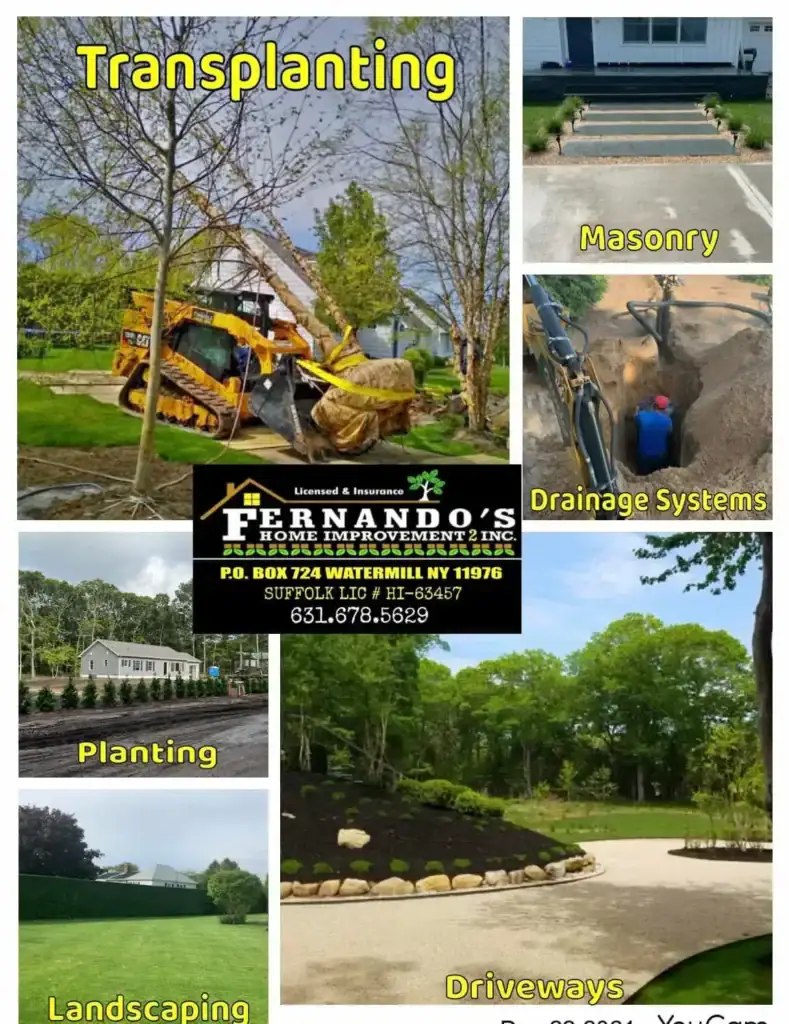
The basics matter more than most people check. Before you commit to anyone, verify that the contractor holds a current Suffolk County home improvement contractor license — you can ask for the number and confirm it. Make sure they carry comprehensive liability insurance, not just a verbal assurance. Ask specifically what their warranty covers and get it in writing.
That last point is where a lot of homeowners get burned. A contractor who says “we stand behind our work” without defining what that means is leaving themselves a lot of room to walk away from a problem. When pavers start sinking two years after installation, “warranty doesn’t cover settling” is a common response from contractors who never put the terms on paper. A real warranty names what’s covered — labor, materials, or both — for how long, and under what conditions.
We offer a one-year warranty that covers both labor and materials. Not just manufacturer defects. If the installation fails — if the base wasn’t prepared right, if the edge restraints give way, if the pavers shift — we come back and fix it. That warranty is in writing before we start.
Beyond the paperwork, pay attention to how the contractor talks about your specific site. Do they ask about your soil conditions? Do they ask about drainage? Do they have an opinion about which materials make sense for a property with coastal exposure? A contractor who gives you the same pitch they’d give anyone, anywhere, probably isn’t thinking carefully about what your property actually needs. The Hamptons isn’t a generic market, and good work here requires knowing that.
Direct communication matters too. If every question goes through a sales rep who has to “check with the team,” that’s a preview of what project management will look like. You want to be talking to the people doing the work.
Does a Paver Patio Increase Home Value in the Hamptons?
The short answer is yes, and in this market the numbers are worth thinking about concretely. Landscaping and hardscape improvements are associated with a five to twelve percent increase in property value. When East Hampton home prices are running between $1.6 and $1.85 million, a five percent increase represents $80,000 to $92,000 in added value. A well-designed paver patio is a meaningful part of that.
Hamptons real estate listings treat outdoor spaces as primary selling features, not afterthoughts. “Dining al fresco on the bluestone patio” is a phrase that shows up in listing copy because it moves properties. Pool surrounds, covered outdoor dining areas, and integrated fire pit spaces all appear in the features that buyers and renters specifically look for.
For rental properties, the calculus is even more direct. The Hamptons rental season runs June through August, and most of the income is concentrated in those twelve weeks. A property with a finished, well-designed outdoor space commands higher weekly rates and attracts more qualified renters than one with bare ground or cracked concrete. A paver patio that isn’t finished by Memorial Day weekend isn’t just a construction delay — it’s a revenue impact.
There’s also a longer-term maintenance argument. Poured concrete cracks, and when it does, the repair options are limited and they always show. Individual pavers can be replaced without disturbing the rest of the installation. In a coastal environment where ground movement and freeze-thaw cycling are facts of life, that flexibility matters. A properly installed paver patio with polymeric sand joints and the right base preparation requires very little ongoing maintenance — occasional sweeping, resealing every few years, and the rare individual paver replacement if something gets damaged.
The investment holds up. That’s the point. And in a market where properties are valued at this level, the quality of the outdoor space is visible to everyone who walks through the gate.
Ready to Start Your Paver Patio Installation Before Summer?
If you’re planning a paver patio for a Southampton, East Hampton, or Bridgehampton property, the most important thing you can do right now is start the conversation early. The contractors worth hiring are the ones who are already booking out — and the gap between “I should get this done” and “I need this done in three weeks” closes faster than it should.
What you’ve read here is what separates a patio that lasts from one that starts failing after the first winter: proper base depth for South Fork soil, materials rated for coastal exposure, permits handled correctly, and a crew that shows up when they say they will and finishes when they said they would.
We’ve been doing this work in the Hamptons for over twenty years. If you want a straight conversation about what your project actually involves — timeline, materials, cost, and what to expect — give us a call.
