Summary:
If you’ve searched “landscape design cost” and seen national averages in the $3,500–$4,500 range, set those aside for now. They don’t apply here. Suffolk County — and the Hamptons in particular — operates by its own pricing reality, and walking into a project without understanding that is one of the fastest ways to get surprised by a quote or, worse, make a decision you regret later.
This guide covers what landscaping actually costs on the East End, what drives those numbers up or down, and how to think through your budget before you pick up the phone. No fluff, just the information that actually helps you plan.
Landscaping Cost in Suffolk County: What the Numbers Actually Look Like
Nationally, a standard landscaping project averages around $3,500–$8,500. In Suffolk County — especially once you get east of Riverhead — expect to add 30 to 60 percent to those figures for comparable work. That’s not a markup for the sake of it. It reflects real differences: higher labor costs, material sourcing limitations, coastal construction requirements, and permit processes in towns like Southampton and East Hampton that simply don’t exist in other markets.
A small project — seasonal plantings, a cleanup, a modest garden refresh — might run $5,000 to $8,000 on the East End. A medium-scope job that includes retaining walls, drainage work, and new planting beds typically falls somewhere between $10,000 and $22,000. A full yard renovation with masonry, irrigation, and comprehensive landscaping can reach $25,000 to $75,000 or more, depending on the property size and what’s going in.
It’s also worth knowing that landscape design fees are separate from installation costs. Design alone — the plan, the site assessment, the layout — runs $2,000 to $10,000 depending on complexity. Your total project cost is design plus materials plus labor, and labor typically accounts for 40 to 65 percent of the final number.

Why Does Landscaping Cost More in the Hamptons Than the National Average?
A few things drive the East End premium that most national cost guides never mention, because they’re genuinely specific to this part of Long Island.
The coastal environment is the biggest one. Properties within a mile or two of the ocean need salt-tolerant plant species, corrosion-resistant irrigation components, and masonry materials rated for coastal exposure. Standard materials don’t hold up — salt air accelerates corrosion, and contractors who don’t know this will spec the wrong things. You won’t notice the problem until year two or three, when you’re paying to redo work that shouldn’t have failed.
The soil on the East End is another factor. The glacially deposited sandy soil throughout Suffolk County drains fast, which is great for some things and a real challenge for others. Proper grading, soil amendment, and irrigation design take more thought here than in markets with denser, more forgiving soil. Drainage solutions — particularly on lower-lying lots near wetlands — add both time and cost to projects that might be straightforward elsewhere.
Then there’s the regulatory layer. Southampton Town and East Hampton Town each require contractors to hold a town-level license on top of the Suffolk County Home Improvement Contractor license. That’s two separate licensing requirements just to legally work in the towns where most of our projects happen. Contractors who don’t hold both licenses aren’t legally permitted to do the work — and many of the lower-priced bids you’ll see in this market come from exactly those operators. That matters for reasons beyond the price tag, which we’ll get into shortly.
Finally, the Hamptons summer season creates real scheduling pressure. Properties need to be ready before Memorial Day weekend — that’s the hard deadline. Contractors who can reliably deliver before that window, with the right licensing and materials for coastal conditions, are in genuine demand. That demand is part of what sets the market rate here.
How to Sequence a Yard Renovation Cost Across Multiple Seasons
Not every homeowner wants to — or needs to — do everything at once. A phased approach makes sense for a lot of properties, especially when the full vision is bigger than the year-one budget. The key is sequencing it correctly so early decisions don’t create problems for later phases.
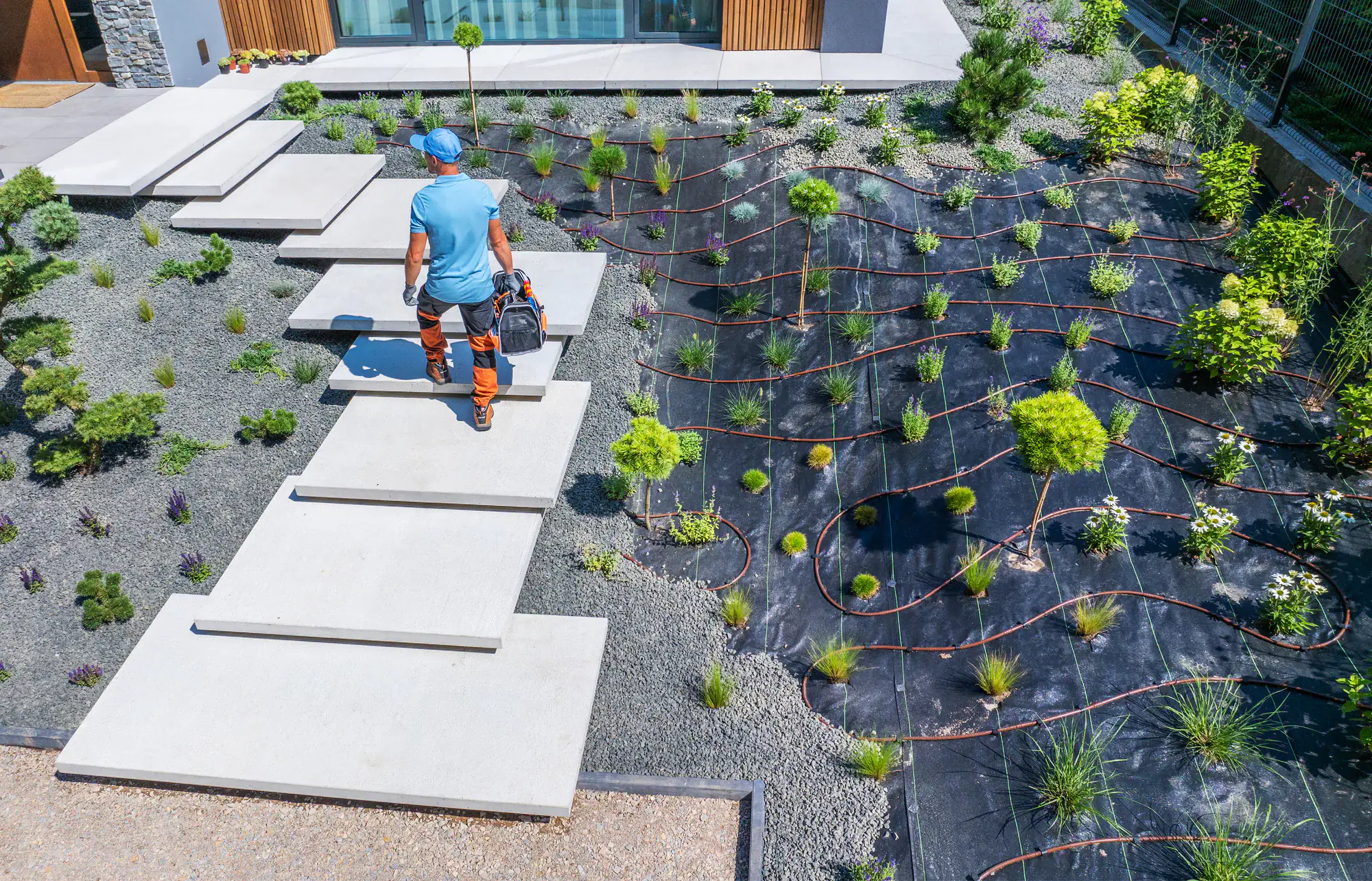
Start with infrastructure. Irrigation and drainage should go in first, before any masonry or planting. Retrofitting irrigation after your landscape is established is more disruptive and more expensive than doing it upfront — it means digging through finished beds, potentially damaging root systems, and often redoing sections of hardscaping to run lines underneath. Getting the water management right at the start protects everything that comes after it.
Hardscaping — patios, retaining walls, walkways, driveways — comes next. These are the structural elements that define how the space functions and flows. They also need to be in place before final grading and planting, because heavy equipment and material deliveries will damage a finished lawn and established plantings.
Softscaping — trees, shrubs, lawn, perennial beds — comes last. This is also where the property really starts to look like the vision, so it tends to be the most emotionally satisfying phase. But it’s the phase that benefits most from having the infrastructure underneath it done correctly.
If you’re planning a multi-season project, fall is actually one of the better times to plant trees and shrubs on the East End. Root systems establish over winter, and by spring the plants are already acclimated and ready to grow. It’s a detail that experienced local contractors know and out-of-area operators often miss.
One more thing worth knowing: deer pressure on the East End is significant. Any planting plan needs to account for it — either through species selection (deer-resistant plants) or physical barriers. It’s not optional, and it’s not a minor line item. Factoring it in from the start saves you from replanting the same beds two seasons in a row.
Yard Renovation Cost: What Licensed vs. Unlicensed Contractors Actually Means for Your Budget
This is the part of the conversation most contractors skip, but it’s probably the most useful thing you can read before getting quotes.
Suffolk County law requires a Home Improvement Contractor license for landscaping and related residential work. Southampton Town and East Hampton Town require additional town-level licenses on top of that. A contractor working without those licenses in those jurisdictions is operating illegally — and that creates real exposure for you as the property owner.
If an unlicensed worker is injured on your property and the contractor carries no workers’ compensation insurance, you can be held personally liable. That’s not a hypothetical. It’s a documented risk under New York law, and it’s one of the reasons the licensing requirement exists in the first place.
Is a Cheaper Landscaping Quote in the Hamptons Actually Cheaper?
On paper, a quote that’s $4,000 less than the next one looks like a win. In practice, the math rarely works out that way.
Unlicensed contractors typically underbid for a reason. It’s usually some combination of: lower-grade materials that won’t hold up to coastal conditions, workers without proper coverage, no warranty on the finished work, or a scope that’s missing things you won’t notice until later. Sometimes all of the above. The work might look fine at first. The problems tend to show up in year two — a patio that’s heaving after one freeze-thaw cycle, an irrigation system with components corroding from salt air, plantings that didn’t survive the first winter because the wrong species were specified.
Redoing failed work costs more than doing it right the first time. A $12,000 project that needs $8,000 in repairs eighteen months later wasn’t actually $12,000 — it was $20,000. That’s before accounting for the time, the disruption, and the difficulty of getting the original contractor back to address it when there’s no warranty and no legal obligation for them to do so.
We offer a one-year warranty on both labor and materials. That’s not standard in this industry — the typical contractor warranty runs 30 to 90 days, if there’s a written warranty at all. Ours covers a full year, in writing, on everything we install. It’s not a marketing phrase. It’s a legal commitment, and it means that if something fails in year one, we fix it. That’s the kind of assurance that’s hard to put a dollar figure on, but it’s very easy to feel the absence of when you need it and it’s not there.
We’re also fully licensed — holding both the Suffolk County Home Improvement Contractor license and the additional licenses required to work in Southampton and East Hampton. We carry general liability insurance and workers’ compensation. You can verify all of it. We’d encourage you to ask any contractor you’re considering for the same documentation before signing anything.
Landscaping Budget Planning: How to Allocate Your Investment for Maximum Return
A useful rule of thumb: most landscape professionals suggest budgeting five to ten percent of your home’s value for landscaping. On a $1 million property — modest by Hamptons standards — that’s $50,000 to $100,000 as a reasonable range for a comprehensive project. That number might feel significant, but the return on it is real.
The American Society of Landscape Architects puts the resale value increase from professional landscaping at 15 to 20 percent. On a $1 million property, that’s $150,000 to $200,000 in added value. The National Association of Realtors’ 2023 Remodeling Impact Report found that standard lawn care alone returns 217 percent ROI at resale. More than 75 percent of top real estate agents say well-landscaped homes sell for one to ten percent more than comparable properties without it.
In the Hamptons, where properties routinely transact at $1 million to $10 million and above, those percentages represent real money. A landscape investment that adds five percent to the value of a $2 million property returns $100,000. That’s not a soft benefit — it’s a measurable financial outcome.
If you’re working with a fixed budget for year one, prioritize infrastructure: irrigation, drainage, and grading. These are the elements that protect everything else you’ll invest in the property. A well-designed irrigation system keeps your plantings alive through dry East End summers and reduces the long-term maintenance burden considerably. Drainage solutions protect your masonry, your lawn, and your foundation. Getting those right first gives every subsequent phase a solid base to build on.
From there, sequence hardscaping before softscaping — let the structural elements settle and define the space before you bring in the living elements. And when you’re selecting plants, work with someone who knows this specific microclimate. Salt air, freeze-thaw cycles, sandy soil, and deer pressure are not abstract considerations here. They determine what survives and what doesn’t, and they’re the kind of thing you learn through nearly 20 years of working on East End properties — not from a general landscaping manual.
How to Choose the Right Landscaping Contractor in Suffolk County, NY
The most important thing you can do before signing a contract is verify that the contractor is properly licensed for the town where your property sits. In Southampton and East Hampton, that means both the Suffolk County Home Improvement Contractor license and the applicable town license. Ask for it. A legitimate contractor will hand it over without hesitation.
Beyond licensing, look for a written warranty with specific terms, a clear scope of work in the contract, and evidence of local experience — not just Long Island experience, but East End experience. The coastal conditions here are specific enough that general landscaping knowledge doesn’t always translate.
If you’re planning a project in Southampton, East Hampton, Bridgehampton, or anywhere across the East End, we’ve been doing this work for nearly 20 years. One project at a time, done right, with a one-year warranty and the licenses to back it up. Give us a call at (631) 678-5629 — we’re available Monday through Friday, 9:00am to 5:00pm, and we’re happy to talk through what your project actually involves before anything else.
Frequently Asked Questions
How much should I budget for landscaping in Suffolk County?
Plan for 30 to 60 percent above national averages for comparable work. A small project on the East End typically starts around $5,000 to $8,000. Medium-scope work — retaining walls, drainage, new planting beds — generally runs $10,000 to $22,000. Full yard renovations with masonry and irrigation can reach $25,000 to $75,000 or more. Suffolk County’s coastal conditions, permit requirements in Southampton and East Hampton, and higher labor costs all contribute to that premium over what you’d find in other markets.
What factors affect landscape design cost the most?
Project size and scope are the biggest drivers, but in Suffolk County specifically, the coastal environment adds meaningful cost. Salt-tolerant materials, proper drainage for sandy East End soil, freeze-thaw-rated masonry, and deer-resistant planting plans all affect the final number. Permit requirements in Southampton Town and East Hampton Town also add time and cost that don’t exist in other jurisdictions. The regulatory environment in Suffolk County is genuinely different from most other regions.
Is it worth paying more for a licensed contractor?
Yes — and not just for quality reasons. In Suffolk County, hiring an unlicensed contractor for landscaping work creates real legal exposure. If a worker is injured on your property and the contractor carries no workers’ compensation insurance, you can be held personally liable under New York law. Licensed contractors are also the only ones with a legal obligation to honor their warranty. The price difference between a licensed and unlicensed contractor is almost always smaller than the cost of fixing what an unlicensed contractor leaves behind.
How do I plan my landscaping budget for maximum value?
Start with infrastructure — irrigation and drainage first, then hardscaping, then softscaping. Each phase builds on the one before it, and skipping ahead creates expensive problems later. If you’re spreading the project across multiple seasons, fall is a good time to plant trees and shrubs on the East End; root systems establish over winter and the plants arrive at spring already acclimated. And whatever your budget, put the warranty terms and full scope of work in writing before any work begins.