Summary:
If you own property in Southampton, East Hampton, or Bridgehampton, you already know that getting outdoor work done right here is not the same as getting it done anywhere else. The environment is demanding — salt air, sandy soil, relentless deer — and the contractor market is, to put it plainly, uneven. Some operators are licensed, insured, and accountable. Many are not. And when you’re managing a property remotely from the city, or trying to get everything finished before Memorial Day, the margin for error is basically zero. This guide is for homeowners who want to understand the process before they make a call — so that when they do, they’re asking the right questions.
What Hamptons Landscape Design Actually Involves
Hamptons landscape design is not a catalog exercise. You can’t just pick what looks good in a magazine and expect it to thrive here. The East End has its own rules — glacially deposited sandy loam that drains fast and holds nutrients poorly, salt spray that degrades standard materials within a few seasons, and a deer population dense enough to strip a newly planted garden overnight.
A real design process starts with understanding those conditions first, then building a plan around them. That means soil assessment, drainage evaluation, and plant selection based on what actually survives in Zone 7 coastal conditions — not what photographs well in a showroom. It also means thinking about how the space will be used, who uses it, and what the property needs to look like when it matters most: peak summer, when you’re actually there.
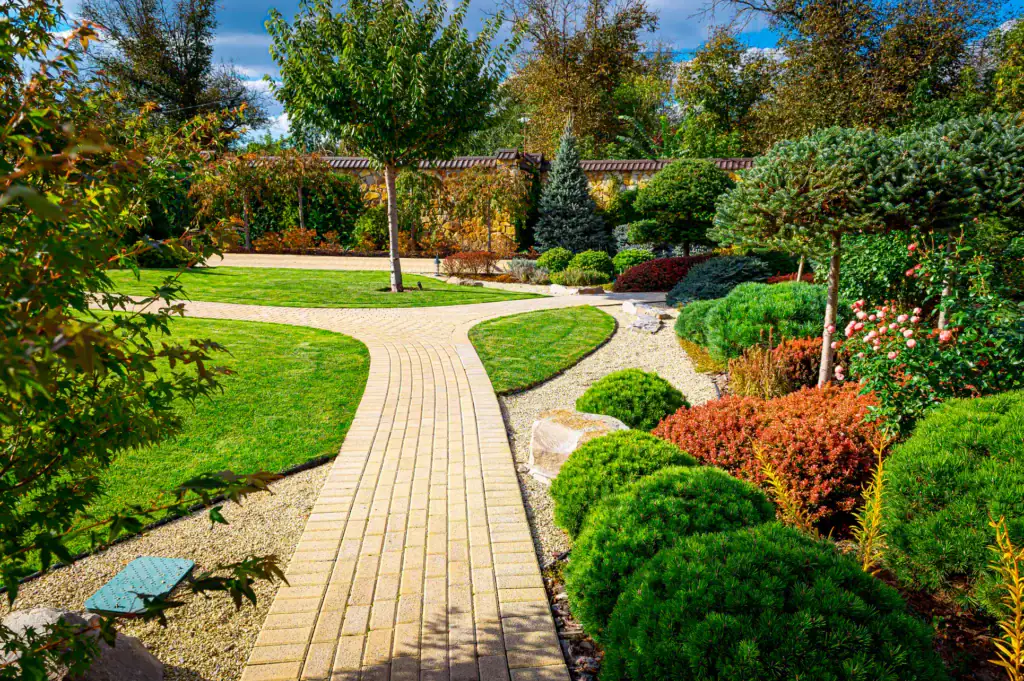
Deer-Proof Landscaping Ideas That Actually Hold Up on the East End
Deer pressure on Long Island’s South Fork is not a minor inconvenience. White-tailed deer populations in this region are among the densest in New York State, and they are not selective eaters. Hostas, roses, arborvitae, English ivy, many ornamental grasses — gone within a season if you’re not designing around the problem from the start.
Deer resistant landscape design plans for Hamptons properties tend to rely on a core group of species that deer consistently avoid: inkberry, bayberry, Russian sage, catmint, ornamental alliums, native switchgrass, and certain boxwood varieties. Lavender performs well in the sandy soil and is reliably left alone. American holly and native viburnums offer structure and privacy without becoming a buffet.
The mistake most homeowners make is treating deer resistance as an afterthought — adding a few “deer-proof” plants around the perimeter while filling the interior with species that will be eaten down to the stem by August. A proper deer resistant landscape design plan integrates species selection throughout the entire design, not just at the edges.
A deer proof privacy hedge is one of the most requested features we work on across Southampton and East Hampton properties. Inkberry holly, native shrub roses, and dense plantings of switchgrass can create effective screening that deer tend to avoid — though no planting is truly deer-proof when populations are high and food is scarce in winter. Pairing plant selection with physical deterrents, like low-profile fencing integrated into the design, is often the most reliable long-term approach. The goal is a landscape that looks intentional and beautiful, not one that looks like it’s under siege.
Hardscape is where a lot of Hamptons backyard projects either come together or fall apart. The material choices matter more here than in most markets, because salt air accelerates deterioration in ways that aren’t obvious until a few seasons in. Standard residential-grade mortars, certain limestone varieties, and lower-density pavers that perform fine inland can crack, spall, or discolor quickly when they’re exposed to ocean air year-round.
Bluestone is a reliable choice for East End properties. It weathers gracefully in coastal conditions, holds up to freeze-thaw cycles, and has a natural character that fits the aesthetic of both traditional Shingle Style homes and more contemporary Hamptons architecture. Properly installed with the right base preparation and jointing material, a bluestone patio can look as good in year ten as it did on day one.
Paver patio contractors in the Hamptons vary widely in how they approach base preparation, material sourcing, and long-term drainage planning. The key with pavers in a coastal environment is base depth and drainage planning. Sandy soil drains well, but it also shifts — and a paver field installed without adequate compaction and edging will move. We’ve seen installations from unlicensed operators that looked fine at first and were noticeably uneven within eighteen months. The base work is where the quality lives, and it’s the part you can’t see once the job is done.
Before any work begins on a hardscape project, you should understand what base depth is being proposed, what drainage provisions are included, and what materials are rated for coastal exposure. Those are the questions that separate a patio that lasts from one that becomes a problem.
How to Find a Landscaper in the Hamptons You Can Actually Trust
The Hamptons contractor market has a real problem with unlicensed operators. They’re not hard to find — they’re often the ones who respond fastest and bid lowest. And for homeowners managing a property remotely, or trying to get something done quickly before the season starts, that combination can be genuinely tempting.
The issue is that Suffolk County Code §563-17 makes it illegal to perform home improvement work on one- and two-family residential properties without a license. East Hampton Town adds a commercial landscaper endorsement requirement on top of that. When you hire someone who isn’t licensed, you’re not just taking a quality risk — you’re taking a legal one. If a worker is injured on your property and the contractor isn’t properly insured, that liability can land on you.
What to Ask Before You Hire a Landscape Design Contractor in the Hamptons
The first question is simple: are you licensed to work in Suffolk County, and do you hold the required town endorsement for East Hampton or Southampton? A legitimate contractor can answer that immediately and provide documentation. If there’s any hesitation, that’s your answer.
After licensing, the next thing to verify is insurance. Ask for a certificate of general liability insurance and confirm it’s current. This protects you — not the contractor — if something goes wrong on your property. A fully insured contractor working on a high-value Hamptons property is not a luxury; it’s basic risk management.
Beyond credentials, the questions that reveal the most about how a contractor actually operates tend to be practical ones. Who will be on my property, and will I have direct access to them? Who handles the permits if the project requires them? What happens if something fails six months after the work is done? How many other projects will be running at the same time as mine?
That last question matters more than most homeowners realize. The most common complaint about landscaping and home improvement contractors — not just in the Hamptons, but everywhere — is that the crew starts the job and then disappears to another site. Progress stalls. Communication drops off. What was supposed to take two weeks takes six. For a homeowner trying to have a finished backyard before Memorial Day, that’s not just frustrating — it can mean losing the entire season.
We work one job at a time. When your project is on the schedule, it’s the only project on the schedule. The crew stays focused, the timeline holds, and you’re not competing with five other properties for attention. It’s a straightforward approach, and it’s the main reason our projects finish when we say they will.
The Hamptons has a compressed outdoor season, and that compression makes timing everything. A lawn or garden that isn’t properly prepared in spring won’t recover in time for peak summer use. One that isn’t put to bed correctly in fall will show the damage by the following May.
Spring lawn care on East End properties typically begins in late March or early April, depending on soil temperature. Sandy soil warms faster than heavier inland soils, which is an advantage — but it also means the window for pre-emergent weed control is shorter than homeowners expect. Fertilization schedules need to account for the soil’s limited nutrient retention, which means lighter, more frequent applications rather than one heavy feeding. Irrigation systems that were winterized in November need to be inspected, tested, and activated before the heat arrives — not after the first dry stretch has already stressed the lawn.
Fall lawn care is the season most Hamptons homeowners underinvest in, and it shows the following spring. Aeration and overseeding in September and October — when soil temperatures are still warm enough for germination but the heat stress of summer has passed — is one of the highest-return maintenance investments you can make. It’s also the right time to evaluate any drainage issues that showed up during summer storms, address bare or thin areas before winter, and winterize the irrigation system properly before the first hard freeze.
Garden maintenance services that cover both spring activation and fall preparation are the difference between a property that looks its best every summer and one that always seems to be catching up. For homeowners who aren’t on-site year-round, having a single contractor who manages that full seasonal cycle — and communicates proactively without needing to be chased — is worth more than most people budget for until they’ve experienced the alternative.
Ready to Design Your Backyard in the Hamptons? Here's Where to Start
The most important thing you can do before any backyard project in Southampton, East Hampton, or Bridgehampton is understand what you’re actually hiring. Not just the service — the contractor. Their license, their insurance, their process, and whether they’ll still be focused on your property two weeks after they started.
A well-designed backyard in the Hamptons holds its value. Landscape improvements return an average of 104% at resale — and in a market where properties are worth what they’re worth here, that’s not a small number. The investment makes sense. The question is whether the execution matches the vision.
We’ve been working on East End properties for nearly twenty years. Every project comes with a one-year warranty on both labor and materials, all required Suffolk County permits handled by us, and a straightforward commitment to finishing what we start. If you’re ready to talk through what your property needs, reach out to us — we’re easy to reach and happy to take a look.
Frequently Asked Questions
Do landscapers need a license to work in the Hamptons? Yes — and this is one of the most important things to verify before hiring anyone. Suffolk County Code §563-17 requires a home improvement contractor license to perform residential landscaping and improvement work on one- and two-family properties. East Hampton Town and Southampton Town both add additional requirements on top of that. Many operators working in these areas do not hold the required licenses, which is illegal and creates real liability exposure for the homeowner. Always ask for proof of licensing before signing a contract.
Do you need a permit to landscape your yard in East Hampton or Southampton? It depends on the scope of the work. Lawn maintenance and basic planting typically don’t require permits. But retaining walls, patios, certain drainage installations, and structural changes to your property often do — and the requirements differ between East Hampton Town and Southampton Town. We handle all required permits for every project we take on. You don’t have to navigate the building department or worry about unpermitted work affecting your property’s resale value. It’s part of what we do.
Do I need a permit to landscape my yard if I’m just adding a patio or retaining wall? Most likely, yes. In East Hampton and Southampton, hardscaping projects that alter grade, add impervious surface, or involve structural elements typically require a permit. The threshold varies by town and project scope. The safest approach — and the one that protects your property long-term — is to work with a licensed contractor who pulls the appropriate permits before work begins. Unpermitted improvements can complicate sales, trigger fines, and create certificate-of-occupancy issues down the line.
What does affordable tree service actually mean in the Hamptons? It means different things depending on who’s using the term. For licensed, insured contractors, “affordable” reflects competitive, fair pricing for work done properly — with the right equipment, the right crew, and a warranty behind it. For unlicensed operators, “affordable” often means lower overhead because there’s no insurance, no licensing cost, and no accountability if something goes wrong. Tree work on a high-value property carries real risk. A branch that damages a roof, a fence, or a neighbor’s property during removal is not a small problem. The price difference between a licensed and unlicensed tree service is rarely as large as it looks on the estimate — and the gap in accountability is significant.
