Summary:
If you’ve ever spent real money on landscaping only to watch half of it die by the following summer, you’re not alone. It happens constantly on Long Island’s East End — not because homeowners made bad choices, but because the plants they bought weren’t suited for what coastal Suffolk County actually throws at them. Salt air off the Atlantic, sandy soil that drains fast and holds little, deer that treat your garden like a buffet, and freeze-thaw cycles that punish anything marginally hardy. The good news is that the right plants do exist — and so do the right places to buy them. Here’s what you need to know before you spend another dollar at a nursery.
Top Suffolk County Garden Centers and Nurseries Worth Knowing
Not all nurseries on Long Island are created equal. The difference between a specialist and a general retailer isn’t just inventory — it’s the conversation you have when you walk in. The best garden centers on the East End will ask where your property sits, how close you are to the water, what kind of sun exposure you’re working with, and whether deer are a real problem for you. If nobody asks those questions, that’s a signal.
For the Hamptons corridor specifically, a handful of operations have built their reputations around exactly this kind of expertise. Whitmores Landscaping in East Hampton has been in the nursery and landscaping business since 1945. Lynch’s Garden Center — sometimes called the unofficial meeting place of the Hamptons — supplies both professional landscapers and homeowners with plants and carries their own “East End Mix” grass seed blend developed specifically for local growing conditions. Fort Pond Native Plants in Montauk specializes in indigenous coastal species and is one of the few operations genuinely focused on what grows best at the very tip of the South Fork.
Native Plants Long Island Specialists: Where to Find Them on the East End
Native plants have had a real moment in recent years, and for good reason — especially here. Long Island Natives, widely considered the largest native plant grower on the island, has over 70 years of horticultural experience and works with everyone from restoration ecologists to Hamptons homeowners redesigning their properties from scratch. They understand the difference between a plant that’s technically native to the Northeast and one that’s actually native to Long Island’s specific coastal environment. That distinction matters more than most people realize.
What makes native plants worth the attention isn’t just the ecological angle, though that’s real. It’s the practical side. Plants like Winterberry Holly (Ilex verticillata), Highbush Blueberry (Vaccinium corymbosum), Serviceberry (Amelanchier canadensis), and Smooth Blue Aster are adapted to Long Island’s sandy, low-nutrient soils. They’ve evolved here. Once they’re established — typically after two growing seasons — they require dramatically less water than exotic ornamentals. In communities like Montauk and Southampton where seasonal water restrictions are a real factor, that’s not a minor consideration.
There’s also the deer question. Native plants aren’t universally deer-proof, but many are naturally less palatable than the exotic ornamentals that deer have come to expect in suburban landscapes. Butterfly Milkweed (Asclepias tuberosa), Wild Lupine (Lupinus perennis), and Cardinal Flower are all strong performers in Suffolk County gardens and tend to hold up better under deer pressure than the standard nursery fare.
ReWild Long Island runs a “Native to Long Island” labeling program at select retail nurseries — look for that tag when you’re shopping. It’s a meaningful distinction from “nativars,” which are cultivated varieties of native species that may look similar but don’t deliver the same ecological or practical benefits. The Long Island Native Plant Initiative (LINPI) is another local resource worth knowing, particularly if you’re looking to connect with growers and designers who specialize in this area.
If you’re planting trees or larger shrubs, the Cornell Cooperative Extension of Suffolk County publishes the Long Island Horticulture Resource Guide — updated in 2025 — which includes a full list of plants suitable for coastal locations, native species, and critically, a Do Not Sell List for invasive species that some general retailers still carry. That list exists for a reason.
Coastal Landscaping Plants: What Salt Air Actually Does to the Wrong Species
Here’s something that doesn’t get said clearly enough: salt doesn’t just stress plants — it dehydrates them. Salt pulls moisture directly out of plant tissue, and on a property within a quarter mile of the ocean or Shinnecock Bay, the accumulation happens faster than most people expect. A plant can look perfectly healthy at the nursery, get installed on a South Fork property in May, and be struggling by August. By the following spring, it’s gone.
One Long Island homeowner documented losing 40 to 50 trees — mostly Leyland Cypress and arborvitae — to salt damage on the South Shore. These are species that get sold constantly at general garden centers and big box stores, and they look great in a display. But they’re not suited for coastal exposure. The same goes for Blue Holly (Ilex x meserveae) and PJM rhododendrons, both of which have a track record of failure in high-exposure coastal settings on Long Island.
What does hold up? Rugosa Rose — the beach rose you see growing wild along the dunes — is one of the most salt-tolerant plants you’ll find anywhere. American Holly (Ilex opaca), Beautyberry, Viburnum, Weigela, and ornamental grasses like Little Bunny are all strong performers in coastal Suffolk County conditions. Serviceberry and Forsythia have also proven themselves over time. These aren’t exotic choices — they’re reliable ones, backed by real performance data from properties across the East End.
The UConn Coastal Landscaping Guide for Long Island Sound offers a zone-based framework for plant selection based on your actual distance from the water and your level of salt spray exposure. It’s a useful reference if you’re trying to be systematic about it. But the honest shortcut is this: buy from a nursery whose staff has worked with coastal properties specifically, not one that’s guessing based on a zone map. The right supplier will have already filtered their inventory for your conditions. A general retailer won’t have done that work.
Bayport Flower Houses, which has been a South Shore institution since 1932, is worth the drive for homeowners in the western part of Suffolk County. East End Trees in Kings Park has earned a strong reputation for quality stock and staff who actually walk customers through the selection process — multiple reviews specifically call that out as the reason they keep going back.
How to Choose a Quality Plant Supplier in Suffolk County, NY
The nursery you buy from matters as much as the plant you choose. A salt-tolerant species sourced from a grower in a warmer climate, sold by staff who don’t know your conditions, and installed without proper soil preparation will still fail. Quality starts before you pick up a single plant.
The practical test is simple: when you walk in, do they ask questions? A good nursery wants to know your proximity to the water, your sun and shade exposure, your soil drainage, and whether deer are a consistent problem. If the conversation jumps straight to “here’s what we have in stock,” slow down.
What to Look for When Selecting a Garden Center on Long Island
Start with inventory. Specialty coastal nurseries — the ones actually suited to East End properties — stock salt-tolerant and deer-resistant varieties as a core part of their offering, not an afterthought. Hicks Nurseries, which has been family-owned since 1853, tags deer-resistant varieties throughout their facility and maintains a dedicated deer-resistant display garden. That kind of intentional curation tells you something about how seriously they take your conditions.
Look for guarantees. Reputable nurseries stand behind their plants. Hicks offers a guarantee on roses and perennials through November 1st of the purchase year. That’s a real commitment, and it’s one of the cleaner ways to separate serious operations from seasonal pop-ups that won’t be around if something goes wrong.
Ask about sourcing. Plants grown in the Northeast, or at minimum sourced from growers who understand Zone 7 coastal conditions, will outperform plants shipped from warmer climates. Long Island falls in USDA Hardiness Zone 7, with minimum winter temperatures between 0°F and 10°F. The April 13 last frost date is your practical planting window opener — mid-April through June is the primary season, with fall being the preferred window for trees and shrubs because cooler temperatures reduce transplant stress.
One more thing worth knowing: Suffolk County maintains a Do Not Sell List and a Watch List for invasive plant species, published by the Cornell Cooperative Extension. Some of those species are still sold at general garden centers that haven’t kept up with local regulations. Buying from a nursery that’s current on that list protects your landscape and the surrounding ecosystem — both of which matter when you’re near Peconic Bay or the Atlantic.
Why Plant Selection and Irrigation Design Go Together on Long Island Properties
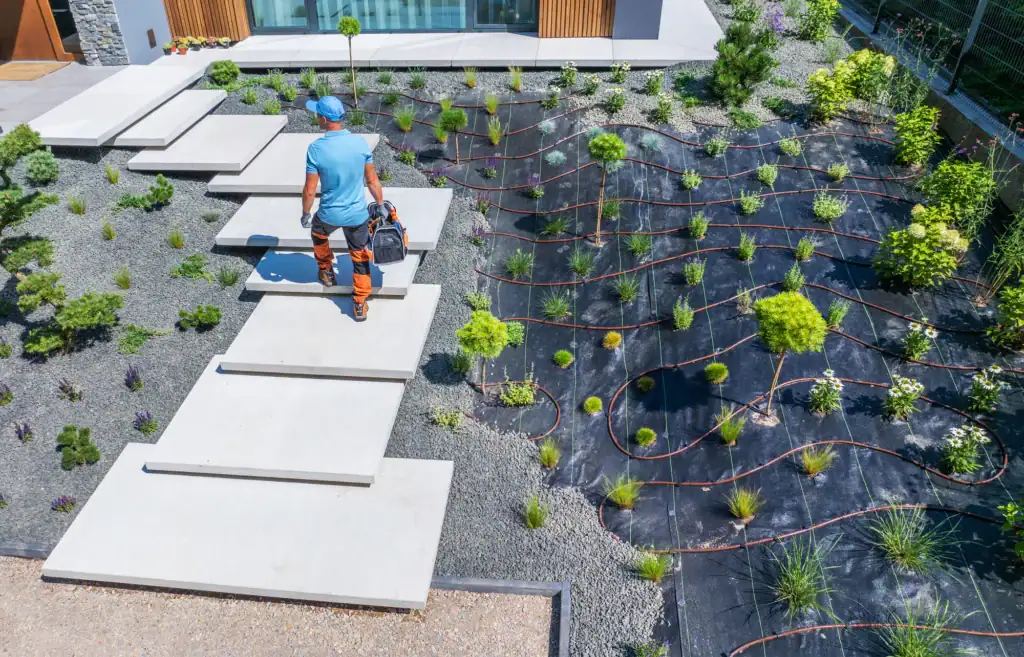
Even the most coastal-adapted, deer-resistant, native plant you can find will struggle without consistent water during its first two growing seasons. Establishment is the vulnerable window — and it’s where a lot of otherwise well-chosen plants fail. This is the part of the conversation that most nursery guides skip entirely.
A properly designed irrigation system isn’t just about convenience. On a Hamptons property, it’s what determines whether your planting investment actually survives. Native and drought-tolerant plants reduce your long-term irrigation demand significantly once they’re established — but they need support to get there. Plants installed without any irrigation plan, particularly in sandy Suffolk County soils that drain quickly and hold little moisture, are operating at a real disadvantage from day one.
The connection between plant selection and irrigation design is something we think about from the start on every landscaping project. Choosing the right species and pairing them with an irrigation system calibrated for their water needs — and for the seasonal conditions of the East End — is how you protect the investment you’re making in your property. It’s also how you avoid the cycle of planting, losing, and replanting that a lot of homeowners on Long Island know too well.
Quality landscaping, done right, can increase property value by over 10 percent. In the Hamptons, where properties routinely trade above seven figures, that’s not a small number. But the return only materializes when the plants actually live — which means sourcing smart, installing correctly, and supporting the landscape with the right systems from the beginning.
Ready to Plant the Right Way on Long Island's East End?
The short version: the best plants for Long Island are the ones suited to your specific conditions — your distance from the water, your soil, your deer pressure, your sun exposure. And the best place to buy them is from a nursery that asks those questions before making a single recommendation.
We work with homeowners across Suffolk County and the Hamptons specifically. We’ve been doing this on coastal properties for over 20 years, and we back every project with a one-year warranty on labor and materials.
Fernando’s Home Improvement is based in Southampton and serves the East End. Give us a call at (631) 678-5629, Monday through Friday, 9:00am to 5:00pm. We’re happy to talk through what your property actually needs before any work begins.