Summary:
Most landscaping advice doesn’t account for what it’s actually like to maintain a property on Long Island’s East End. The soil drains differently. The wind carries salt. The water table sits higher than you’d expect. And a nor’easter will reveal every weak point in your yard before the first spring thaw.
If you’ve had plants die within a season, or watched a beautiful install slowly fall apart, it’s usually not bad luck — it’s that the work wasn’t designed for these specific conditions. This guide covers what makes coastal landscaping in Suffolk County genuinely different, and what it takes to do it right from the start.
Understanding Long Island's Coastal Climate
Suffolk County sits on glacially deposited outwash plains — which is a technical way of saying most of the soil here is sandy, fast-draining, and nutritionally thin. That’s the foundation everything else builds on. Add in the Atlantic exposure along the South Fork, the bay and inlet conditions around the Peconic and Great South Bay, and the seasonal nor’easters that push salt-laden wind across properties well inland, and you have an environment that behaves unlike almost anywhere else in the Northeast.
What makes it tricky isn’t any one factor — it’s how they interact. Sandy soil drains water before roots can absorb it. Salt accumulates in that same soil and disrupts water uptake at the root level, so plants can essentially dehydrate even when water is present. Wind accelerates that stress. And when a major storm rolls through, a high water table can rise fast enough to flood root zones that seemed perfectly fine the week before.
Cornell Cooperative Extension of Suffolk County identifies ten distinct soil associations across the county. In the Hamptons corridor specifically — Southampton, Bridgehampton, East Hampton — you’re typically dealing with Bridgehampton silt loam, Haven loam, Montauk sandy variant, and Plymouth loamy sand. Each one drains differently and supports a different range of plants. A contractor who doesn’t know which association they’re working in will make the same wrong decisions on every job.

Wind Resistant Landscaping Techniques for the East End
Wind on Long Island’s South Fork isn’t just a nuisance — it’s a structural force that shapes what can grow and what can’t. Properties facing the open Atlantic in Amagansett, Montauk, or along the oceanfront in Southampton deal with sustained coastal winds that physically stress plants not adapted to flexible or low-profile growth habits. Even properties set back from the water feel it. Salt spray can travel approximately 660 feet inland from the oceanfront — meaning plenty of homes that don’t feel “beachfront” are still sitting inside the damage zone.
The practical response to wind isn’t to avoid planting — it’s to sequence your plantings strategically. Windbreaks go in first. Salt-tolerant, wind-hardy species like eastern red cedar, Rosa rugosa, bayberry, and beach plum are planted along the windward edge to create a buffer. Once that buffer is established, more sensitive interior plantings have a fighting chance. Skipping that step and going straight to the decorative plants is one of the most common mistakes we see on coastal properties — the interior plants get hammered before they’ve had a season to establish.
For hardscaping, wind matters too. Retaining walls, fencing, and structural elements need to be engineered for the lateral pressure that sustained coastal winds create, especially in combination with saturated soil after a storm. A wall that looks solid in September can show serious stress by March if the drainage and base preparation weren’t done with Long Island winters in mind. Ninety percent of retaining wall failures on Long Island trace back to poor drainage — water builds up behind the wall during nor’easters, and the pressure cracks or collapses the structure. That’s not a wall problem. It’s a drainage problem that was never addressed.
Native and regionally adapted plants — beach grass, seaside goldenrod, beach plum, bayberry — aren’t just aesthetically appropriate for coastal Suffolk County. They’ve evolved here. They know what to do with the wind, the salt, and the sandy soil. Leaning on them, especially in exposed areas, reduces the maintenance burden significantly over time.
Sandy soil sounds like it should be easy to work with. It’s loose, it drains well, it’s not compacted. But that drainage speed is exactly the problem. Coastal sandy soils can drain water ten to twenty times faster than loam or clay, which means nutrients leach out before roots can absorb them, irrigation water passes through the root zone too quickly to be useful, and pH management becomes an ongoing challenge rather than a one-time amendment.
The fix isn’t complicated, but it has to happen before planting — not as an afterthought. Incorporating organic matter into sandy soil improves water retention, slows nutrient loss, and creates a more hospitable root environment. Soil pH on Long Island tends to run acidic, often requiring amendment to bring it into the 6.2 to 7.0 range that most plants actually need. Skipping that step and planting directly into unamended sandy soil is a reliable way to watch a healthy-looking plant slowly decline over a season.
Irrigation design is where sandy soil causes the most invisible problems. A system calibrated for loam or clay — which is what most standard irrigation schedules assume — will run too infrequently for sandy coastal soil. The water moves through too fast. Plants end up chronically under-watered even when the system is technically working. The right approach is more frequent, shorter cycles that match the actual drainage rate of the soil on your specific property. That requires knowing what you’re working with before you program the controller, not after the plants start showing stress.
Suffolk County also prohibits fertilizer application between November 1st and April 1st — a regulation designed to protect the county’s groundwater and coastal water quality. That window affects planting schedules, establishment timelines, and maintenance planning. A contractor who doesn’t build their calendar around that restriction isn’t operating with current local knowledge.
Salt Tolerant Plants for Long Island's Coastal Properties
Plant selection for a coastal property in Suffolk County isn’t about picking what looks good in the catalog. It’s about knowing what will actually survive the first full growing season — and the second, and the third. Salt damages plants in two ways: direct spray burns leaf tissue, and salt accumulation in the soil disrupts the osmotic process that allows roots to take up water. A plant can look healthy in May and be struggling by July if the soil salt level is working against it.
The species that hold up along the East End are well documented. Beach grass, seaside goldenrod, beach plum, bayberry, Rosa rugosa, and eastern red cedar are the workhorses of coastal Suffolk County planting — they’re regionally native or adapted, salt-tolerant, and wind-resistant. Further back from the waterline, the plant palette opens up, but salt tolerance should still be the first filter applied, not the last.
What doesn’t work is selecting plants based on aesthetics at the nursery without checking their salt tolerance ratings. A plant that thrives in Connecticut or central New Jersey may have no documented tolerance for salt spray and will fail on an East Hampton property within a season. We’ve seen that pattern repeat more times than we can count.
How to Choose Plants That Survive Suffolk County's Salt and Sandy Soil
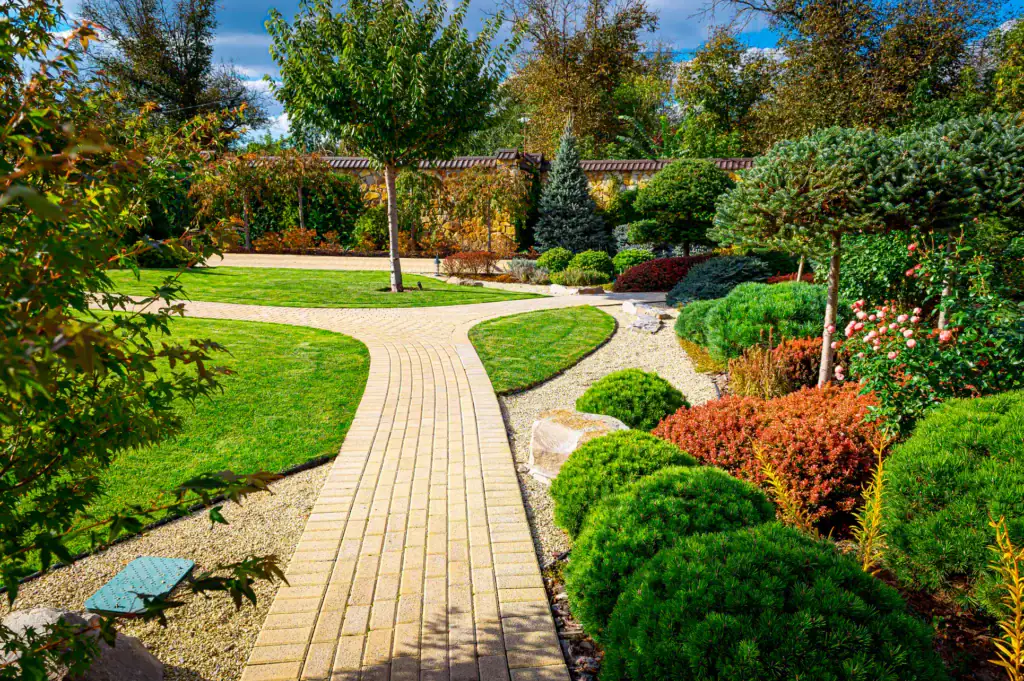
The starting point is knowing your property’s actual salt exposure. If you’re within roughly 660 feet of the oceanfront — which covers more Hamptons properties than most homeowners realize — your plant selection needs to be built around documented salt tolerance, full stop. That includes the Great South Bay shoreline, Peconic Bay-facing properties, and any lot near a tidal inlet. Salt doesn’t only come from the ocean directly in front of you.
From there, the evaluation should layer drought tolerance on top of salt tolerance. Sandy soil dries out fast, so a plant that needs consistent moisture is going to struggle regardless of its salt tolerance. The species that consistently perform in coastal Suffolk County share a few traits: they’re adapted to well-drained or even poor soils, they can handle periods of dry stress, and they’ve demonstrated resilience to salt spray in documented growing conditions — not just in theory.
For homeowners who want more than the native palette, there are ornamental options that meet these criteria. Certain ornamental grasses perform well in exposed coastal conditions. Some shrub roses beyond Rosa rugosa hold up in the spray zone. The key is vetting each species against the specific conditions of your property rather than applying a generic regional plant list. A Bridgehampton property with Plymouth loamy sand and direct Atlantic exposure has different requirements than a Southold property on the Long Island Sound side with slightly more wind protection and different soil composition. Those distinctions matter, and they’re the difference between a landscape that establishes and one that needs to be replaced.
One more thing worth saying plainly: drought-tolerant and salt-tolerant are not the same thing. Many drought-tolerant plants have no salt tolerance at all and will fail in the spray zone. That’s a distinction a lot of contractors — and homeowners — miss until after the plants are in the ground.
Drainage Solutions for High Water Table Properties in the Hamptons
Drainage is the part of coastal landscaping that gets skipped most often and causes the most expensive problems. The logic is usually: “The soil is sandy, it drains fine.” But sandy soil draining fast at the surface doesn’t mean the water table isn’t sitting high underneath it. In coastal areas of the South Fork — particularly near the ocean in Southampton and East Hampton — the water table can be close enough to the surface that a significant storm event brings it up into the root zone of plants that seemed perfectly well-drained in dry conditions.
The practical consequence is root rot, plant loss, and hardscaping that shifts and cracks as the ground saturates and drains repeatedly through a Long Island winter. Post-Hurricane Sandy, FEMA remapped flood zone designations for a significant number of Hamptons properties, and many homeowners discovered their lots had drainage exposure they hadn’t previously accounted for. That remapping also affects what landscaping and construction is permissible in certain coastal overlay zones — another detail that requires current local knowledge to navigate correctly.
Addressing drainage before planting isn’t optional on a coastal Suffolk County property — it’s foundational. French drains, engineered drainage systems, and proper grading need to happen first. Installing plants in a high water table area without drainage engineering means redoing the job after the first major storm. We approach drainage as part of the overall landscape system, not as a separate problem to deal with later.
The same principle applies to retaining walls. A wall installed without proper drainage engineering behind it is under constant hydrostatic pressure during wet periods. On Long Island, where nor’easters can dump significant rainfall over a short period, that pressure builds fast. The wall doesn’t fail because the masonry was poor — it fails because the water had nowhere to go. Getting drainage right the first time is almost always cheaper than fixing the consequences of skipping it.
Coastal Landscaping in Suffolk County Done Right the First Time
The through-line in everything above is this: coastal landscaping on Long Island requires specific knowledge, not just general landscaping experience. The soil associations, the salt spray radius, the water table behavior, the fertilizer restriction calendar, the wind patterns on the South Fork — these aren’t details you pick up from a general landscaping background. They come from working in this specific environment, through enough seasons to know what holds up and what doesn’t.
Getting it right the first time matters more here than in most markets. A failed planting in sandy salt-spray soil takes longer to re-establish. A drainage problem on a high water table property doesn’t fix itself. A retaining wall installed without proper drainage engineering will show the consequences within a few winters. The cost of redoing failed coastal landscaping almost always exceeds what it would have cost to do it correctly from the start.
If you’re dealing with a coastal property in Southampton, East Hampton, Bridgehampton, or anywhere along the East End, we’ve been working in this environment for over 20 years. We handle landscaping, drainage, irrigation, and masonry as one integrated system — because on a coastal property, those things aren’t separate problems. Give us a call at (631) 678-5629, Monday through Friday, 9am to 5pm. We’re based right here in Southampton, and we’re happy to talk through what your property actually needs.
Frequently Asked Questions
What makes Long Island’s coastal climate challenging for landscaping? Suffolk County’s coastal environment combines several factors that don’t exist in most inland markets: fast-draining sandy soil that leaches nutrients quickly, salt spray that can reach 660 feet inland from the oceanfront, sustained coastal winds along the South Fork, and a water table that sits close to the surface in many areas near the ocean and bays. Cornell Cooperative Extension of Suffolk County identifies ten distinct soil associations across the county, and the Hamptons corridor specifically sits on some of the sandiest, fastest-draining profiles on the island. Each of those factors affects plant selection, irrigation design, drainage planning, and hardscaping installation in ways that require local knowledge to navigate correctly.
Which plants thrive in sandy soil with salt exposure on Long Island? The species that consistently perform in coastal Suffolk County are the ones that evolved here or have documented tolerance for these specific conditions. Beach grass, seaside goldenrod, bayberry, beach plum, Rosa rugosa, and eastern red cedar are reliable performers in exposed coastal conditions. The important distinction is that drought tolerance and salt tolerance aren’t the same thing — many drought-tolerant plants have no salt tolerance and will fail in the spray zone. Any plant going into a coastal property should be vetted for both, against the actual conditions of that specific lot.
How do I improve drainage on my coastal Long Island property? Start before you plant. French drains, engineered drainage systems, and proper grading need to be in place before any planting or hardscaping goes in. On properties near the ocean in Southampton or East Hampton, where the water table can rise significantly after a major storm, drainage isn’t optional — it’s the foundation everything else depends on. Installing plants or retaining walls without addressing drainage first is the single most common reason coastal landscaping projects fail and need to be redone. We’ve worked through multiple nor’easter seasons on South Fork properties, and we can tell you that proper drainage engineering is the difference between a landscape that survives and one that doesn’t.
What landscaping techniques work best for windy coastal areas? The most effective approach we use is layered planting — establishing a windbreak of salt-tolerant, wind-hardy species along the windward edge before planting more sensitive species further in. Eastern red cedar, Rosa rugosa, bayberry, and beach plum are the workhorses for that first layer on Long Island’s East End. Once the windbreak is established, interior plantings have meaningful protection. For hardscaping in wind-exposed areas, proper base preparation and drainage engineering are critical — lateral wind pressure combined with saturated soil after a nor’easter puts real structural stress on walls and paved surfaces that weren’t built with those conditions in mind.