Summary:
If you own property in Southampton, East Hampton, or anywhere along the South Fork, you already know that fall doesn’t ease in gently out here. The winds pick up, the nor’easters start forming offshore, and before you know it, the window for meaningful fall prep has closed. What you do between late September and early November has a direct impact on what your landscape looks like next May — and how much it costs to get it there. This checklist covers what actually matters for coastal Suffolk County properties, in the order it matters, with the timing that makes a difference.
Essential Fall Landscaping Tasks for Long Island Coastal Properties
Most fall cleanup checklists were written for somewhere else. They don’t account for salt air off the Atlantic, the sandy loam soil that drains fast and holds little, or the fact that Suffolk County has a hard legal deadline on fertilizer applications. Out here, the stakes are different and so is the sequence.
The core tasks — lawn care, bed cleanup, tree inspection, irrigation winterization — are the same as anywhere. But the timing, the methods, and the things that can go wrong are specific to this stretch of Long Island. Getting them right in fall is what separates a landscape that thrives in spring from one that needs to be rebuilt.
Fall Lawn Care Timing on Long Island: What the Fertilizer Deadline Actually Means
Here’s something a lot of Hamptons homeowners don’t know until it’s too late: Suffolk County’s Clean Water Protection Law prohibits the application of nitrogen and phosphorus fertilizers between November 1 and April 1. That’s not a guideline — it’s a local law, and violations carry fines. It also means your fall fertilization window is shorter than you might think.
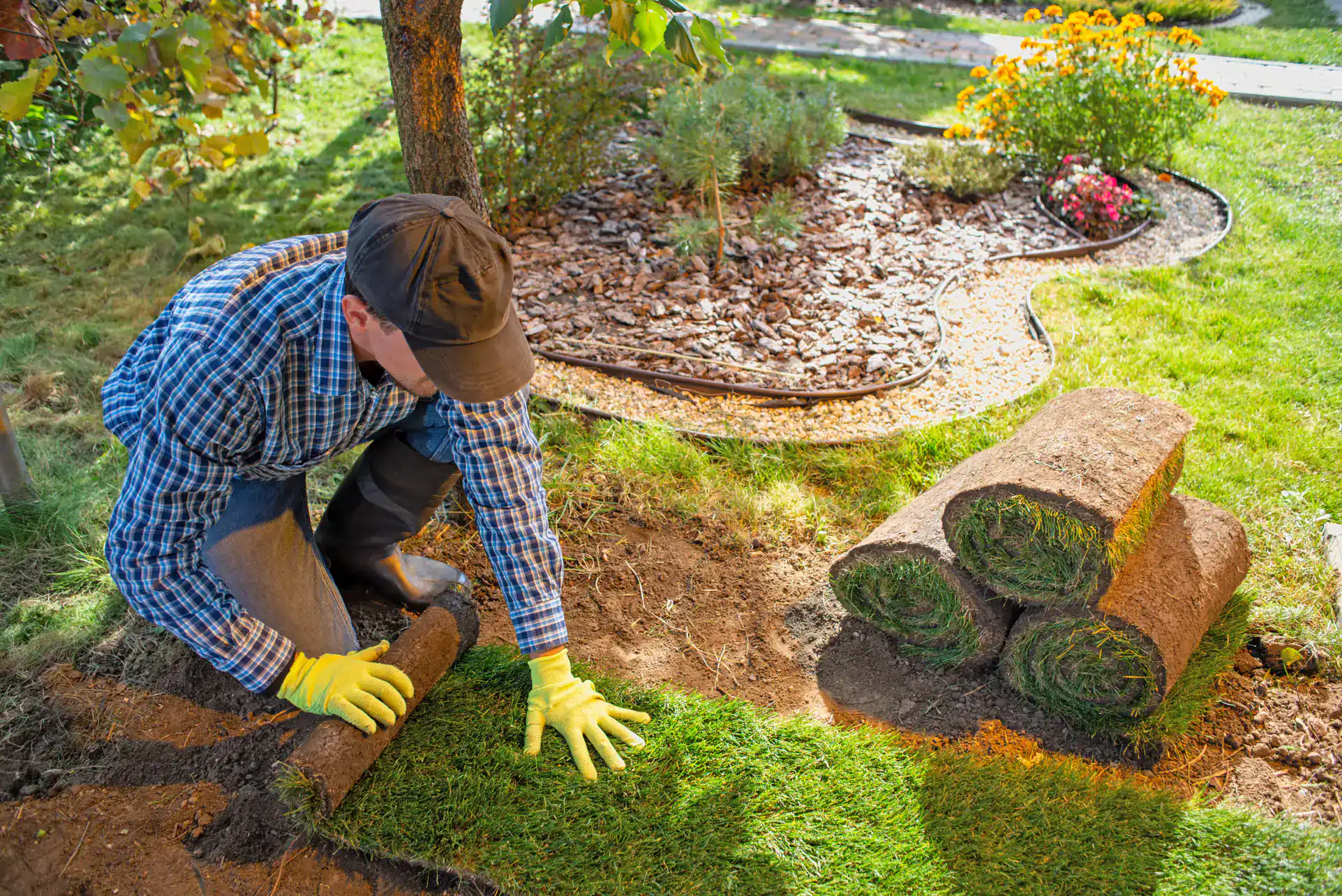
Grass on Long Island needs that fall feeding to build root strength before dormancy sets in. Miss the November 1 cutoff and your lawn goes into winter without it. The practical implication is that fertilization, overseeding, and core aeration all need to happen in September or early October — not the week before Halloween when most people start thinking about it.
Core aeration is worth doing every year on coastal properties. The sandy soil out here compacts differently than clay-heavy inland soil, but foot traffic, irrigation, and the weight of wet leaves still take a toll. Aeration opens the soil, lets fertilizer reach the root zone, and creates better conditions for overseeding to take hold. If you have thin patches from summer stress or salt exposure, fall is the window to address them while the soil is still warm enough for germination. Once soil temperatures drop below 55°F — which typically happens in November on Long Island — that window closes.
Leaf management matters more than most people give it credit for. A thick layer of wet leaves sitting on the lawn through November and December creates the exact conditions fungal disease needs to establish. It’s not just about aesthetics. Matted leaves block light, trap moisture, and can smother grass that would otherwise come back strong in spring. Complete removal — not just a pass with the blower — is the right call.
Garden Bed Cleanup and Plant Protection Before the First Freeze
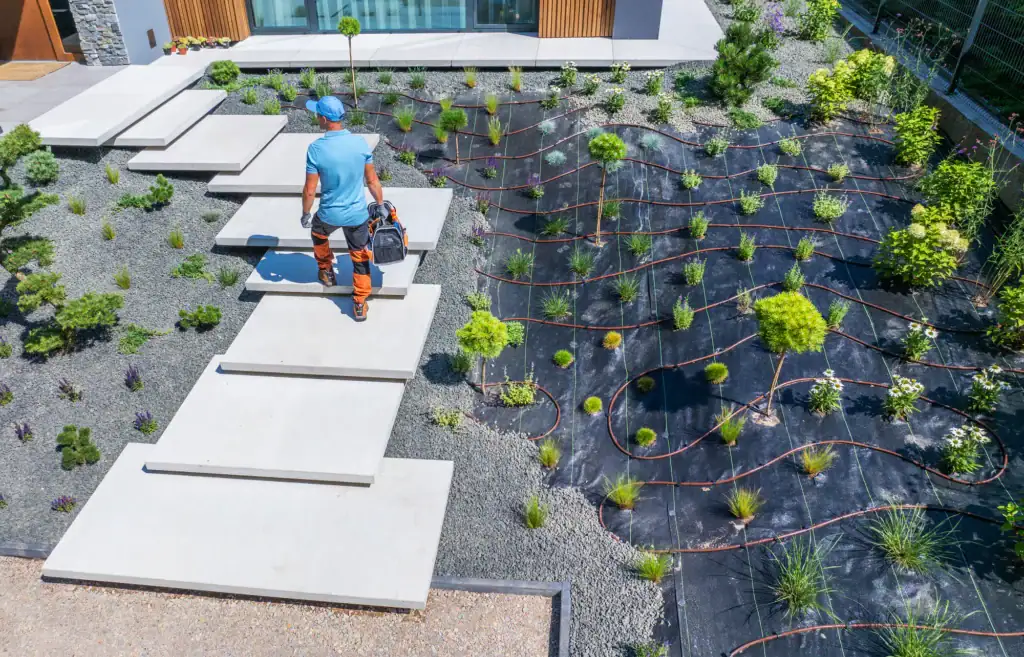
Bed cleanup in fall is more than pulling dead annuals. It’s also the right time to cut back perennials, remove any plant material that showed signs of disease over summer, and get mulch down before the ground hardens. Two to four inches of mulch around plant bases — kept away from the stems themselves — provides meaningful insulation against the freeze-thaw cycles Long Island winters are known for. It’s not a sustained deep freeze out here the way it is upstate. It’s repeated cycles of freezing and thawing that do the real damage to root systems and soil structure.
Fall is also the best time to divide overcrowded perennials. Every three to five years or so, most perennials benefit from being dug up, split, and replanted. Doing it in fall gives the divisions time to establish roots before dormancy, and you end up with healthier, fuller plants the following season. It’s the kind of task that’s easy to defer but pays off noticeably when you don’t.
One thing coastal properties need that most checklists skip entirely: anti-desiccant spray for broadleaf evergreens. Salt spray off the Atlantic intensifies when fall winds pick up, and it dehydrates plant tissue in a way that looks like winter kill but is actually happening before the ground even freezes. Anti-desiccant spray creates a protective coating on leaf surfaces that slows moisture loss. The catch is that it has to be applied within a specific temperature window — between 32°F and 50°F, with no rain expected for at least four hours. That’s not something you can just pick a random Saturday for. Timing it correctly makes the difference between effective protection and wasted product.
Shrubs in exposed locations — facing the ocean, along fence lines that catch prevailing winds — may also benefit from burlap wrapping. It’s not the most attractive look, but it’s far better than replacing a mature shrub in spring because it didn’t make it through February.
Winterizing Plants and Irrigation Systems on Long Island
Irrigation winterization is the fall task with the highest cost consequence if it’s skipped. Water left in the lines when temperatures drop below freezing expands, and that expansion cracks pipes and heads. On a Hamptons property with a full irrigation system, the repair bill for a winter that wasn’t properly prepared for can run well into the thousands.
The right way to winterize an irrigation system is to blow out all the water with a commercial-grade air compressor — one with enough CFM (cubic feet per minute) to actually clear the lines. Most homeowner compressors don’t meet that threshold, which is why this is one of the tasks that genuinely requires professional equipment. It’s also time-sensitive: you want it done before the first hard freeze, which on Long Island typically means completing it in October.
Fall Planting on Long Island: What to Put in the Ground Before Winter

Fall gets a reputation as the end of the planting season, but for certain plants, it’s actually the best time to go in the ground. Spring-flowering bulbs — tulips, daffodils, crocus — need to be planted in fall because they require cold stratification over winter to bloom. If they go in after the ground freezes, you’ve missed the window. In the Hamptons corridor, which sits in USDA Hardiness Zone 7a, you typically have until late November before the ground becomes unworkable, but earlier is better.
Trees and shrubs also transplant well in fall. Cooler air temperatures reduce the stress on the plant while the soil is still warm enough to encourage some root development before dormancy. A tree planted in October has a head start on one planted in May, even if it doesn’t look like it through the winter months. The root system is working even when the canopy isn’t.
For coastal Suffolk County properties specifically, fall planting decisions should account for salt tolerance. Not every plant that’s rated for Zone 7a will hold up against the salt spray exposure that comes with being close to the water. This is where local plant knowledge matters — understanding which species actually perform well in the specific conditions of a Bridgehampton or Amagansett property, not just what the tag says at the nursery.
Fall is also a good time to address any drainage issues before winter rain and snowmelt make them worse. Low spots that collected water over summer will only get more problematic in winter. If you’ve been meaning to address a drainage problem, doing it in fall — while the ground is still workable — is significantly easier than trying to fix it in March.
DIY vs. Professional Fall Cleanup: Where the Line Actually Is
Some fall cleanup tasks are genuinely manageable on your own — pulling spent annuals, raking leaves, cutting back perennials you know well. Others require equipment or expertise that makes the DIY route more expensive in the long run than just hiring it done correctly the first time.
Irrigation winterization is the clearest example. The equipment needed to do it properly isn’t something most homeowners own, and the cost of doing it wrong is high. Tree inspection is another — identifying which branches are structurally compromised and likely to fail under snow or ice load is not something you can assess from the ground with any confidence. A branch that looks fine in October can come down in a February nor’easter and take out a fence, a car, or worse.
For second-home owners who aren’t on the property from October through May, the calculus shifts even further toward professional preparation. If something goes wrong — a burst pipe, a plant that didn’t make it, a drainage issue that got worse over winter — you’re finding out about it in the spring, when the damage is already done and the options are more limited and more expensive. Having a licensed, experienced contractor go through the property systematically before you leave for the season is the closest thing to peace of mind that exists in this situation.
The licensing piece matters more than it might seem. Suffolk County requires home improvement contractors to be registered, and homeowners who hire unlicensed workers can be personally liable for on-site injuries. On a high-value Hamptons property, that’s a real exposure. A contractor who carries proper insurance and offers a written warranty — not a verbal assurance, but an actual one-year warranty on labor and materials — is worth paying for, because you have recourse if something isn’t right.
Getting Your Suffolk County Property Ready Before Winter Closes the Window
The fall prep window on Long Island is shorter than most people expect. Between the November 1 fertilizer cutoff, the soil temperature drop in early November, and nor’easter season getting underway in October, there’s a real case for starting in late September and working methodically through the list rather than trying to compress everything into a single weekend in late October.
The properties that come out of winter in the best shape are the ones where fall cleanup was treated as a system — lawn care, bed prep, irrigation winterization, plant protection, and tree inspection all handled in sequence, with the coastal conditions specific to this part of Suffolk County factored in at every step.
If you’d like to talk through what your property needs this fall, we’ve been working on Hamptons properties for over 20 years and we’re based right here in Southampton. Give us a call at (631) 678-5629 — we’re available Monday through Friday, 9:00am to 5:00pm.