Summary:
You noticed it after the last big rain — water pooling near the foundation, a soggy corner of the yard that never seems to dry out, or worse, water finding its way into your basement. Now you’re trying to figure out what to do about it, and you’ve landed on two options that keep coming up: a French drain system and a dry well. They sound similar. They’re not. Which one you need depends on where the water is coming from, where it needs to go, and — especially here in the Hamptons — what your soil is actually doing beneath the surface. This guide will walk you through both.
How a French Drain System Actually Works
A French drain is a subsurface system — it intercepts water moving through the ground before it reaches your foundation, your basement, or the low spots in your yard. It’s a trench, typically 18 to 24 inches deep, lined with filter fabric, filled with washed gravel, and fitted with a perforated pipe that collects groundwater and redirects it to a designated discharge point away from your home.
The key word is “redirects.” A French drain doesn’t absorb water — it moves it. That distinction matters more than most people realize, and it’s the core difference between a French drain and a dry well.

Where French Drains Work Best on Long Island's South Fork
The South Fork of Long Island sits between the Atlantic Ocean and Peconic Bay, and the soil underneath it tells that story. Much of the area is glacial outwash — sandy on the surface, which sounds like great news for drainage. But beneath that sandy layer, clay pockets and hardpan are common, particularly in lower-lying inland areas around Southampton and Bridgehampton. Water hits that clay layer and stops. It has nowhere to go, so it spreads sideways and eventually finds the path of least resistance — which is often your foundation wall.
A French drain works by intercepting that water before it reaches anything important. The trench is dug with a calculated downward slope — at minimum one inch of drop for every ten feet of length — so gravity does the work of moving water toward the discharge point. The perforated pipe sits holes-down in the gravel bed, the filter fabric keeps soil from migrating into the system, and water that would have pooled against your house instead drains away cleanly.
This is also why the 2023 flash floods hit parts of the South Fork so hard. East Hampton’s own infrastructure officials noted that the rainfall was something the region “hasn’t been used to seeing” — but that it’s been happening more frequently. Properties with properly installed drainage systems handled those storms. Properties without them didn’t. A French drain isn’t a luxury on the East End anymore; it’s a reasonable response to what the weather has been doing.
One thing worth knowing: a French drain is not the same as a surface drain or catch basin. A catch basin sits above ground and collects runoff from driveways and patios. A French drain works underground, capturing water that’s moving through the soil. Most well-designed drainage systems use both — they solve different parts of the same problem.
French Drain Basement Solutions: When the Problem Is Below Grade
When water is getting into your basement, the source matters more than anything else. If it’s coming through the foundation walls — seeping in under hydrostatic pressure from saturated soil pressing against the exterior — an exterior French drain installed around the perimeter of the foundation is often the right approach. It intercepts the groundwater before it ever reaches the wall.
If the water intrusion is more advanced or the exterior approach isn’t practical, an interior perimeter drain — sometimes called a French drain basement system — is installed along the inside of the foundation footing. It captures water that’s already entered and routes it to a sump pump, which then discharges it away from the home. Interior systems cost more, typically $40 to $100 per linear foot, and most basements need 100 to 150 linear feet of drain. That puts most interior projects in the $5,000 to $18,000 range depending on complexity.
For Hamptons homeowners, there’s an added layer of risk worth taking seriously: seasonal vacancy. A lot of properties on the East End sit unoccupied from October through May. A slow foundation leak that starts in November might not be discovered until June — by which point mold has had months to develop and structural damage may have followed. Water damage in a vacant seasonal home can run anywhere from $25,000 to well over $100,000 depending on how long it went undetected. Installing proper drainage before you close the house for the winter isn’t just smart maintenance. On the South Fork, it’s asset protection.
Foundation repair from unchecked hydrostatic pressure can exceed $30,000. A properly installed French drain system that prevents that damage costs a fraction of that — and lasts 30 to 40 years when it’s built right.
Yard Drainage Problems: When a Dry Well Makes More Sense
A dry well is an underground chamber — typically a perforated concrete or plastic barrel — buried in the ground to collect and slowly release water into the surrounding soil. Unlike a French drain, it doesn’t redirect water somewhere else. It holds it and lets the earth absorb it over time.
That works well when the soil around the dry well can absorb water fast enough to keep up. In areas with genuinely sandy, well-draining soil and a low water table, a dry well can handle localized runoff efficiently and at a lower upfront cost than a French drain. The problem is that “sandy soil” on the South Fork is not always what it appears to be.
Why "Sandy Soil" Doesn't Automatically Mean a Dry Well Will Work in the Hamptons
Here’s where a lot of homeowners get burned by generic advice. The common rule of thumb is: sandy soil absorbs water well, so use a dry well; clay soil doesn’t, so use a French drain. That’s not wrong, exactly — but it’s dangerously oversimplified for properties on the East End.
The South Fork’s soil profile is more complex than it looks from the surface. Sandy outwash sits on top in many areas, but clay layers and hardpan beneath it are common — especially in inland sections of Southampton and Bridgehampton where former agricultural land altered the soil structure over decades. A dry well installed in what looks like sandy soil can hit one of those clay layers and fill up faster than the soil can drain it. When that happens, instead of solving your drainage problem, you’ve created a buried tank that overflows every time it rains hard.
Water table depth is the other variable. Properties near the ocean, Peconic Bay, or any of the ponds and wetlands scattered across the East End often have water tables that sit close to the surface. A dry well that’s installed too close to the water table has nowhere to send the water — it fills and stays full.
The only reliable way to know whether a dry well will work on your specific property is a percolation test. A perc test measures how quickly water moves through your soil at the depth where the dry well will sit. If the rate is adequate, a dry well is a legitimate option. If it’s not, a French drain — or a combination of both systems — is the right answer.
That combination approach is worth mentioning. In some cases, a French drain collects and moves water to a dry well, which then handles the final dispersal into the soil. When the soil conditions support it, this can be an efficient and cost-effective design. It’s not a universal solution, but it’s a real one — and it’s the kind of thing that only comes up when someone actually evaluates your property rather than giving you a one-size answer over the phone.
Landscape Drainage in the Hamptons: What to Know Before You Install Anything
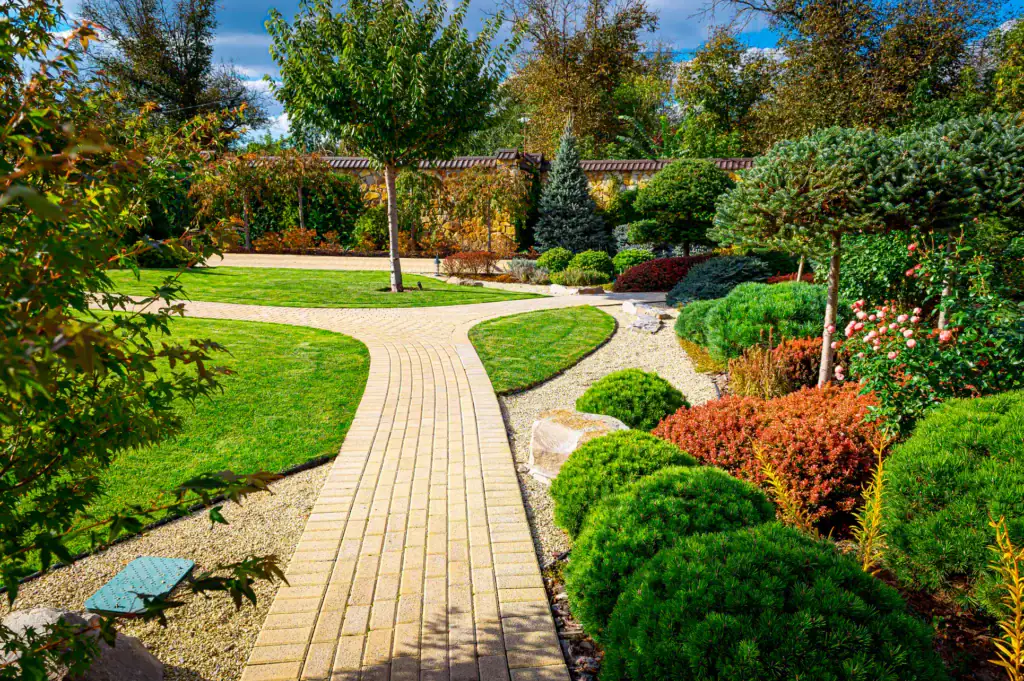
Drainage and landscaping are more connected than most people think. The way your yard is graded — the subtle slope of the ground — determines where water flows naturally. If that grading is working against you, no drainage system will fully compensate for it. A yard that slopes toward the house instead of away from it will keep pushing water toward your foundation regardless of what’s buried underneath.
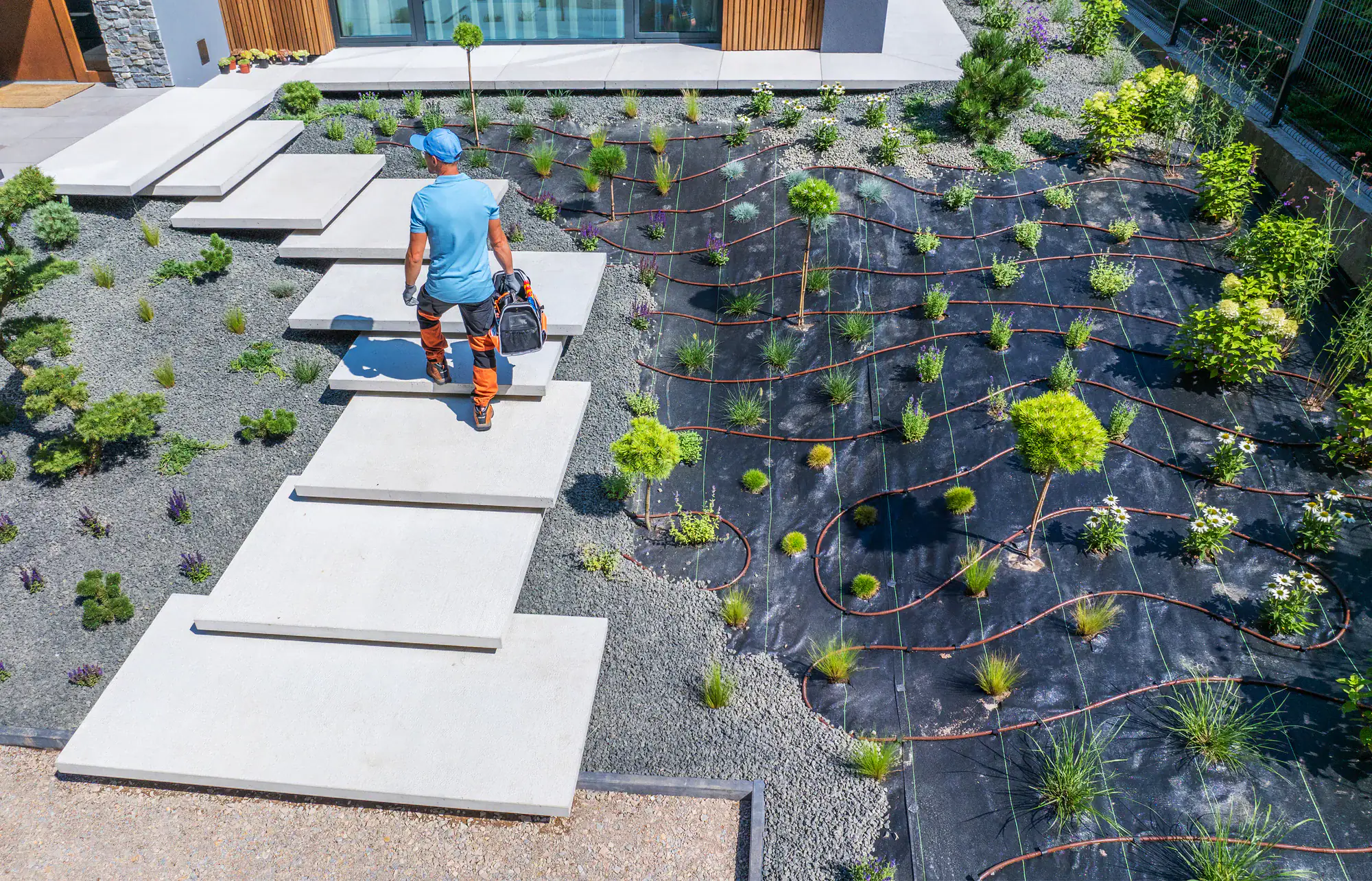
Good landscape drainage design starts with understanding the natural movement of water across your property. Where does it enter? Where does it pool? Where does it need to go? A French drain that doesn’t have a proper discharge point — a storm drain, a lower area of the property, or a daylight outlet — just moves the problem somewhere else. In some cases, that “somewhere else” is your neighbor’s yard, which creates a different kind of problem entirely.
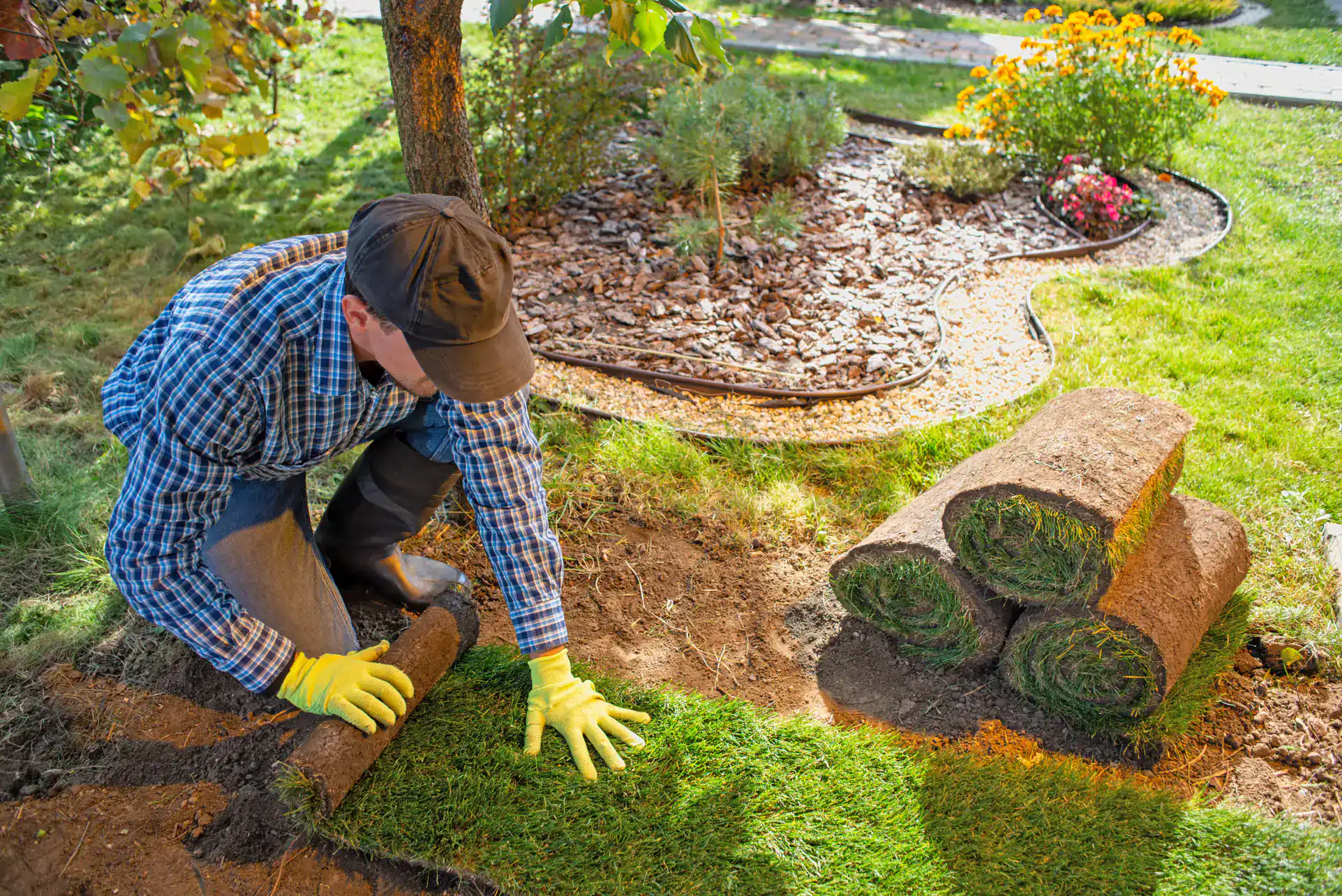
There’s also the question of what happens to your landscaping during installation. A French drain trench is typically 18 to 24 inches deep and runs however many feet the system requires. That’s real excavation. A contractor who’s focused on doing the job right will dig precise trenches, protect the surrounding plantings, and restore the property after the system is in. A contractor who’s juggling three other jobs that week will not.
We take on one project at a time. That’s not a slogan — it’s how we make sure the slope is calculated correctly, the filter fabric is installed, the discharge point is planned, and your yard looks like itself again when we leave. Properties without filter fabric in their French drain systems typically see clogging within two to five years. Properties with it can go decades between cleanings. That difference comes down entirely to whether the person installing your system was paying attention.
For properties in FEMA-designated flood zones — and both East Hampton and Southampton have them — drainage installations may also need to comply with local flood damage prevention ordinances. Most drainage projects in Suffolk County require permits regardless. The process takes two to three weeks and typically costs $50 to $200 depending on the scope. We handle all of that coordination as part of the project, so you don’t have to figure out what Suffolk County requires or chase down an inspector on your own.
Which Drainage Solution Is Right for Your Hamptons Property?
The honest answer is that it depends — on your soil, your water table, where the water is coming from, and what your property is actually doing during a heavy rain. A French drain system is the right call when water needs to be intercepted and redirected. A dry well works when your soil can absorb it fast enough. Often, the best solution combines both.
What doesn’t work is guessing. Generic advice built for average conditions doesn’t account for the clay layers under Bridgehampton’s former farmland, the high water tables near the bay in Southampton, or the coastal debris that clogs undersized systems faster than anyone expects.
If you’re dealing with standing water, basement seepage, or a yard that stays soggy long after the rain stops, the first step is a real site assessment — not a quote based on a phone call. We’ve been working on properties across Southampton, East Hampton, and Bridgehampton for over 20 years. We know this soil. We know what works here. Reach out and let’s take a look at what’s actually going on with your property.