Summary:
If you own property in the Hamptons or anywhere along Suffolk County’s East End, you already know your lawn doesn’t behave like a typical suburban yard. The salt air coming off the Atlantic, the sandy soil that drains faster than it holds, the deer that treat your grass like a buffet — it adds up. And if you’ve hired a lawn care company before and been disappointed, you’re not alone. Most of them aren’t set up for what coastal properties actually need. This guide covers what real lawn maintenance looks like out here, what separates a contractor worth hiring from one that’ll leave you with more problems than you started with, and what you should expect from the whole process.
What Lawn Maintenance Actually Includes for Suffolk County Properties
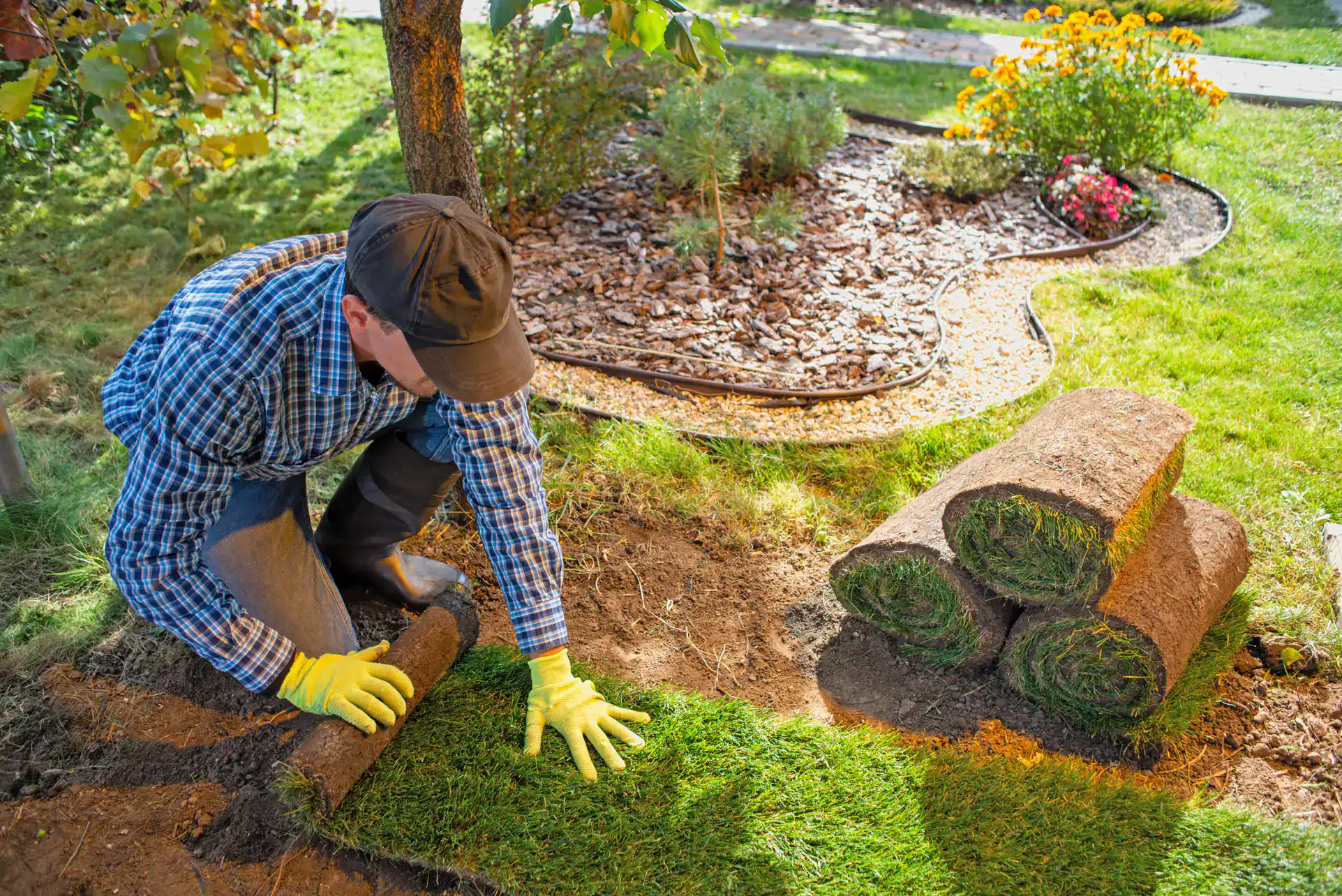
A lot of homeowners assume lawn maintenance means someone shows up, mows, and leaves. That’s the visible part. But the health of your lawn — especially on a coastal property — depends almost entirely on what’s happening below the surface and between visits.
A real maintenance program covers fertilization timed to the season, aeration to break up compacted or sandy soil, overseeding bare patches before they spread, weed control that doesn’t burn out the grass alongside the weeds, and irrigation management calibrated for how fast water moves through East End soil. Mowing is part of it, but it’s the least complicated part.
The seasonal calendar matters too. Spring is for light fertilization and recovery. Summer is about stress management — higher mowing height, early morning watering, no aggressive treatments during heat. Fall is the most important window for fertilizing cool-season grasses and preparing roots for winter. Skip the fall application and you’ll see it in April.
Best Lawn Care Practices for Coastal Grass Near the Ocean and Bay
Salt spray is the variable most lawn care companies from outside this area underestimate. Ocean winds carry salt deposits onto grass blades, drawing moisture out and causing the browning and dieback you see on exposed coastal properties in Amagansett, Montauk, and along the oceanfront in East Hampton. It’s not drought stress. It’s not disease. It’s salt — and treating it like something else is how you end up reseeding the same patches every spring.
Managing it correctly means a few things working together. First, irrigation timing matters more here than almost anywhere else. Watering early in the morning — between 6 and 10 AM — rinses salt deposits off the blades while minimizing the humidity that invites fungal disease overnight. Evening watering on a coastal property is a reliable way to end up with dollar spot or brown patch by midsummer.
Second, grass variety selection is not interchangeable. Tall fescue handles the sandy, fast-draining soils of the East End well and holds up under coastal wind stress better than Kentucky bluegrass, which needs more water and more careful management to look good in this environment. Fine fescue blends work well in shadier spots and lower-maintenance areas. Getting the variety right from the start — whether you’re overseeding or starting fresh — saves a significant amount of remediation work later.
Third, fertilization on sandy soil requires a different approach than inland properties. Nutrients leach through sand faster than through clay-based soils, which means a single heavy annual application doesn’t hold the way it would in a typical suburban yard. Lighter, more frequent applications — using slow-release formulas — keep the lawn fed without burning it or sending excess nutrients toward the bays and waterways that Suffolk County actively works to protect through its Healthy Lawns, Clean Water program.
None of this is especially complicated once you understand the environment. But it does require someone who actually knows the environment — not someone applying a generic program and hoping for the best.
Quality Lawn Care Means Getting the Schedule Right, Not Just the Service
One of the most consistent complaints from Hamptons homeowners — especially those managing second properties from the city — is showing up for a summer weekend and finding the lawn in worse shape than when they left. The contractor was supposed to come. They may have come once. But somewhere between their other jobs and their own scheduling pressure, the property slipped.
This is an industry-wide problem. Most lawn care companies take on more clients than they can realistically serve well. When something has to give, it’s usually the properties where the owner isn’t around to notice. That calculus changes when you have a contractor who works one job at a time — not juggling ten properties simultaneously, not rushing through yours to get to the next one.
Timing also matters in a way that’s specific to the Hamptons market. Many properties here sit quiet from October through April and need to be at peak condition by Memorial Day. That’s a hard deadline, not a soft preference. A fall fertilization that gets skipped, an irrigation system that wasn’t properly winterized, a spring cleanup that starts two weeks late — any one of those can mean your lawn looks rough precisely when it matters most.
The other scheduling issue that comes up repeatedly is communication. When we’re going to be late, or conditions push back a visit, or something comes up — you should know. Not after the fact, not when you ask. Reliable lawn care means you’re not left guessing what happened to your property while you were away.
We work out of Southampton, NY, and we serve the communities across Suffolk County — Southampton, East Hampton, Bridgehampton, Amagansett, Southold, and the North Fork. We know what these properties need and when they need it, because we’ve been maintaining them for close to 20 years. That kind of familiarity isn’t something you build in a season.
Local Lawn Care: What to Look for in a Suffolk County Contractor
The Hamptons has no shortage of people willing to mow your lawn. The harder thing to find is someone who will do it right, show up consistently, and still be around next spring when you need them again.
Licensing is the starting point, not a bonus feature. In New York State, home improvement contractors are required to be licensed, and anyone applying pesticides commercially — including many common lawn fertilizers — must hold a valid New York State DEC Pesticide Applicator Certification. A lot of operators in this market don’t. That’s a problem for the homeowner, not just the contractor, because an unlicensed worker injured on your property can create liability that falls on you.
Beyond the paperwork, the real question is whether they understand what your specific property needs — not just what lawns generally need.
How to Tell If a Lawn Care Company Actually Knows Long Island's East End

There’s a quick way to gauge whether a lawn care contractor actually understands coastal Suffolk County properties or is just saying they do: ask them about your soil.
Long Island’s South Shore and East End soils are predominantly sandy. That’s not a minor detail — it changes how water moves, how nutrients behave, how often and how deeply you need to irrigate, and which grass varieties are worth planting in the first place. A contractor who gives you a generic answer about fertilization without asking where your property sits, what’s growing there now, and how close you are to the water is working from a template that wasn’t built for your lawn.
Local knowledge also means understanding the regulatory environment. Suffolk County has active guidelines around pesticide and fertilizer use near water bodies — the bays, inlets, and ocean that define the East End. These aren’t obscure rules. They exist because runoff from lawn treatments reaches local waterways, and the county takes that seriously. Cornell Cooperative Extension of Suffolk County is the regional authority on this, and a contractor who references local guidance rather than national product labels is a contractor who’s paying attention.
It also means knowing the deer situation. The East End has a significant deer population, and newly seeded areas or fresh plantings are vulnerable. A contractor who doesn’t factor that into their recommendations — whether through plant selection, protective measures, or timing — is going to leave you frustrated when your overseeding gets browsed before it establishes.
The point isn’t to quiz every contractor you talk to. It’s to pay attention to whether they’re asking you questions or just quoting you a price. The ones who ask more tend to know more.
Why a Warranty on Lawn Maintenance Work Matters More Than You Think
Most lawn care companies offer no warranty on their work. If the sod they installed dies, if the fertilization burned your lawn, if the irrigation setup they adjusted is overwatering one zone and starving another — that’s typically your problem to sort out and pay to fix.
We back everything we do with a one-year warranty on all labor and materials. That’s not common in this industry. We include it because it reflects how we approach the work — if something doesn’t hold up the way it should, we come back and make it right. That walkthrough at the end of a project where we go over everything with you and explain the maintenance requirements isn’t just courtesy. It’s when the warranty activates.
For a Hamptons property owner, this matters in a concrete way. You may not be on-site to catch a problem early. You might not notice that the sod in a shaded corner didn’t take until you’re back for a summer weekend. A warranty means that discovery doesn’t turn into an unexpected bill. It means the contractor who did the work is still accountable for it — not just until they drive away.
There’s also a broader point here. A company that offers a warranty is a company that expects their work to hold. It changes the incentive structure. When you stand behind what you do for a full year, you don’t cut corners on the installation, the product quality, or the process. You do it right the first time because you’ll be the one coming back if you don’t.
We’ve been working on properties across Southampton, East Hampton, Bridgehampton, and the surrounding communities long enough to know that a reputation in this market is built slowly and lost fast. The warranty isn’t a marketing line. It’s how we work.
Lawn Maintenance on Long Island's Coast: What It Takes to Get It Right
Coastal lawn care isn’t complicated, but it does require someone who takes it seriously. Salt exposure, sandy soil, seasonal timing, local regulations, deer pressure — these aren’t obstacles that show up on a generic maintenance checklist. They’re the actual conditions your lawn is dealing with, and they require someone who knows them firsthand.
What you’re really looking for in a contractor is pretty simple: show up when you say you will, understand the property, do the work properly, and stand behind it. That’s a low bar in theory. In practice, it’s rarer than it should be.
If you’re looking for lawn maintenance in Suffolk County, NY from a licensed, local contractor who has been working on East End properties for nearly 20 years, we’re based in Southampton and available Monday through Friday. Call (631) 678-5629 to talk through what your property needs.