Summary:
You’ve tried the products. Maybe you’ve hired someone. The lawn looks fine for a few weeks, then the weeds are back — same spots, same story. It’s easy to blame the service or the seed, but most of the time, neither one is the real problem.
South Fork soil is. The sandy, fast-draining soil across Southampton, East Hampton, and Bridgehampton behaves completely differently than the soil most lawn care programs are built around. Until that’s understood and accounted for, no weed control plan is going to hold. Here’s what’s actually going on — and what it takes to get a lawn that stays clean.
Spring Lawn Care on the South Fork Starts With Soil, Not a Calendar
Most lawn care programs treat spring as a fixed event. Apply pre-emergent in early April, fertilize, move on. On the South Fork, that approach is a coin flip — and it loses more often than it wins.
Pre-emergent herbicide only works if it’s in the ground before weed seeds germinate. That window opens when soil temperature hits 55°F, not on a specific date. In a warm spring, that threshold can arrive in mid-March. In a cold one, it might not come until late April. Miss it by a week and crabgrass has already started. No amount of post-emergent treatment will give you the same result as getting ahead of it.
Why South Fork Sandy Soil Makes Timing Even More Critical
Here’s what makes this harder on South Fork than almost anywhere else on Long Island. The soil across the south shore — the glacially deposited sandy outwash that runs from Southampton out to Montauk — drains at rates that can exceed four inches per hour. That’s classified as excessive drainage. It’s the same geological process that gave the Hamptons its beaches, and it creates a lawn care challenge that most national programs and generic schedules simply aren’t built for.
When soil drains that fast, fertilizer flushes through before grass roots can absorb it. Herbicide treatments don’t hold the way they do in denser soil. And the turfgrass itself gets drought-stressed far faster than it would in a loam or clay-based soil — which is exactly the condition weeds are waiting for. Thin, stressed turf is an open invitation.
The organic matter problem compounds this. Cornell Cooperative Extension has been direct about it: most Long Island soils need additional organic matter. Sandy South Fork soil has very little of it. Low organic matter means low nutrient retention, poor water-holding capacity, and reduced soil microbial activity — the biological engine that supports healthy turf. Without addressing that baseline, you’re applying treatments to soil that can’t support the results you’re after.
This is why properties near Mecox Bay, Georgica Pond, and the ocean-facing lots along Dune Road can behave so differently from one another even within a few miles. Proximity to the water table, salt accumulation from coastal winds, and variations in soil depth all change what a lawn needs. A program calibrated for average conditions will underperform on all of them.
What this means practically: spring lawn care on a South Fork property requires someone who’s actually monitoring soil temperature on your land — not applying treatments on a fixed schedule designed for a different region. The timing window is real, it’s narrow, and it moves.
Turf Lawn Care on Sandy Soil — What Grass Actually Survives Here
Grass species selection is one of the most overlooked factors in South Fork lawn care, and it’s responsible for more failures than most homeowners realize. Kentucky bluegrass is widely marketed as a premium option. It’s also poorly suited to South Fork’s sandy, slightly acidic soil. It struggles with drought stress, doesn’t tolerate the salt exposure that comes with coastal properties, and thins out quickly under the kind of summer heat and drainage conditions that are completely normal here.
Tall fescue and fine fescue blends are a much better fit. They have deeper root systems that reach further into the soil profile, better drought tolerance, and they hold up under the kind of inconsistent moisture that fast-draining sandy soil creates. Fine fescues in particular perform well in the lower-fertility conditions that are common on South Fork properties before soil amendment work has been done.
This matters for weed control because turf density is the most effective long-term weed prevention tool available. A dense, healthy stand of the right grass shades the soil surface and physically blocks weed seeds from germinating. When you plant the wrong species in the wrong soil, the turf thins out — and every thin patch becomes a weed opportunity. No herbicide program can compensate for grass that was never going to thrive in this soil to begin with.
There’s also the deer pressure reality that anyone who has managed a South Fork property knows well. White-tailed deer densities on the South Fork are among the highest in New York State. Newly seeded areas and recently overseeded patches are particularly vulnerable. A turf lawn care plan that doesn’t account for deer browse — whether through timing, deterrence, or species selection that reduces browse appeal — will lose ground faster than the weeds can be controlled.
Getting the grass right from the start isn’t a luxury. It’s the foundation that everything else depends on.
New Lawn Installation in the Hamptons: Why Most Don't Last Two Seasons
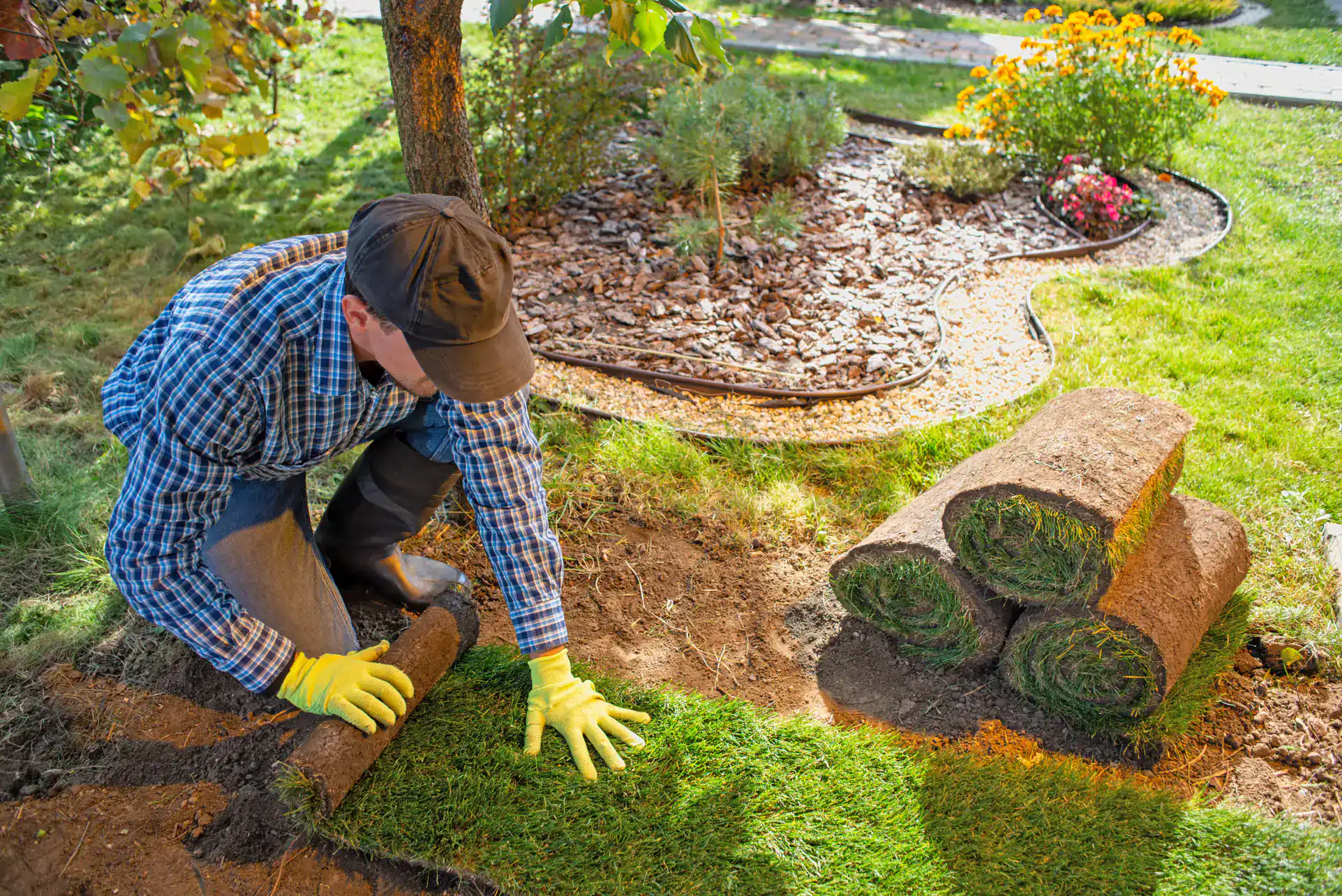
New sod feels like a reset. You’re starting fresh, the lawn looks immaculate, and the weed problem seems solved. Then the following summer arrives, and so do the weeds — sometimes worse than before.
The reason is almost always the same: the soil underneath the sod wasn’t properly prepared. New sod installed over sandy, low-organic-matter South Fork soil is sitting on a foundation that can’t support it long-term. The sod itself may be healthy when it arrives, but once it roots into that soil, it’s subject to the same drainage, nutrient, and moisture problems that caused the original lawn to struggle.
What Proper New Lawn Installation Actually Involves on South Fork Properties

A new lawn installation done correctly on a South Fork property starts well before the first roll of sod or the first handful of seed. It starts with understanding what the soil is actually doing — its drainage rate, its pH, its organic matter content, and how water moves across and through the property.
Organic matter amendment is almost always necessary. Incorporating compost into the top several inches of sandy soil before installation improves nutrient retention, slows drainage to a rate that grass roots can actually use, and builds the microbial environment that supports long-term turf health. Skipping this step because it adds time and cost is the single most common reason new Hamptons lawn installations fail within two growing seasons.
Drainage planning is the other piece that gets overlooked. South Fork properties vary dramatically in how water moves through them. Low-lying areas near bays and wetlands can hold water and create conditions for root rot and nutsedge pressure. Higher, more exposed properties drain so fast that newly established turf can’t survive a dry week without irrigation. Neither situation responds well to a one-size approach, and both require a drainage assessment before installation begins.
Irrigation matters too — and not just whether you have a system, but whether it’s calibrated for sandy soil. A standard irrigation schedule designed for loam soil will chronically underwater a South Fork lawn because the water moves through the profile so much faster. An irrigation system that isn’t adjusted for local drainage rates will leave you with drought-stressed turf in the middle of summer while the system runs on schedule and you assume it’s covered.
The properties around Bridgehampton and the inland areas of Southampton tend to have slightly more forgiving soil than the oceanfront lots, but the same principles apply across the South Fork. Proper installation means addressing the soil before anything goes in the ground — not after the weeds show up two summers later.
Lawn Care Weed Control FAQs for South Fork and Hamptons Homeowners
A few questions come up consistently from homeowners across Southampton, East Hampton, and Bridgehampton. These are worth answering directly.
Why do weeds come back every year even after treatment? Because treatment addresses the plants, not the conditions that allowed them to grow. Weeds are indicators — they show up where turf is stressed, thin, or growing in soil that can’t support dense grass. On South Fork, that usually means low organic matter, fast drainage, or a pH that’s drifted out of the range turfgrass prefers. Until those underlying conditions change, weeds will return every season regardless of what product was applied.
When is the right time to apply pre-emergent weed control on Long Island? The honest answer is: it depends on the year and the property. The trigger is soil temperature reaching 55°F, which varies by several weeks depending on spring conditions. Properties with more sun exposure and shallower soil warm faster. A fixed calendar date is a rough guess. We monitor actual soil temperature on your property — that’s the only reliable way to hit the window and get results that last.
Is it safe to use standard weed control products near coastal areas and wetlands? This is an important question for South Fork properties, particularly those near Mecox Bay, Georgica Pond, or any of the tidal wetland areas throughout East Hampton and Southampton. New York State has restricted or banned certain herbicides, including glyphosate, in specific applications. Suffolk County and many Hamptons municipalities have additional local pesticide regulations on top of state requirements. In New York, commercial application of herbicides on someone else’s property requires a DEC pesticide applicator license — unlicensed operators applying weed control products are not compliant with state law, and if something goes wrong, the homeowner can be exposed to liability. We carry the proper licensing and maintain compliance with all local and state regulations, which protects both your property and your liability exposure.
Can I fix my weed problem without redoing the whole lawn? Sometimes, yes. If the turf is thin but the soil has been properly amended and the drainage is functional, a targeted program of aeration, overseeding, and pre-emergent application in the right sequence can recover a struggling lawn without full reinstallation. But if the soil hasn’t been addressed — if it’s still sandy, low in organic matter, and draining too fast — the overseeding won’t hold and the weeds will return. An honest assessment of the soil is the only way to know which situation you’re in.
How to Find a Lawn Care Company That Actually Understands South Fork
The Hamptons contractor market has no shortage of people who will take your money in April and be unreachable by July. What it has a shortage of is contractors who understand why South Fork soil behaves the way it does — and build their work around that reality from the start.
We’ve spent years working in Southampton, East Hampton, and Bridgehampton, and that experience teaches you things that no national program or generic lawn care schedule can replicate. You learn which grass species hold up and which ones don’t. You learn how fast the soil drains after a storm, what the pre-emergent window actually looks like in a cold spring versus a warm one, and why a drainage problem on one end of a property can show up as a weed problem on the other.
If your lawn keeps failing despite treatments, the answer isn’t more product. It’s a better understanding of what the soil is doing. We work across Southampton, East Hampton, and Bridgehampton — and if you’re ready to stop guessing and get a real plan, we’re worth a call.