Summary:
You noticed the problem after a heavy rain — water sitting in your yard for days, or maybe seeping somewhere it shouldn’t. You searched around, found some national cost guides, and now you’re looking at a range so wide it’s basically useless. Five hundred dollars to eighteen thousand? That doesn’t help you plan anything.
Here’s the thing: drainage projects in the Hamptons don’t follow national averages. The soil is different. The water table near the bays is different. The permit requirements in Southampton and East Hampton are specific. And the standards for how work gets done on properties out here are higher than most of those guides account for.
This is a straightforward breakdown of what French drain and yard drainage installations actually cost on the South Fork — and what’s behind those numbers.
What Yard Drainage Work Costs in the Hamptons
On Long Island, French drain installation runs between $30 and $47 per linear foot as a baseline. For a standard 60-foot yard drain, that puts you somewhere between $1,800 and $2,800 just for the installation itself. But on the South Fork, several factors push projects above that range — and understanding why helps you evaluate any quote you receive.
Labor is the biggest cost driver, typically making up 80 to 85 percent of the total. Materials — perforated pipe, gravel, and drainage fabric — make up the rest. The type of system matters too. A shallow yard drainage system runs $30 to $50 per linear foot. A deeper foundation or perimeter drain starts at $50 and goes up from there. For most Hamptons properties needing a full yard drainage system, a realistic budget starts around $3,000 to $5,000 and can reach $10,000 or more for comprehensive perimeter work.
Why Hamptons Drainage Projects Cost More Than the Long Island Average
The South Fork has a specific set of conditions that most cost guides don’t factor in, and they matter more than people expect.
Start with the soil. The South Fork sits on a glacial outwash plain — predominantly sandy, which sounds like it should drain easily. And in normal conditions, it does. The problem is that the water table in many parts of Southampton, East Hampton, and Bridgehampton is shallow, particularly near the bays. Mecox Bay, Georgica Pond, Shinnecock Bay — properties in those areas sit above water tables that rise quickly during heavy rain. When the ground is already saturated, sandy soil stops draining fast. In some areas, there are also clay lenses beneath the sandy topsoil that trap water above them, creating what’s called a perched water table. A drainage system that doesn’t account for that layer won’t solve the problem.
Then there’s the coastal environment itself. Salt air accelerates corrosion and degrades certain pipe materials faster than you’d see inland. Drainage components on Hamptons properties need to be selected for coastal conditions — which costs more upfront and saves you from replacing the system in five years.
Permit requirements add time and cost that many homeowners don’t anticipate. The Town of Southampton requires that drainage plans account for a three-inch rainstorm retention volume — two inches minimum within leaching structures and one inch in ponding. Projects that connect to municipal storm drains or significantly alter grading require permits. That process typically takes two to three weeks and costs between $50 and $200 depending on scope. We handle all of that as part of the project, but it’s a real variable in your timeline.
Finally, there’s the access and aesthetic reality of working on luxury properties. Drainage systems on Hamptons properties need to be invisible — no exposed hardware, no disruption to mature landscaping, no visible discharge pipes running across a manicured lawn. That level of finish takes more time and care, and it’s reflected in the cost.
What Makes a French Drain Fail — and Why It Matters Before You Hire Anyone
A French drain that fails within two or three years isn’t a drainage system — it’s a buried pipe that cost you several thousand dollars and didn’t solve anything. Unfortunately, it’s not uncommon, and the failures almost always come down to a handful of installation mistakes.
The most common one is skipping the geotextile filter fabric. This is the material that wraps the gravel and pipe and prevents soil from migrating into the system over time. Without it, fine sand particles — exactly what you have on the South Fork — work their way into the gravel and clog the drain. It doesn’t happen overnight, but within a few years the system stops functioning the way it should.
Improper slope is the second most common failure. A French drain works by gravity. The trench has to maintain a consistent downward slope from start to finish so water moves toward the outlet. If any section is flat or back-pitched, water pools inside the pipe and the system backs up. This requires careful planning across the full length of the trench, especially on properties with uneven grade.
Outlet planning is the third issue. The drain has to discharge somewhere — a dry well, a catch basin, a storm drain connection, or daylight at a lower elevation. If the outlet isn’t properly planned, you end up redirecting water from one part of the yard to another. We’ve seen systems installed by other contractors that ended in the middle of a property, creating a new wet spot where there wasn’t one before.
A properly installed French drain with cleanouts can last 15 to 25 years. The difference between that and a system that fails in two years isn’t the materials — it’s the installation.
Yard Grading and Landscape Drainage: When a French Drain Isn't the Whole Answer
Not every drainage problem requires a French drain. Sometimes the issue is simpler — the yard slopes toward the house instead of away from it, or a patio or driveway is directing runoff somewhere it shouldn’t go. In those cases, regrading the yard and correcting the slope can solve the problem without installing a drain at all.
Yard grading is often the first step in a drainage evaluation, and it’s sometimes the only step needed. When grading and drainage work are done together, the result is a more complete solution — water is directed away from the foundation at the surface level, and any remaining subsurface water is handled by the drain. The two work together.
How Yard Grading Affects Drainage on South Fork Properties
Proper yard grading means the ground slopes away from your home’s foundation at a rate of about six inches over the first ten feet. That’s enough to redirect surface water before it has a chance to pool or seep. On many Hamptons properties — particularly older homes and those on low-lying lots near the water — the grade has shifted over time, or was never set correctly to begin with.
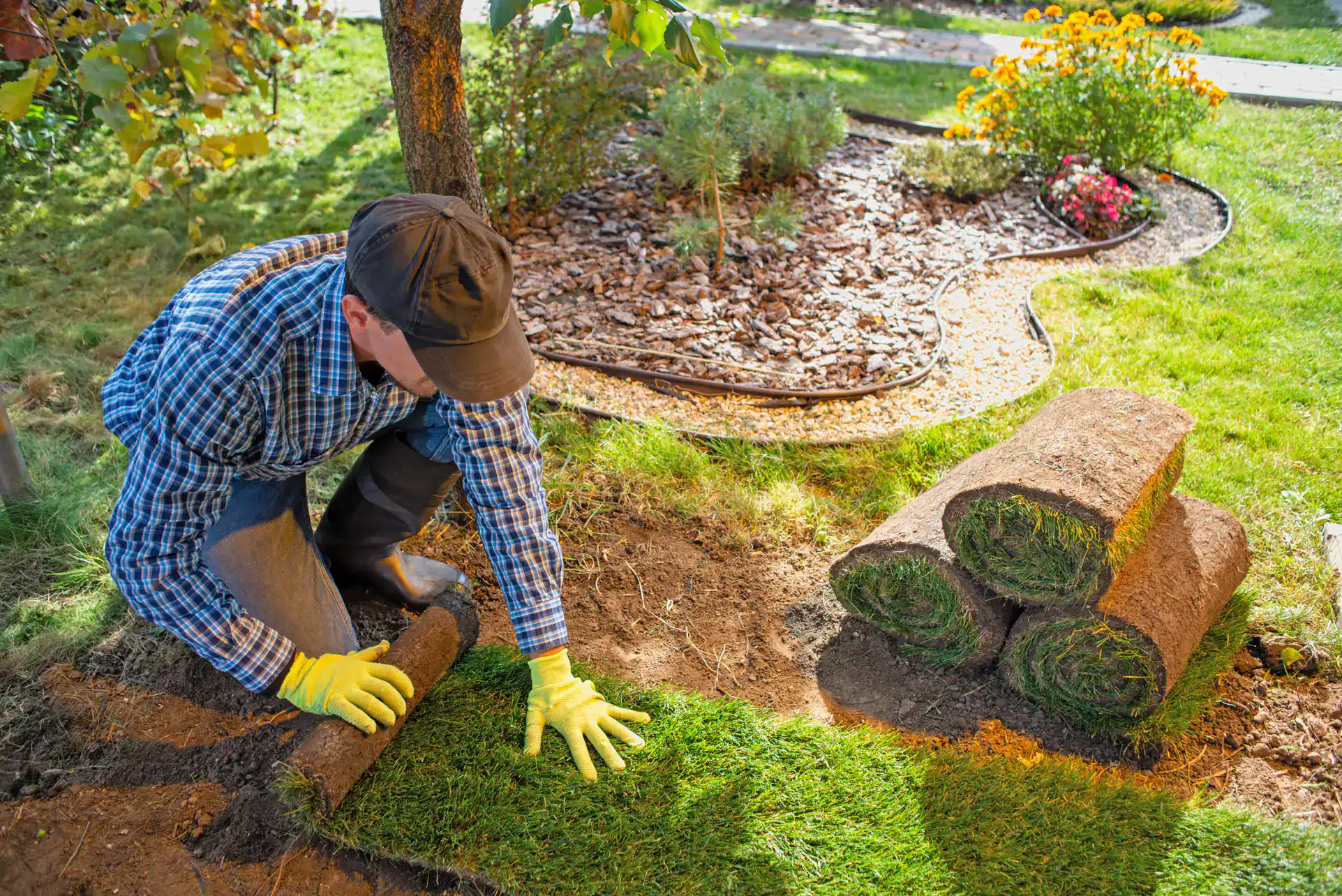
When we evaluate a drainage problem, grading is one of the first things we look at. If the slope is working against you, no amount of underground pipe is going to fully compensate for it. Regrading a yard in Southampton or East Hampton typically involves bringing in fill, reshaping the surface, and reseeding or resodding the affected area. It’s less invasive than installing a drain, and on the right property, it’s the more effective fix.
The Town of Southampton’s drainage code requires that grading and drainage plans account for the three-inch rainstorm retention volume. That’s not a suggestion — it’s a code standard that applies to projects requiring permits. A contractor who doesn’t know that standard is a contractor who hasn’t worked in this town before, and that’s worth knowing before you sign anything.
For properties near protected wetlands — and there are many on the South Fork, given the proximity to Mecox Bay, Georgica Pond, and other NYSDEC-regulated areas — grading work near those boundaries may require additional review. We factor all of that into the project scope before work begins, not after.
Landscape Drainage Design: Getting the Full Picture Before You Dig
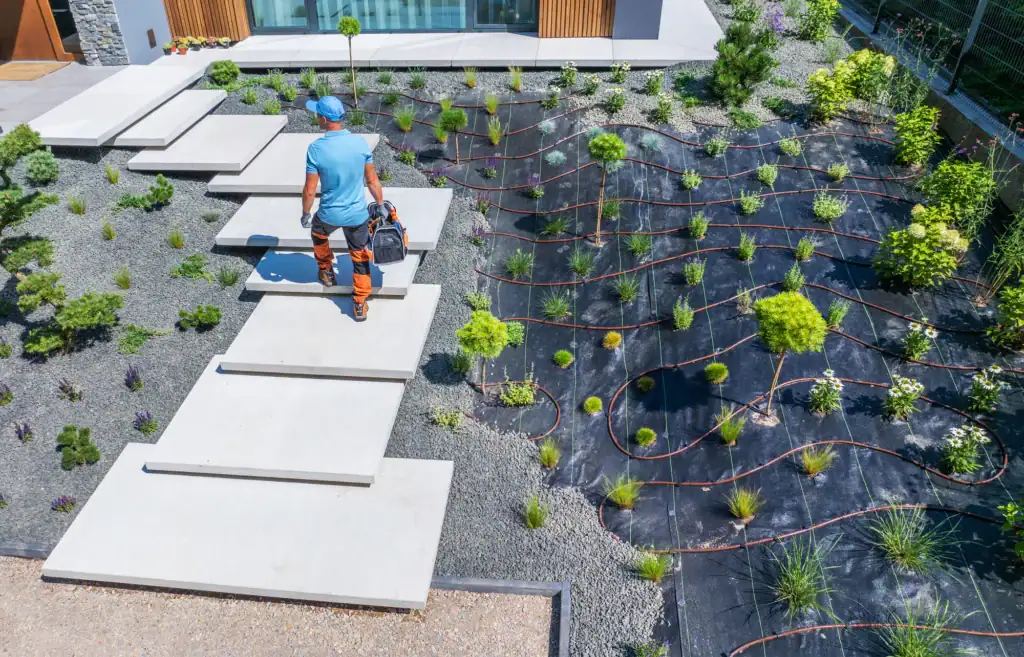
The most effective drainage solutions aren’t designed in isolation. Landscape drainage — the integration of surface grading, subsurface drains, catch basins, and dry wells into a unified system — is how you actually solve a water problem on a complex property, rather than just moving it around.
A catch basin, for example, collects surface runoff from driveways and patios and channels it into an underground pipe. A dry well disperses that water slowly into the surrounding soil. A French drain handles subsurface groundwater moving toward the foundation. Used together, these systems address different parts of the same problem. Used separately or incorrectly, they can work against each other.
On Hamptons properties, landscape drainage design also has to account for the seasonal reality of how these homes are used. Many properties are occupied from Memorial Day through Labor Day and sit vacant the rest of the year. A drainage system that requires active monitoring or maintenance isn’t practical for a home that’s closed for the winter. Systems need to be designed to handle freeze-thaw cycles without damage, and to function reliably when no one is on-site to catch a problem early.
That’s part of why the diagnostic step matters so much. Before recommending a system, we walk the property, look at where water is entering, how the grade is set, what the soil conditions are, and what’s downstream. That assessment shapes the solution. A property in Bridgehampton on a low-lying lot near Mecox Bay has different drainage needs than a hillside estate in Southampton Village — and the system should reflect that, not default to whatever’s cheapest or fastest to install.
We also handle all permits required by the Town of Southampton or East Hampton as part of the project. You don’t have to figure out what’s required, submit plans, or follow up with inspectors. That’s on us.
Hiring a Drainage Contractor in the Hamptons: What to Know Before You Call
The short version: drainage work on the South Fork is more involved than a national cost guide will tell you, and the difference between a system that lasts 20 years and one that fails in three comes down almost entirely to how it’s installed.
When you’re evaluating contractors, ask whether they’re licensed in Suffolk County, whether they handle permits, and whether they offer a warranty on both labor and materials. Those three questions will tell you a lot. We’re a licensed home improvement contractor in Suffolk County, we carry comprehensive liability insurance, we manage all necessary permits, and we back every project with a one-year warranty on labor and materials. We also work one job at a time — which means when we’re on your property, that’s where our attention is.
If you’re dealing with standing water, a soggy yard, or moisture near your foundation in Southampton, East Hampton, or Bridgehampton, reach out to Fernando’s Home Improvement. We’ll take a look at what’s actually happening and give you a straight answer on what it’ll take to fix it.