Summary:
You’ve probably stood at your back door after a rainstorm, looking at water that has no business still being there two days later. The yard looks fine — the soil is sandy, the lawn is established — and yet there it sits. Soggy, unusable, and slowly killing the grass underneath it.
This isn’t a fluke. It’s a pattern that plays out across Southampton, East Hampton, and Bridgehampton every spring and every summer storm season. The South Fork’s geology creates a specific drainage problem that catches a lot of homeowners off guard. Once you understand what’s actually happening beneath your lawn, the fix starts to make a lot more sense.
Why Yard Drainage Fails on the South Fork
The most common assumption is that sandy soil drains well. In most places, that’s true. In the Hamptons, it’s only half the story.
The South Fork sits on glacial outwash deposits — essentially layers of sand and gravel left behind by retreating glaciers. That sandy topsoil does drain quickly at first. But beneath it, in many Southampton, East Hampton, and Bridgehampton properties, there’s a hardpan or clay layer that water simply cannot pass through. So water soaks through the surface, hits that impermeable layer, and has nowhere to go. It backs up, saturates the root zone, and pools at the surface. Your yard isn’t broken — it’s just built on geology that requires a smarter approach.
Add in the naturally high water table that comes with coastal proximity, and you’ve got a yard that’s fighting drainage on two fronts before a single drop of rain falls.
What Makes Hamptons Flooding Worse Than a Typical Suburban Yard Problem
The geology is one thing. The weather on the East End is another matter entirely.
East Hampton officials documented flash flooding on the South Fork in July 2023, describing it as something that “we haven’t been used to seeing, but it’s been happening a lot in our geographical region.” That’s not just one bad storm — it’s a pattern. Heavy rainfall events are becoming more frequent and more intense on the South Fork, and properties that managed fine a decade ago are struggling to keep up.
Then there’s the seasonal occupancy factor. A lot of Hamptons homeowners aren’t here year-round. You close the house in October, come back Memorial Day weekend, and discover the yard has been quietly flooding and draining and flooding again all winter and spring — with no one there to catch it early. By the time you see it, the damage to the lawn and landscaping is already done.
Salt air adds another layer. Coastal exposure accelerates wear on everything from fencing to pipe materials. A drainage system installed with the wrong specifications for a coastal environment won’t last as long as one built for these specific conditions — and you won’t know until it fails. Twenty years of working in Suffolk County has shown us exactly what holds up here and what doesn’t, and that knowledge gets applied to every drainage system we design.
The other thing worth understanding is the regulatory environment. Properties near Peconic Bay, the Atlantic Ocean, Georgica Pond, Lake Agawam, or any of the other protected water bodies throughout the Hamptons are subject to environmental review when it comes to stormwater discharge. That means drainage work near those areas isn’t just a landscaping decision — it’s a permitted one. Work done without the right permits can create real complications at resale and may put you in violation of Suffolk County environmental regulations. This is not a corner worth cutting.
How to Tell If Your Yard Has a Drainage Problem Worth Fixing
Standing water is the obvious one. But drainage problems often show up in subtler ways before they get to that point.
Patches of grass that die in the same spots every year, regardless of how much you water or fertilize, are usually a sign that the soil beneath is staying saturated long enough to suffocate the roots. Grass can tolerate flooding for a few days — not much longer than that. When the root zone stays wet, the soil becomes anaerobic, and the turf dies from the bottom up. You replant, it dies again. The cycle repeats because the underlying cause hasn’t been addressed.
Soft or spongy ground that squelches underfoot well after a rain is another indicator. So is erosion — if you’re seeing soil washing away from certain areas or accumulating in others, water is moving across your property in ways it shouldn’t be. Erosion patterns often point directly to where the drainage failure is originating.
The one that gets homeowners’ attention fastest, especially in the Hamptons, is mosquitoes. Standing water breeds mosquitoes within 48 to 72 hours. If you’re hosting guests on a Saturday evening in July and the yard is uninhabitable by 6 p.m., that’s not just a nuisance — it’s a quality-of-life problem that drainage directly solves.
And then there’s the foundation concern. Water that consistently pools adjacent to your home’s foundation is not a problem that resolves on its own. Over time, it works its way into the foundation, creates moisture intrusion, and sets the conditions for mold. On a Hamptons property worth several million dollars, the cost of ignoring that is orders of magnitude higher than the cost of fixing it.
Landscape Drainage Solutions That Actually Work Here
There’s no single answer to a drainage problem. The right solution depends on where the water is coming from, where it needs to go, and what’s already on your property — irrigation lines, landscaping, hardscaping, proximity to protected water. What works on a flat Bridgehampton estate is not necessarily what works on a sloped Southampton property backing up to a pond.
That said, most yard drainage problems on the South Fork fall into a few recognizable categories, and we’ve developed proven solutions for each of them.
How French Drains and Catch Basins Solve Subsurface Water Problems
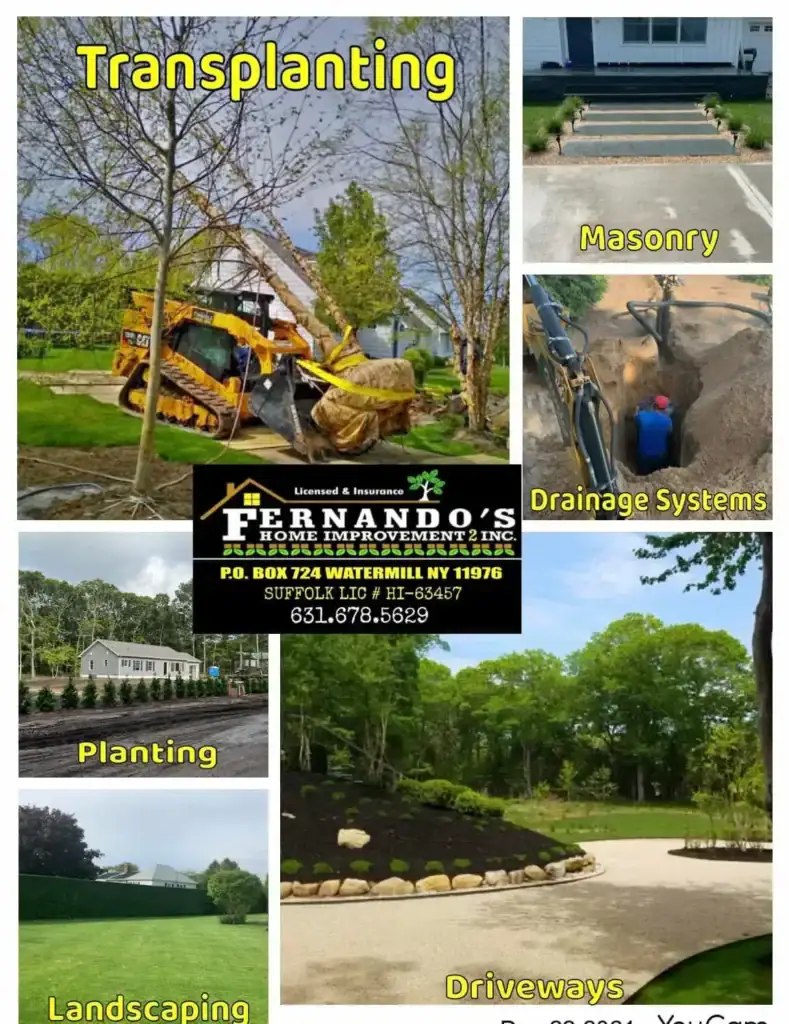
A French drain is the workhorse of yard drainage. It’s a trench filled with angular gravel and a perforated pipe, lined with geotextile fabric to keep soil from infiltrating the system. Water enters the pipe through the perforations, travels along the trench slope, and discharges at a defined exit point — a storm drain, a dry well, a lower area of the property, or the street.
The key word in that description is slope. A French drain only works if the trench is graded correctly so water actually moves through the pipe rather than pooling inside it. This is where a lot of failed drainage installations go wrong — a crew that’s moving fast, juggling multiple jobs, doesn’t get the slope right. The system looks finished. It doesn’t work. You don’t find out until the next heavy rain.
For properties dealing with surface runoff rather than subsurface seepage — water flowing across the lawn from a neighbor’s property, from a driveway, or from a roof — catch basins are often part of the solution. A catch basin is essentially a collection point, a grated inlet set at grade level that captures surface water and channels it into an underground pipe system. In many Hamptons properties, French drains and catch basins work together as an integrated system rather than as separate fixes.
Dry wells are another common component, particularly in areas where discharging water to the street isn’t practical or permitted. A dry well is an underground chamber that collects water and allows it to percolate slowly into the surrounding soil — useful when the discharge point needs to be on the property itself. Sizing a dry well correctly for the volume of water it needs to handle, and confirming the surrounding soil can accept that water, requires a proper site assessment. It’s not a guessing exercise.
For properties in East Hampton or Southampton near protected wetlands or water bodies, the discharge point for any drainage system needs to comply with environmental regulations. We handle the permit process for every project, which means you’re not navigating that on your own.
What Yard Grading Does That a Drain Alone Cannot
Sometimes the drainage problem isn’t about where water goes underground — it’s about where it goes on the surface. If your yard is graded so that water flows toward your house rather than away from it, no French drain is going to fully solve the problem. You have to fix the grade first.
Yard grading means reshaping the surface of your property so that water flows in the right direction. The standard is a drop of at least six inches within the first ten feet from your foundation, sloping away from the structure. On a flat Bridgehampton property or a Southampton yard that’s settled unevenly over the years, that slope may no longer exist — or may never have been established correctly in the first place.
Regrading is not the same as dumping topsoil into low spots. That’s a common shortcut that doesn’t hold. Proper grading involves removing soil from high points, compacting fill in low areas, and reshaping the entire drainage plane so water consistently moves away from structures and toward appropriate discharge points. Done correctly, it can resolve surface flooding entirely without any underground system at all. Done incorrectly, it washes away or compresses back to the original problem within a season or two.
In most Hamptons drainage projects, grading and an underground system work together. The surface grade handles the initial direction of water flow. The French drain or catch basin handles what the soil can’t absorb. When these two components are designed as a system rather than installed as separate fixes, the result holds up over time.
One thing we pay close attention to is how grading interacts with existing landscaping and irrigation. A regrading project that doesn’t account for irrigation line depths will damage the irrigation system. One that doesn’t consider plant root zones can stress established plantings. We’ve been integrating drainage, irrigation, and landscaping on Hamptons properties for twenty years, and that coordination is built into how we approach every project — not added as an afterthought.
What to Ask Before Hiring a Yard Drainage Contractor in the Hamptons
The most important thing to know is that drainage work in Suffolk County requires permits — and a contractor who can’t legally pull those permits shouldn’t be doing the work. Unpermitted drainage work can surface as a problem at resale and may violate environmental regulations, particularly near the protected water bodies throughout Southampton and East Hampton.
Beyond licensing, ask about the site assessment process. A contractor who quotes a job without walking the property and evaluating the soil, slope, and water source isn’t designing a solution — they’re guessing. Ask about the discharge point. Ask about the warranty. A one-year warranty on both labor and materials is a meaningful commitment; it means the contractor is confident enough in their own work to stand behind it after you’ve paid.
If you’re dealing with standing water, recurring dead spots, foundation moisture, or a yard that’s been unusable after every storm, we’re worth a conversation. We’ve been solving drainage problems across Southampton, East Hampton, and Bridgehampton for over twenty years, and we handle every project — permits included — from site assessment through final grading.