Summary:
Designing a backyard sounds straightforward until you’re standing in a soggy Southampton yard in April wondering why the drainage quote just doubled, or watching plants you paid good money for die their second summer in a row. Long Island is a genuinely different environment — the soil, the salt air, the water table, the permit process — and most generic backyard planning advice skips all of it. This guide covers what Suffolk County homeowners actually need to think through before a single paver gets laid or a single plant goes in the ground. Get this part right, and the rest of the project gets a lot easier.
How to Use a Backyard Planner for Your Suffolk County Property
A backyard planner — whether that’s a professional designer, a landscape contractor, or even a detailed site assessment — is really just a tool for making decisions in the right order. The problem is that most homeowners start with the fun part: patios, plantings, maybe an outdoor kitchen. What they skip is the foundational stuff that determines whether any of it actually holds up.
On Long Island, the right order matters more than almost anywhere else. Sandy glacial soil shifts under improperly prepared hardscaping. Water tables in coastal areas of Suffolk County can sit just two or three feet below the surface. Salt air off the Atlantic and Peconic Bay will kill the wrong plant selection faster than any pest will. These aren’t hypothetical risks — they’re the reasons we get calls from homeowners who need work redone within a few seasons of having it installed.
Home Garden Design for Sandy Soil and Salt Air on the South Fork
If your property is anywhere near the South Fork — Southampton, Bridgehampton, East Hampton, Amagansett — you’re dealing with a specific combination of conditions that most landscaping guides don’t address. Sandy glacial outwash soil drains quickly, which sounds like a good thing, but it also shifts and settles. It holds almost no nutrients on its own. And it behaves very differently under a paver patio than compacted clay-based soil would.
Proper hardscaping installation in Suffolk County requires excavating 8 to 10 inches deep and building up compacted base layers before a single stone goes down. Contractors who skip this step — and some do, especially at lower price points — create installations that heave, crack, or sink within a few years. That’s not a worst-case scenario. It’s a common one.
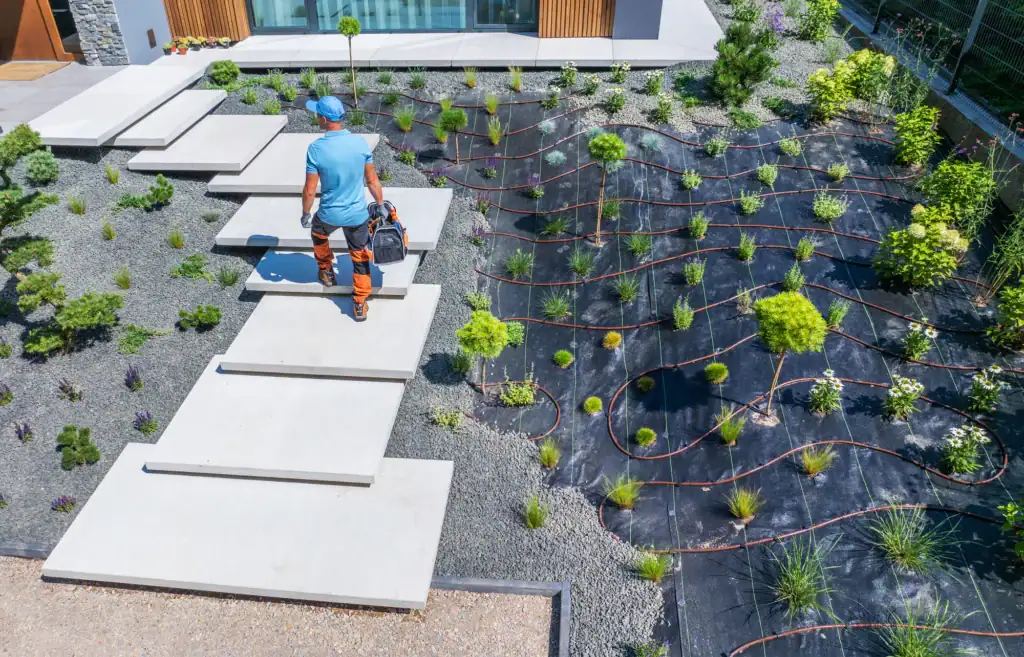
For home garden design specifically, sandy soil means most planting beds need amendment before anything goes in the ground. You’re adding organic matter to improve nutrient retention, adjusting drainage characteristics depending on what you’re planting, and selecting species that can actually survive what Long Island throws at them. Properties with direct ocean or bay exposure face salt spray carried by prevailing winds, which eliminates a wide range of otherwise-common garden plants. Salt-tolerant species — ornamental grasses, beach roses, bayberry, certain sedums — aren’t just aesthetically appropriate here. They’re practical necessities.
The other piece that homeowners often underestimate is deer pressure. White-tailed deer populations across Suffolk County are significant, and a planting plan that doesn’t account for deer resistance is a planting plan that’s going to frustrate you. A good home garden design for this area builds deer resistance into the species selection from the start, rather than treating it as an afterthought you address after the first season of damage.
Suffolk County Permit Requirements Most Homeowners Don't Know About
This is the part that surprises people most. Backyard projects that feel straightforward — a retaining wall, a new patio, a drainage system — often require permits in Suffolk County, and the requirements vary by town. Southampton and East Hampton, in particular, are known for rigorous code enforcement. Getting this wrong doesn’t just slow your project down. Unpermitted work can create serious problems when you go to sell the property.
As a general rule in most Suffolk County municipalities: retaining walls over two feet in height require a building permit. Drainage system installations — French drains, dry wells, anything that meaningfully alters how water moves across your property — typically require permits as well. Significant hardscaping that changes drainage patterns falls into the same category. Fences over four feet in front yards or six to seven feet in backyards also require permits in most jurisdictions.
The permit process isn’t impossible, but it takes familiarity with local building departments to navigate efficiently. We manage permit applications as part of our projects because we’ve been working with these departments for over 20 years. We know what Southampton Town’s building department needs, what the timeline looks like, and how to make sure the project stays on track while the paperwork moves through. For homeowners who aren’t full-time Hamptons residents — and many of our clients aren’t — this is one of the more valuable things we do, because it removes a process they’d otherwise have to manage remotely.
One thing worth knowing: New York State requires home improvement contractors to be licensed for any work valued at $200 or more. Suffolk County has its own licensing requirement through the Department of Consumer Affairs on top of that. Hiring an unlicensed contractor isn’t just a quality risk — if an uninsured worker is injured on your property, you can be held personally liable. It’s a detail that gets glossed over when someone’s quoting you a price that seems too good to pass up.
Backyard Renovation Planning in the Hamptons: What to Tackle First
Most backyard projects stall or go over budget because the planning sequence was wrong. Homeowners pick the features they want — a patio, a garden, an outdoor dining area — and then discover mid-project that drainage needs to be addressed first, which means tearing up work that’s already been done.
Drainage isn’t a finishing touch. It’s the foundation. Long Island’s high water tables and heavy summer storms make this especially true in coastal Suffolk County, where a minor grading problem can turn into standing water that damages foundations and kills plantings. Address drainage before the first paver goes down or the first plant goes in, and every other decision gets easier.
How to Fix Backyard Drainage Problems Before They Get Worse

If your yard stays soggy after rain, or if water tends to move toward the house rather than away from it, that’s not just an inconvenience. It’s a sign that the grading isn’t working the way it should, and in coastal Suffolk County, ignoring it tends to compound the problem over time.
The most common drainage solutions we install are French drains, dry wells, and regrading. A French drain is a perforated pipe buried in a gravel-filled trench that redirects subsurface water away from problem areas. A dry well collects surface runoff and allows it to percolate slowly into the soil below. Regrading adjusts the slope of the yard itself so water naturally flows away from structures rather than pooling against them. Often, the right answer is a combination of two or three of these working together.
What makes Long Island drainage design different from other markets is the water table depth. In many coastal areas of Suffolk County, you’re working with a water table that’s only a few feet down. That affects how dry wells are sized, where they can be placed, and how much capacity the system needs to handle a significant rain event. Getting this right requires site-specific knowledge — not a generic drainage formula applied from somewhere else.
We build drainage assessment into every backyard design consultation we do. Not because it’s the most exciting part of the conversation, but because it’s the part that determines whether everything else performs the way it’s supposed to. A patio installed over a drainage problem is a patio that will eventually fail. A garden planted in soil that doesn’t drain properly is a garden that will struggle no matter what you plant in it.
Planning a Backyard That Works for How You Actually Use It
The best backyard designs start with a simple question: how do you actually want to use this space? It sounds obvious, but a lot of projects skip it. The result is a yard that looks finished but doesn’t quite function — a patio that gets afternoon sun when you’d rather have shade, a garden that’s beautiful but requires more maintenance than anyone has time for, a lawn area that’s too small for what the family actually does outside.
For Hamptons homeowners who rent their properties during the summer, this question has a financial dimension too. A well-designed outdoor space — a proper patio, a clean planting scheme, functional outdoor seating — directly affects what a property can command in the rental market. We work with a number of seasonal property owners who want their outdoor spaces turnkey-ready by Memorial Day, and the planning conversation always includes what renters and guests are actually going to use and appreciate.
Maintenance planning is part of that conversation too, and it’s something a lot of contractors skip. When we design a backyard, we walk you through what the finished space will actually require to maintain — how often the irrigation needs to run, which plantings need seasonal attention, when hardscaping should be inspected after a hard winter. This isn’t us trying to sell you a maintenance contract. It’s us making sure you go into the project with realistic expectations, so nothing catches you off guard six months later.
The other thing worth thinking through early is how your backyard connects to the rest of your property. A new patio that doesn’t integrate with the existing irrigation zones creates headaches. A retaining wall that wasn’t designed with drainage behind it creates hydrostatic pressure that will eventually cause it to fail. These aren’t rare edge cases — they’re what happens when different parts of a project are planned in isolation. We handle landscaping, masonry, drainage, and irrigation together, which means the finished product actually functions as a system rather than a collection of separate installations.
Ready to Design Your Backyard the Right Way in Suffolk County?
Designing a backyard on Long Island is genuinely more involved than most guides make it sound. The soil, the water table, the salt air, the permit process — these aren’t obstacles, but they are things that need to be planned for from the beginning. Get the sequence right, and a backyard renovation here can increase your home’s value by 15 to 20 percent while giving you an outdoor space that actually holds up for years.
The difference between a project that performs and one that gets redone in a few seasons usually comes down to who’s doing it and how carefully they planned it. We’ve been working on Hamptons and Suffolk County properties for over 20 years, and we take on one project at a time — which means when we’re working on your yard, that’s where our attention is.
If you’re starting to think through a backyard project and want to talk through what it actually involves for your specific property, we’re based right here in Southampton, NY, and we’re reachable Monday through Friday at (631) 678-5629.