Summary:
You noticed a dry patch where there shouldn’t be one. Or a head that won’t stop running. Maybe your water bill spiked and you’re not sure why. Whatever triggered it, you’re now trying to figure out what this is going to cost before you call someone — which is exactly the right instinct.
The problem is that most cost guides online are built on national averages that have nothing to do with the Hamptons. Sandy soil, salt air, multi-zone estate systems, and a contractor market that’s slammed from Memorial Day through Labor Day all change the equation. We’ve put together this guide to give you a realistic picture of what irrigation repair costs here in Southampton, East Hampton, and Bridgehampton, what drives those numbers, and what to look for in a contractor before you commit.
Irrigation Repair Cost: What the Numbers Actually Look Like
Nationally, homeowners pay somewhere between $137 and $422 for irrigation repairs. Labor typically runs $55 to $120 per hour, though emergency calls — the kind that happen in the middle of July when your system goes down and your lawn is baking — can push that to $250 per hour or more.
Those numbers are a starting point, not a ceiling. In the Hamptons, you’re dealing with a labor market that reflects the cost of living on the East End, properties that often have complex multi-zone systems, and conditions that wear down components faster than anything a national average accounts for. Expecting to pay at the low end of those ranges is setting yourself up for disappointment — or for hiring someone who cuts corners to get there.

Residential Irrigation Repair: What Each Type of Fix Typically Costs
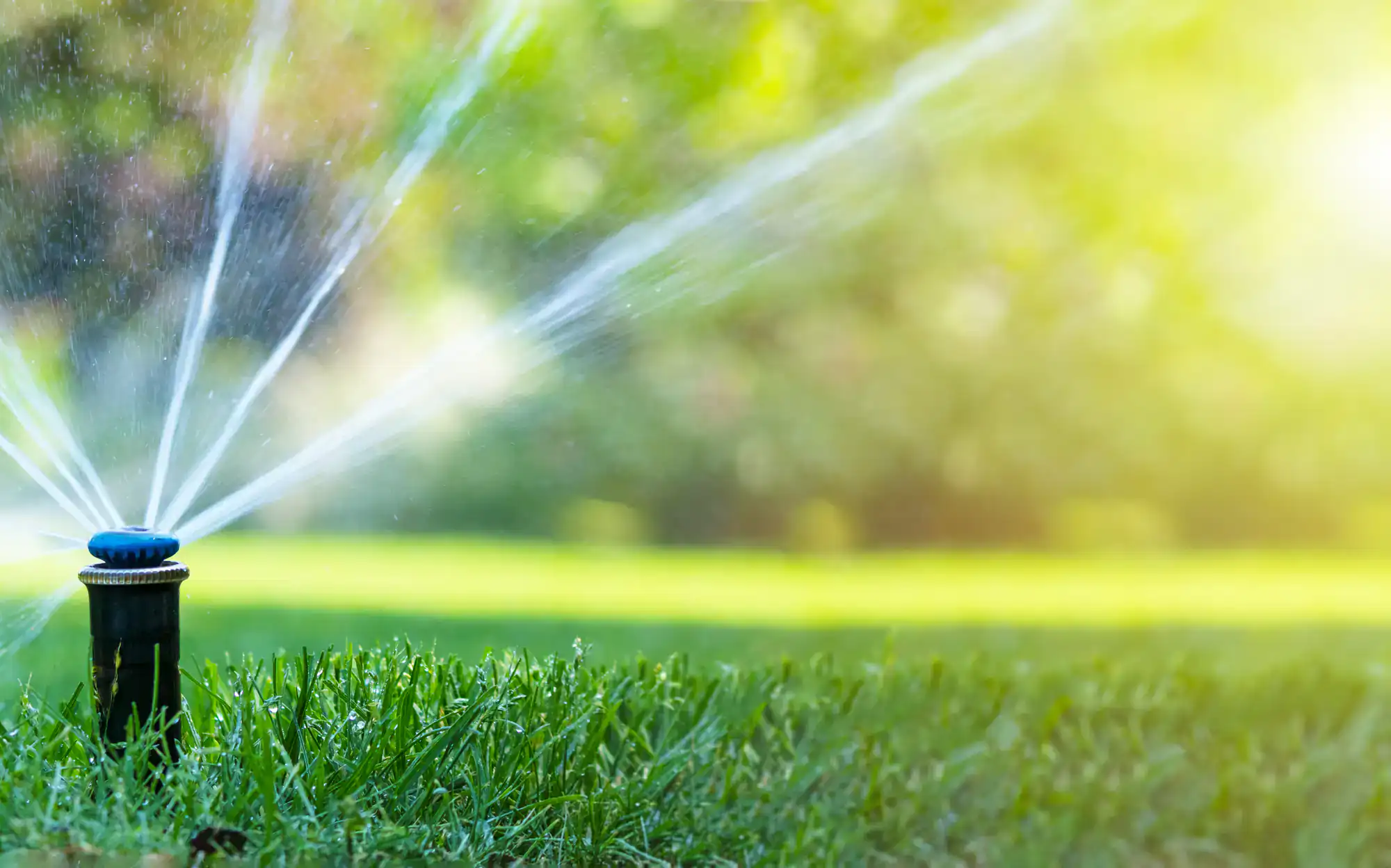
The most common repair on any residential system is a broken or worn sprinkler head. Nationally, head replacement runs $130 to $275 per head — and on a Hamptons property, that number is realistic, sometimes higher depending on the head type and how many zones are affected. What most homeowners don’t realize is that a single broken head is rarely just about the head. A good technician will check the zone pressure, inspect the surrounding heads, and make sure the root cause isn’t something upstream.
Broken underground pipes are the repair that tends to surprise people most. Depending on the depth, pipe material, and how much excavation is involved, you’re typically looking at $150 to $400 for a straightforward break — more if the damage is extensive or if the system has been leaking long enough to cause soil erosion or collateral damage to nearby plantings. On properties with mature landscaping and root systems, access can complicate things further.
Valve and controller issues are a different category entirely. A malfunctioning zone valve might cost $75 to $200 to repair or replace. A controller that’s failing — whether it’s a standard timer or a smart system — can range from a simple reprogramming to a full replacement, which runs $150 to $400 for the unit alone before labor. Smart controllers, which are increasingly common in this market, require a technician who actually knows how to configure them, not just swap them out.
Water pressure problems are the trickiest to quote sight-unseen. Low pressure might mean a partially closed valve, a clogged filter, or a failing pump if you’re on well water. High pressure can blow heads and crack fittings over time. Diagnosing and resolving pressure issues typically costs $50 to $500 depending on the source of the problem — and skipping the diagnosis to just replace visible components is how you end up calling someone again two months later.
Why Hamptons Irrigation Repair Costs More Than the National Average
The Hamptons isn’t a generic market, and irrigation systems here don’t behave like systems in other parts of the country. A few specific factors consistently push repair costs above what national guides suggest, and understanding them helps you evaluate quotes more intelligently.
Salt air is the one most homeowners underestimate. Properties in Southampton, East Hampton, and Bridgehampton — especially anything close to the ocean or the bay — expose above-ground irrigation components to corrosive salt-laden air year-round. Head housings degrade faster. Metal fittings oxidize. Controller components that would last a decade inland might need attention in five years here. This isn’t a contractor upselling you — it’s just the reality of maintaining equipment in a coastal environment.
Deer are a real and recurring repair category that doesn’t exist in most markets. The East End’s deer population is dense, and they step on sprinkler heads with enough regularity that head replacement becomes a seasonal maintenance line item on some properties, not a rare event. If you’re seeing a pattern of broken heads in the same zones year after year, deer pressure is often part of the explanation.
Estate-scale system complexity is another factor. A property in Bridgehampton or on Further Lane in East Hampton might have 15 to 25 irrigation zones covering lawn, formal hedges, cutting gardens, pool surrounds, and drip lines for specimen plantings. Diagnosing a problem across a system that size takes longer than a standard suburban system, and the parts involved are often higher-spec. That complexity is reflected in labor time and cost.
Finally, there’s the seasonal booking reality. From June through August, every reputable contractor on the East End is fully committed. If you’re calling in crisis mode during peak season, you’re either waiting or paying a premium for availability. That’s not gouging — it’s supply and demand in a compressed market. The homeowners who get responsive service in July are the ones who established a relationship with a contractor before they needed one urgently.
What You're Actually Paying For — and What Separates a Good Repair from a Bad One
Price is easy to compare. Quality is harder to see until something fails again. The difference between a repair that holds and one that brings you back to square one isn’t always visible in the quote — it’s in how the contractor approaches the diagnosis, what parts they use, and whether they stand behind the work after they leave.
A contractor who quotes you over the phone without seeing the system is guessing. A contractor who replaces the visible broken component without checking what caused it to fail is setting you up for a repeat call. And a contractor who can’t provide a written warranty on both labor and materials is telling you something important about how confident they are in their own work.
How to Evaluate an Irrigation Repair Quote Before You Say Yes
The first thing to look for is an itemized estimate. A single bottom-line number with no breakdown of parts versus labor is not a quote you can evaluate — it’s a number you’re being asked to trust blindly. Any contractor worth hiring can tell you what parts they’re using, what those parts cost, and how many hours the job is expected to take. That transparency isn’t just courtesy; it’s how you catch the difference between a contractor using name-brand components and one substituting cheaper generic parts to pad their margin.
Ask specifically about the diagnostic process. A thorough technician doesn’t just fix what’s visibly broken — they run the system zone by zone, check pressure at multiple points, inspect the controller and valves, and give you a clear picture of the system’s overall condition before recommending any work. If a contractor wants to start replacing components before completing a full diagnostic, that’s worth pausing on.
Licensing matters more than most homeowners realize. In New York, irrigation work connected to the public water supply or involving backflow prevention requires proper credentials — and not every contractor operating in the Hamptons has them. A Suffolk County Home improvement Contractor license is verifiable and creates legal accountability. An unlicensed operator might quote you less, but if something goes wrong, your recourse is limited and your insurance may not cover the damage.
Finally, ask about the warranty. We stand behind our work with at least a one-year warranty on labor — not just parts. Manufacturer warranties cover components; a labor warranty covers the work itself. If the repair fails in month four, you want a contractor who comes back without charging you again.
Should You Repair or Replace Your Irrigation System?
This is the question that comes up most often once a homeowner gets a repair quote that’s larger than they expected. The honest answer depends on the age of the system, the scope of what’s failing, and what you’d be spending on repairs over the next few seasons if you keep patching.
A system that’s under ten years old and experiencing isolated failures — a broken head here, a valve issue there — is almost always worth repairing. These are normal wear items, and a well-maintained system in this age range has years of reliable service left. Budget somewhere in the range of $250 to $500 per year for routine repairs and seasonal maintenance, and you’ll catch most problems before they escalate.
A system that’s pushing 15 to 20 years old and failing in multiple zones is a different conversation. At that point, you’re often dealing with degraded pipes, aging valves, and a controller that’s either obsolete or unreliable. Continuing to repair individual components on a system in that condition is like patching a tire that’s structurally compromised — you’re spending money without solving the underlying problem. New system installation typically runs $3,000 to $10,000 depending on property size and system complexity, which sounds like a lot until you compare it to three or four years of escalating repair bills.
For Hamptons properties specifically, there’s another factor worth considering: efficiency. Older systems run on fixed timer schedules regardless of rainfall or temperature. Smart controllers — which adjust automatically based on local weather data — typically reduce water usage by 30 to 50 percent compared to traditional timers. On a property with a large irrigated area, that reduction shows up meaningfully on your water bill. If your system is due for replacement anyway, upgrading to a smart controller at the same time is usually the right call.
If you’re managing the property remotely and aren’t sure what condition the system is in, the most useful first step is a full diagnostic inspection before committing to either path. A thorough inspection gives you a clear picture of what you’re working with and what the realistic options are — without pressure to decide on the spot.
Hiring an Irrigation Repair Contractor in the Hamptons: What to Know First
Irrigation repair in Southampton, East Hampton, and Bridgehampton isn’t complicated — but it does require a contractor who understands what they’re looking at. The cost ranges in this guide give you a realistic baseline, but the more important variables are the ones you can’t see in a quote: whether the contractor diagnosed the root cause, whether the parts they used will hold up in a coastal environment, and whether they’ll stand behind the work if something fails in month three.
The homeowners who get the best outcomes in this market are the ones who hire based on track record and transparency, not on who quoted lowest. A licensed contractor with two decades of experience on the East End, a written warranty on both labor and materials, and a process built around doing one job right at a time is going to cost more than the alternative — and is going to cost you less over time.
If you’re trying to figure out what’s wrong with your system, what it’s going to take to fix it, or whether it’s time to think about replacement, we’re the call to make. We’ve been handling irrigation repair and installation across the Hamptons for years, and we know what works in this market and what doesn’t.