Summary:
Why Retaining Walls Matter for Suffolk County Properties
Suffolk County properties face specific challenges that make retaining walls more than decorative features. Coastal erosion, sloped terrain, and sandy soil conditions create ongoing threats to property stability.
Soil erosion doesn’t just damage landscaping. It threatens foundations, creates drainage problems, and reduces usable outdoor space. On sloped properties, gravity constantly works against you, pulling soil downward and creating uneven terrain that’s difficult to landscape or enjoy.
Retaining walls engineered for these conditions hold soil in place, redirect water flow, and create level areas where your property previously had none. They transform challenging terrain into functional outdoor living spaces while protecting your home’s structural integrity. The key is understanding that not all retaining walls are created equal—coastal properties need solutions designed specifically for local conditions.
Coastal Erosion Control in the Hamptons
The Hamptons face unique erosion pressures that inland properties don’t encounter. Salt air, ocean winds, and the region’s characteristic sandy soil create an environment where erosion happens faster and more aggressively than in other areas.
New York State recognizes these challenges through its Coastal Erosion Hazard Area regulations. Properties in designated zones must comply with specific standards for any land disturbance or construction. This isn’t bureaucratic red tape—it’s recognition that coastal properties need engineered solutions to withstand environmental pressures.
Retaining wall contractors in Suffolk County who understand these regulations design walls that meet compliance requirements while solving your erosion problems. Materials must resist salt corrosion. Drainage systems must handle the higher water volumes that coastal storms deliver. Footings must extend below the frost line to prevent heaving during freeze-thaw cycles.
The soil itself presents challenges. Suffolk County’s combination of sand, silt, and loam doesn’t hold together like clay-heavy soils found inland. Water moves through it quickly, which is good for drainage but means retaining walls need robust engineering to prevent soil migration behind the wall.
Storm intensity matters too. Nor’easters and hurricanes deliver wind-driven rain that saturates soil rapidly. Without proper drainage behind your retaining wall, this water creates hydrostatic pressure that can cause even well-built walls to fail. The solution isn’t just building a stronger wall—it’s engineering a complete system that manages water effectively.
Understanding these coastal-specific challenges explains why retaining walls in the Hamptons require more sophisticated design and installation than similar projects inland. Your wall isn’t just holding back dirt—it’s managing an active, dynamic environment where multiple forces work constantly to undermine its stability.
How Engineered Garden Walls Prevent Property Damage
A properly engineered retaining wall does more than hold soil in place. It’s a comprehensive system that manages multiple forces simultaneously—gravity, water pressure, soil weight, and seasonal ground movement.
The engineering starts with understanding load calculations. Your wall must resist lateral earth pressure, which increases with height and soil saturation. Engineers calculate these forces to determine the wall’s required thickness, footing depth, and reinforcement needs. This isn’t guesswork—it’s structural analysis based on your specific site conditions.
Drainage design is equally critical. Water is the primary enemy of retaining walls. When water accumulates behind a wall, it increases pressure exponentially. A wall designed to hold dry soil might fail completely when that soil becomes saturated. That’s why every engineered retaining wall includes a drainage system with perforated pipes, crushed stone backfill, and filter fabric to keep water moving away from the wall structure.
Footing design determines long-term stability. Your wall’s foundation must sit below the frost line—typically 3-4 feet deep in Suffolk County. This prevents frost heaving, where freezing ground lifts the wall and causes cracks and structural failure. The footing also needs adequate width to distribute the wall’s weight and prevent settling into sandy soil.
Material selection affects both performance and longevity. Natural stone provides mass and drainage through its joints. Timber offers flexibility and a natural aesthetic but requires pressure treatment for ground contact. Concrete blocks deliver strength and can be engineered for various heights with geo-grid reinforcement when needed.
The integration of these elements creates a retaining wall system that protects your property for decades. When one component fails—usually drainage—the entire system becomes compromised. That’s why working with experienced retaining wall contractors in Suffolk County matters. We ensure every element works together to manage the forces acting on your wall, not just on installation day, but through years of coastal weather and seasonal changes.
Stone Retaining Wall Design for Luxury Hamptons Landscapes
Material choice defines both how your retaining wall performs and how it looks. In the Hamptons, where aesthetic standards run high, your wall needs to solve functional problems while enhancing your property’s visual appeal.
Stone and timber remain the preferred materials for residential retaining walls because they deliver the natural, elegant look that Hamptons properties demand. Both materials can be engineered for structural integrity while maintaining the organic aesthetic that complements luxury landscape design.
The decision between stone and timber depends on your specific site conditions, budget, and aesthetic goals. Each material brings distinct advantages and considerations that affect both installation and long-term performance in masonry landscape walls.
Natural Stone Retaining Walls That Last Generations
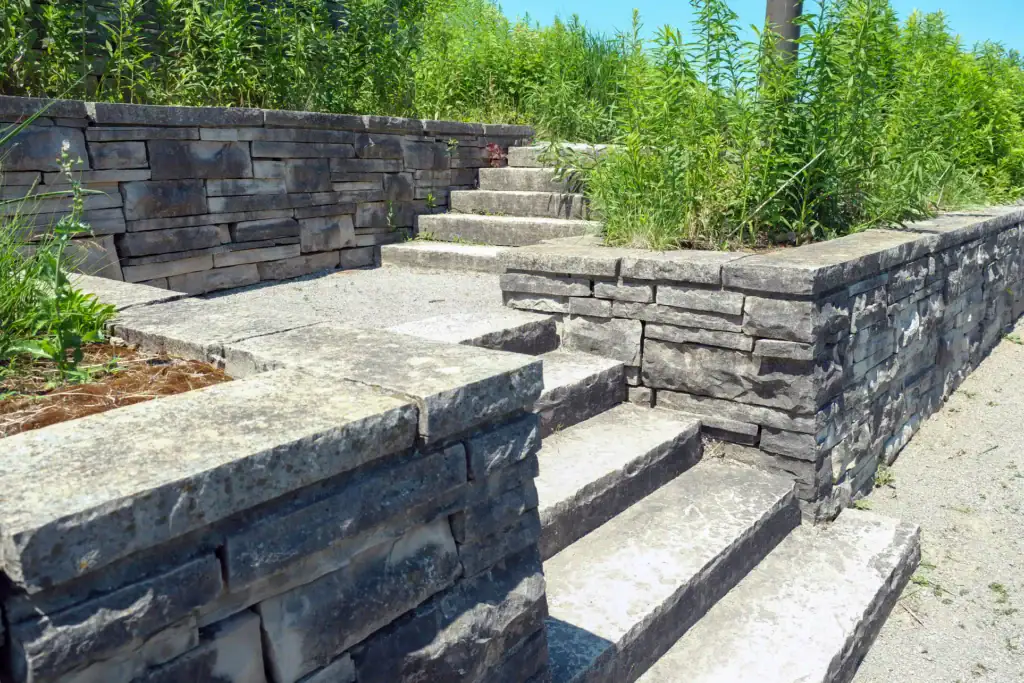
Natural stone creates retaining walls with timeless appeal and exceptional durability. The material’s irregular shapes and textures provide visual interest while blending seamlessly with both traditional and contemporary Hamptons architecture.
Stone walls work through mass. They’re gravity walls—their own weight provides stability against soil pressure. This makes them ideal for properties where the natural, unmortared look fits the desired aesthetic. Dry-stacked stone walls also offer natural drainage as water seeps through joints between stones, relieving pressure that could cause other wall types to fail.
For Suffolk County properties, stone selection matters. Fieldstone, limestone, and granite all perform well in coastal conditions, resisting salt air and weathering beautifully over time. The key is working with stone large enough to provide adequate mass while maintaining visual appeal. Smaller stones require more careful placement and may need mortaring for walls above certain heights.
Installation requires skill and experience. Unlike modular block systems with uniform dimensions, natural stone demands an eye for fit and balance. Each stone must be selected and placed to distribute weight properly while creating a stable, attractive face. This is why stone retaining wall design typically costs more—the labor intensity and expertise required are significantly higher than other options.
The payoff is a wall that improves with age. Stone develops character as it weathers, and properly built stone walls can last for generations with minimal maintenance. They require occasional repointing if mortared, and they add substantial value to luxury properties where quality and aesthetics matter.
For taller walls or areas with significant soil pressure, stone veneer over a concrete core provides the best of both worlds. You get the structural strength of engineered concrete with the natural beauty of stone facing. This approach allows for taller walls while maintaining the aesthetic that makes stone so appealing for Hamptons properties. When we install these walls with a comprehensive one-year warranty on labor and materials, you have confidence the work will perform as promised.
Timber Retaining Walls for Natural Garden Aesthetics
Timber retaining walls bring warmth and organic character to landscape design. They’re particularly effective for properties seeking a more natural, less formal aesthetic that complements wooded areas or garden settings.
Pressure-treated timber rated for ground contact is essential for Suffolk County’s coastal environment. Standard lumber fails quickly when exposed to moisture and soil contact. Ground-contact-rated timber resists decay and insect damage, extending the wall’s functional life to 15-20 years or more with proper installation and maintenance.
Timber walls typically use 6×6 or 8×8 posts and beams. For shorter walls under 4 feet, horizontally stacked timbers secured with long screws or spikes create effective gravity walls. Taller walls require deadmen—horizontal timbers extending back into the hillside that anchor the wall and prevent it from leaning forward under soil pressure.
The construction process is more straightforward than stone, making timber walls faster to install. Each course of timbers is set back slightly from the one below, creating a batter that adds stability. Proper installation includes the same drainage considerations as stone walls—perforated pipe, crushed stone backfill, and filter fabric to manage water.
Timber’s flexibility is both an advantage and a consideration. Unlike rigid concrete or stone, timber walls can accommodate minor ground movement without catastrophic failure. They’re forgiving of less-than-perfect soil conditions. However, this flexibility also means they require more maintenance over time. Annual inspections and occasional timber replacement keep the wall functioning properly.
Aesthetically, timber offers versatility. The natural wood grain and texture create a softer look than stone or concrete. Timber walls can be stained to match other exterior wood elements or left natural to weather to a silvery gray. They integrate beautifully with garden plantings, and their horizontal lines create visual rhythm in the landscape.
For Hamptons properties where the goal is creating terraced garden beds, defining outdoor living areas, or managing gentle slopes, timber provides an economical solution that doesn’t sacrifice aesthetic quality. The key is proper engineering and installation—shortcuts in drainage or anchoring lead to premature failure regardless of material quality. When we focus on one job at a time, your project receives the attention to detail it deserves rather than being rushed to move onto the next client.
Protecting Your Suffolk County Property with Quality Retaining Walls
Your retaining wall is an investment in your property’s long-term stability and value. When engineered correctly and built with materials selected for coastal conditions, it solves erosion problems while enhancing your landscape’s visual appeal.
The difference between a retaining wall that performs for decades and one that fails within years comes down to engineering, drainage, and installation quality. Suffolk County’s coastal environment demands solutions designed specifically for local conditions—sandy soil, salt air, freeze-thaw cycles, and storm-driven water volumes.
Whether you choose natural stone for its timeless elegance or timber for its organic warmth, the principles remain the same. Proper footing depth, comprehensive drainage systems, and materials rated for ground contact in coastal environments. These aren’t optional upgrades—they’re requirements for walls that protect your property instead of becoming problems themselves.
We bring decades of experience engineering and installing retaining walls for Hamptons properties. We understand the unique challenges your property faces and design solutions that work with Suffolk County’s coastal conditions, not against them.