Summary:
If your lawn has dry spots no matter how long the sprinklers run, or your yard turns into a swamp every time it rains hard, you already know that generic advice doesn’t cut it on Long Island. The soil here drains differently. The winters are harder on underground pipes than most contractors account for. And the water restrictions in Southampton, East Hampton, and surrounding villages add another layer that most irrigation guides completely ignore.
We cover what you actually need to know — from how a proper sprinkler system is designed for Suffolk County’s conditions, to French drain installation, winterization, and the questions homeowners ask us most often.
Best Sprinkler System for Long Island's Sandy Soil and Coastal Climate
Long Island sits on a glacial outwash plain. That’s a technical way of saying the soil here is predominantly sandy, fast-draining, and nothing like the clay-heavy ground you’d find in most other parts of the Northeast. Water moves through it quickly — which sounds like a good thing until you realize your irrigation system is running on a schedule designed for soil that holds moisture, not soil that lets it pass through in minutes.
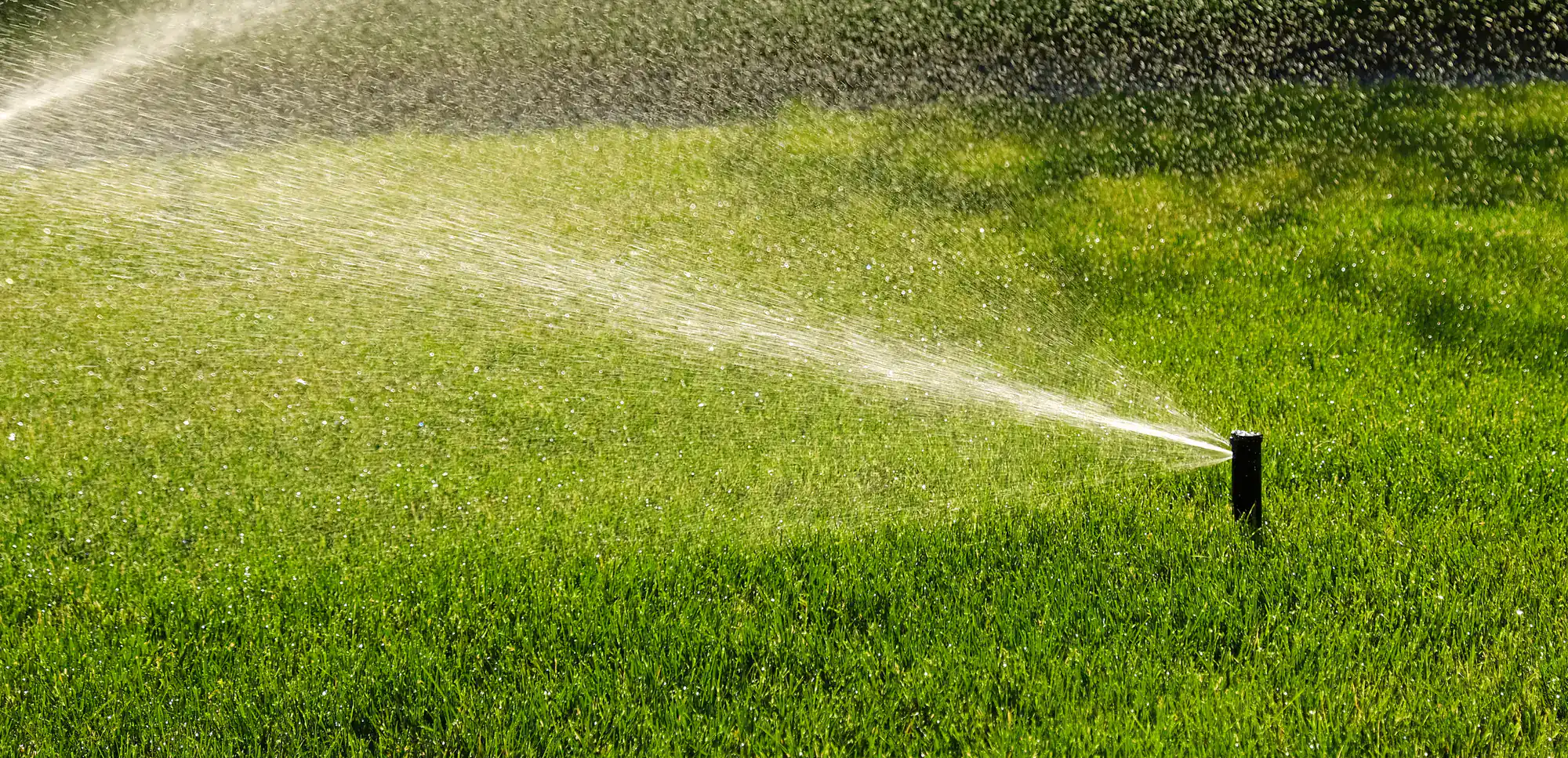
A well-designed yard irrigation system for Suffolk County accounts for this. Shorter, more frequent watering cycles. Zone layouts that match local water pressure. Head selection that accounts for coastal wind patterns — because a spray head calibrated for calm conditions will drift and miss coverage on a property near the water. These aren’t optional refinements. They’re the difference between a lawn that thrives and one that looks stressed no matter how much water it gets.
Underground Irrigation System Design: What Most Contractors Get Wrong
The most common mistake we see on Long Island properties is mixing rotor heads and spray heads in the same zone. Rotor heads and spray heads apply water at very different rates. Run them together and you’ll overwater one area while the other stays dry — and the system will look like it’s working fine until you notice the patchy results in July.
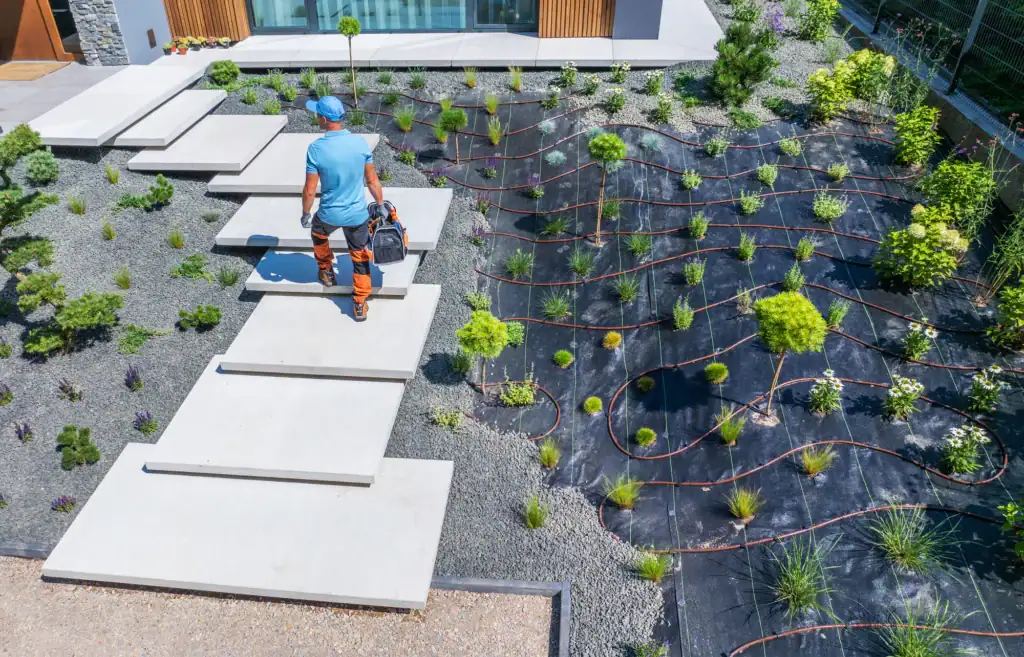
Proper zone design starts with your water pressure and flow rate, then works backward to determine how many heads each zone can support and which head type belongs where. A quarter-acre lot in the Hamptons typically needs four to seven zones, depending on the landscape layout, plant types, and how much of the property is turf versus beds versus hardscape.
Pipe depth matters too. Underground irrigation lines in Suffolk County should be buried at least 18 inches deep — ideally deeper in exposed areas — to survive the freeze-thaw cycles that run from November through March. A contractor who buries lines at 12 inches is setting you up for cracked pipes the first hard winter. We’ve repaired enough of those in Southampton and East Hampton to know exactly how it happens.
Smart controllers and rain sensors are worth the upgrade here, not just for water savings but for compliance. Many Hamptons municipalities restrict outdoor irrigation to specific days and hours during summer months. A smart controller handles that automatically. Without one, you’re either hand-managing the schedule or risking a fine you didn’t see coming. The EPA estimates smart irrigation controllers save an average of 8,800 gallons of water per year — and on a property with a large landscape investment, that adds up fast.
Backflow prevention is another piece that often gets overlooked until it becomes a problem. New York State requires annual testing of backflow prevention devices by a certified tester, and many local water districts in Suffolk County enforce this actively. It’s not a big expense — typically $50 to $100 per year — but it’s a compliance requirement that protects both your water supply and your standing with the municipality.
Crawl Space Drainage System: When Water Gets Under the House
Sprinkler system design and crawl space drainage might seem unrelated, but on Long Island properties they’re often two sides of the same problem. An irrigation system that’s overwatering — or one that’s discharging water too close to the foundation — can contribute directly to moisture intrusion in crawl spaces and basements. We see this connection regularly, and it’s one of the reasons we think about irrigation and drainage as one integrated system rather than two separate services.
A crawl space drainage system typically involves a perimeter drain channel installed at the base of the foundation walls, which collects water that seeps through and routes it to a sump pump for discharge. In Suffolk County, where the water table near Peconic Bay, the Great South Bay, and coastal wetlands can be surprisingly high, this kind of system isn’t a luxury — it’s protection for the structure itself.
The distinction between a crawl space drainage system and a French drain matters here. A French drain manages surface water and groundwater outside the foundation, intercepting it before it reaches the structure. A crawl space drainage system manages water that’s already made it inside. Many properties near the water need both, working together. Getting that diagnosis right — understanding where the water is coming from before deciding which system to install — is where experience makes the difference. A contractor who installs the wrong system for the wrong problem doesn’t solve anything; they just move the water around.
Interior crawl space drainage systems in most Long Island homes take one to two days to install and typically cost significantly less than exterior excavation work. But the right answer depends entirely on the source of the water, the property’s grade, and how the existing drainage is — or isn’t — functioning.
French Drain Installation for Suffolk County Yards
A French drain is a simple concept: a trench filled with gravel and a perforated pipe that intercepts water moving through the soil and redirects it away from where it’s causing problems. Done right, it’s one of the most reliable drainage solutions available — a properly installed French drain can last 20 years or more. Done wrong, it either doesn’t work or fails within a few seasons.
The sandy soil across most of Suffolk County is actually ideal for French drain performance. Water moves through it readily, which means a well-placed trench and pipe can intercept and redirect significant volumes of groundwater without the system getting overwhelmed. The challenge is getting the grade right and choosing the correct pipe and gravel — details that separate a system that works from one that looks installed but doesn’t drain.
Install a French Drain in a Yard: What the Process Actually Looks Like

The trench needs to be at least 18 to 24 inches deep and wide enough to accommodate the pipe and surrounding gravel — typically six inches minimum. The critical factor is slope: you need at least a 1% grade, which works out to roughly one inch of drop for every eight feet of trench. Without adequate slope, gravity can’t move the water and the system stagnates.
Before any digging starts, New York State law requires a call to 811 — the Dig Safe utility notification line. This isn’t optional. Underground utilities, including gas, electric, water, and cable lines, are buried throughout Suffolk County neighborhoods, and hitting one is both dangerous and expensive. Any contractor who skips this step is cutting a corner that puts your property and their crew at risk.
The pipe itself should be four-inch perforated PVC — rigid, not the flexible corrugated plastic that’s cheaper and easier to work with but prone to collapse and clogging over time. The trench gets lined with landscape filter fabric before the gravel goes in, which keeps soil from migrating into the gravel layer and eventually clogging the pipe. Clean, washed gravel in the three-quarter to one-and-a-half inch range goes in around and over the pipe, and the fabric gets folded over the top before backfilling. This detail — the fabric wrap — is what separates a French drain that lasts two decades from one that needs to be dug up and redone in five years.
Drainage installations in Suffolk County that connect to municipal storm systems or significantly alter property grading typically require a permit through the Town of Southampton or the relevant local authority. The process usually takes two to three weeks and costs between $50 and $200 depending on scope. We handle this as part of the project — because unpermitted drainage work can require full removal and reinstallation at the homeowner’s expense if it’s flagged during a property sale or inspection.
Best Pipe for a French Drain and What It Costs on Long Island
Four-inch perforated PVC is the right pipe for most residential French drain installations in Suffolk County. It’s rigid enough to maintain its shape under soil pressure, durable enough to last decades, and available in the perforated format needed for water collection. Flexible corrugated drainpipe gets used frequently because it’s cheaper and easier to handle, but it collapses under heavy soil loads and the corrugated interior catches debris over time. For a system you’re putting in a yard on a Hamptons property, PVC is the right call.
On cost: French drain installation on Long Island runs roughly $20 to $90 per linear foot, depending on depth, access, soil conditions, and whether the project requires permits or landscape restoration afterward. For a typical Suffolk County home needing 100 to 150 feet of drainage, the total cost generally falls between $3,000 and $13,500 before factoring in any driveway or hardscape repair that the trenching requires.
An exterior French drain installed around the full perimeter of a foundation — a common solution for Hamptons properties with chronic basement moisture — typically runs $8,000 to $15,000 or more for larger homes. Interior drainage systems cost significantly less, often half the price of exterior work, because they don’t require exterior excavation. The right choice depends on where the water is entering and what’s driving it — surface runoff, groundwater pressure, or a combination of both.
One thing worth knowing: the cost estimates you’ll find online are national averages. Labor rates on the East End of Long Island are higher than the national baseline, and material costs reflect that too. A quote that comes in dramatically below the range above is worth scrutinizing — not because every low bid is bad work, but because proper depth, proper pipe, proper fabric, and proper permits all cost real money.
Lawn Sprinkler System Winterization in Suffolk County: Don't Skip This Step
Every fall, irrigation systems across the East End get damaged the same way: the water gets shut off at the valve, the homeowner assumes that’s enough, and residual water left in the lines freezes when temperatures drop below 32 degrees. Underground pipes crack. Valve chambers split. Backflow preventers fail. Come spring, what should be a simple startup turns into a repair bill that runs into the thousands.
Professional winterization — a full compressed-air blowout of every zone — removes the water that a valve shutoff leaves behind. It costs between $60 and $120 for most homes. That’s the math. For seasonal Hamptons properties where owners often depart before the first hard frost, scheduling a professional blowout before Columbus Day weekend is the reliable way to protect a system that costs thousands to install and repair.
Winterizing a lawn irrigation system properly means working zone by zone, using a commercial-grade compressor, and confirming that each zone is clear before moving to the next. It takes less than an hour on most residential systems. DIY blowouts with a rented compressor are possible, but undersized compressors and improper technique are common — and the damage from a botched blowout isn’t always visible until spring. If you’re not certain the system is fully clear, it’s worth having someone who does this every October make that call for you.
If you have questions about your sprinkler system, a drainage problem in your yard, or water showing up in your basement after a hard rain, we’re based in Southampton, NY and have been working on East End properties for over 20 years. Give us a call at (631) 678-5629.
Frequently Asked Questions
How much does it cost to blow out a sprinkler system in Suffolk County? Professional sprinkler system blowout services in Suffolk County typically run between $60 and $120 for a standard residential system. The exact cost depends on the number of zones and the size of the property. It’s one of the lowest-cost maintenance services on the calendar — and one of the highest-consequence ones to skip. A single cracked underground pipe from a freeze can cost several hundred to several thousand dollars to locate and repair, depending on where it is and how much of the system is affected. Most homeowners in Southampton and East Hampton schedule their blowout for early to mid-October, before overnight temperatures start dropping consistently below freezing.
Why is water leaking from my baseboard when it rains? Water appearing at the base of a foundation wall — what most people describe as water leaking from a baseboard — is almost always caused by hydrostatic pressure. When the soil around your foundation becomes saturated during heavy rain, water is pushed laterally through any gap or crack in the foundation wall and appears at the lowest point it can reach: the joint where the wall meets the floor. This is extremely common in parts of Suffolk County with a high water table, particularly in lower-lying areas near Peconic Bay, the Great South Bay, and coastal wetlands. An exterior French drain installed around the foundation intercepts that groundwater before it builds pressure against the wall. In cases where exterior excavation isn’t practical, an interior perimeter drainage system paired with a sump pump is the alternative. The right solution depends on a proper diagnosis of where the water is originating — surface runoff, rising groundwater, or both.