Summary:
If your yard stays soggy for days after rain, or water keeps finding its way toward your foundation, you’ve probably already started looking into French drains. The first thing you’ll notice is that pricing information online is all over the place — $10 a foot, $100 a foot, national averages that have nothing to do with what we actually charge in Suffolk County.
That confusion is frustrating when you’re just trying to make an informed decision. So here’s a straightforward breakdown of what French drain installation actually costs in this market, what drives those numbers, and what the process looks like when it’s done right.
French Drain Installation Cost Per Foot in Suffolk County
In Suffolk County’s market, French drain installation typically runs $30 to $47 per linear foot for exterior yard systems. That range reflects local labor rates, the cost of materials suited to this climate, and the permit requirements that come with working in Suffolk County municipalities. It’s a meaningfully different number than the $10–$100 national range you’ll see on most cost guides — and that difference matters when you’re trying to plan a real budget.
For a typical yard drainage project — say, 60 to 100 linear feet — most homeowners in Suffolk County end up spending somewhere between $1,800 and $7,200 depending on the specifics of the job. Interior basement French drains run higher, typically $74 to $89 per linear foot in this market, because the work is more involved and the access is more difficult.
Average Cost of a French Drain: What Changes the Final Number
The average cost of a French drain isn’t just about how many feet of pipe go in the ground. Several factors can move that number significantly in either direction, and understanding them helps you evaluate quotes more accurately.
Soil type is one of the biggest variables, and it’s one that catches a lot of homeowners off guard. Suffolk County has significant areas of clay-heavy soil — the kind that acts almost like a natural barrier to water movement. Clay is harder to excavate than sandy soil, which means more labor hours and, in some cases, equipment that a smaller crew may not have access to. When contractors unfamiliar with Long Island’s soil profile show up with an underpriced quote, this is often where they start cutting corners.
Depth matters too. A shallow curtain drain around a yard perimeter is a different job than a deep footing drain installed around a foundation. The deeper the system, the more excavation, the more gravel, and the more time it takes to get right. Accessibility plays into this as well — if a trencher or mini-excavator can’t reach the installation area, hand digging increases labor costs considerably.
Then there’s the permit question. Many Suffolk County municipalities require permits for French drain installation, particularly for systems near wetlands, systems that connect to municipal storm drains, or projects that significantly alter property grading. Southampton, East Hampton, and other towns along the South Fork have strict environmental review requirements for anything near sensitive coastal areas. Permits typically cost $50 to $200 and add two to three weeks to the project timeline — something worth knowing before you set expectations.
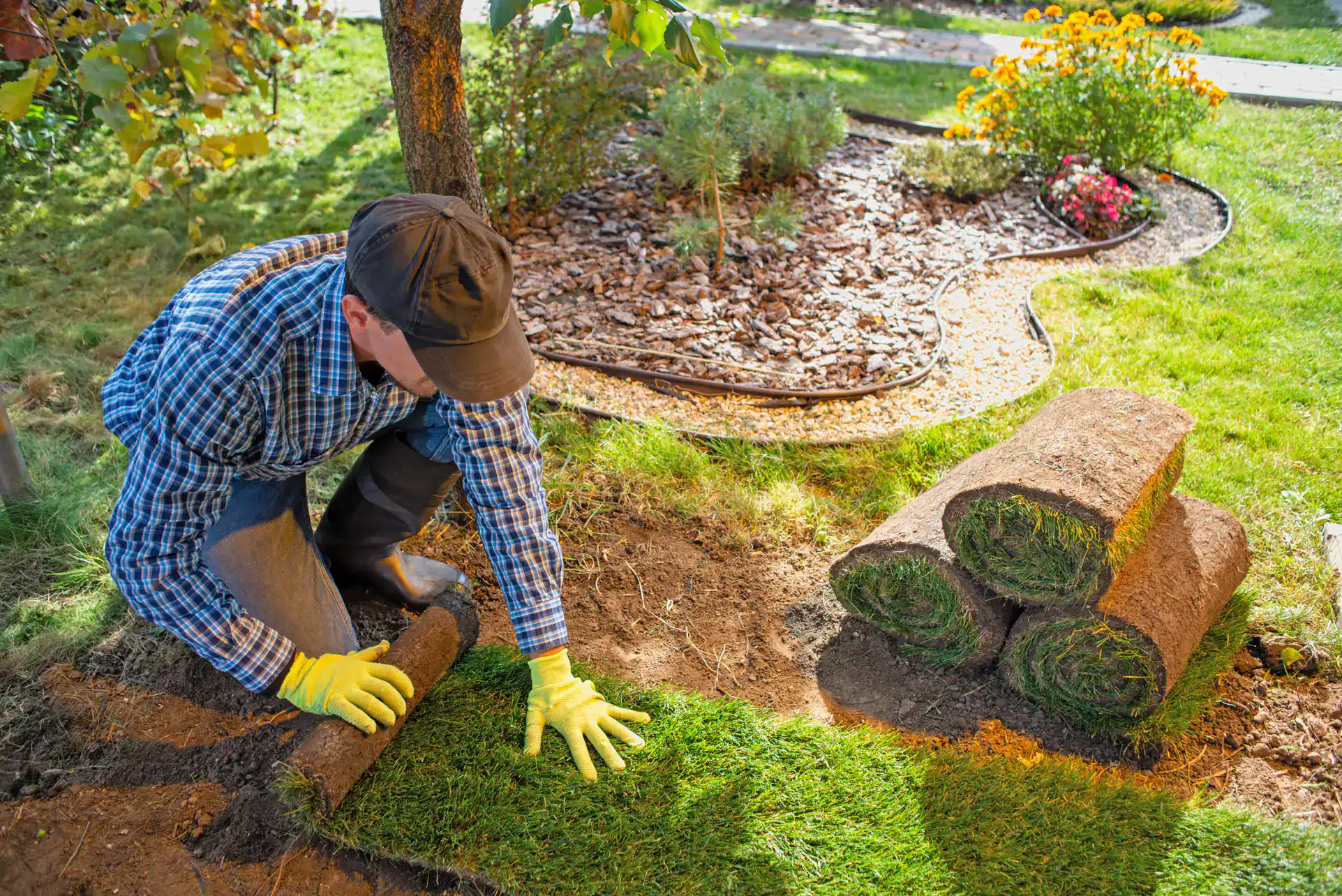
Finally, don’t overlook landscape restoration. After excavation, the trench area needs to be restored — sod runs about $1 to $2 per square foot, and replanting flowerbeds or garden areas adds $25 to $50 per plant. A complete project cost includes getting your yard back to the way it looked before the work started.
Exterior French drains — the kind installed in your yard to redirect surface water and subsurface runoff away from your home — are the most common type of drainage project we handle in Suffolk County. They’re also, generally speaking, the more approachable option cost-wise compared to interior basement systems.
For exterior systems in this market, that $30 to $47 per linear foot range covers the core components: excavation, perforated pipe (typically four inches in diameter for residential applications), washed round gravel, geotextile filter fabric, and the outlet point where water exits the system. Each of those components matters. The gravel type, for instance, isn’t interchangeable — round washed river rock allows water to flow freely, while angular crushed stone compacts over time and restricts flow. The geotextile fabric wrapped around the gravel is what keeps soil from infiltrating the pipe and clogging the system within a season or two. Skip it, and you’ll be excavating again sooner than you’d expect.
Outlet planning is another piece that gets underestimated. The water has to go somewhere — a drainage ditch, a dry well, a daylight outlet at a lower elevation on the property. Getting that outlet location right is critical, because placing it too close to the foundation just redirects the problem rather than solving it.
For coastal properties in the Hamptons specifically, there’s an additional layer of complexity. Properties near Long Island Sound, Peconic Bay, Great South Bay, or any tributary wetland have to comply with Southampton’s wetlands setback requirements. A contractor who doesn’t know those rules — or decides to ignore them — can leave you with unpermitted work, potential fines, and a mandatory removal order. That’s not a hypothetical; it’s something that happens when homeowners hire based on price alone without verifying licensing and local knowledge.
How to Install a French Drain in Your Yard the Right Way
The installation process looks straightforward on paper, but the details are where most systems succeed or fail. A properly installed French drain starts before anyone picks up a shovel — with utility marking. In New York, calling 811 before any excavation is legally required. It’s also just common sense, because hitting a buried gas or electric line is a problem no drainage system is worth.
From there, the process moves through site assessment and slope calculation, permit coordination, excavation, pipe and gravel installation, fabric wrapping, outlet connection, and finally landscape restoration. Each step depends on the one before it. The single most common reason French drains fail — the one that sends homeowners back to square one — is incorrect slope. The pipe has to maintain a continuous downward grade from inlet to outlet. If it doesn’t, water backs up, sits in the pipe, and the system stops working.
Why the "One Job at a Time" Approach Matters for Drainage Installation
Drainage installation is the kind of work where distraction costs you. A crew splitting attention between three active job sites is a crew that rushes slope calculations, skips the geotextile fabric because it adds time, or uses whatever gravel is on the truck rather than what the job requires. These aren’t dramatic failures — they’re quiet ones that don’t show up until the first heavy rain of the following spring.
We work one project at a time. That’s not a slogan; it’s how we actually operate. When we’re on your property, we’re on your property — not mentally halfway across town managing another crew. Every step of the installation gets the attention it needs, from the initial slope grade to the final sod restoration. For a drainage system that’s going underground and staying there for the next 30 to 40 years, that focus matters more than most homeowners realize until they’ve had to dig one up and start over.
This approach also means you get consistent communication throughout the project. You’re not chasing down a project manager who’s juggling five other clients. You know what’s happening, when it’s happening, and what to expect when we’re done.
Suffolk County’s drainage conditions make this especially important. The clay-heavy soil, the shallow water table, the coastal environmental requirements — these aren’t challenges you can manage on autopilot. They require contractors who are actually paying attention.
Licensed vs. Unlicensed Drainage Contractors in Suffolk County: What's Actually at Stake
Suffolk County law is specific on this point: drainage system installation is classified as a home improvement under the county’s Home Improvement Contractor licensing law. That means any contractor performing this work on a residential property in Suffolk County is legally required to hold a valid license. A lot of them don’t.
This matters for a few reasons beyond just following the rules. If an unlicensed contractor installs your drainage system and it fails — or causes damage — your legal recourse is limited. You can’t file a complaint with Suffolk County Consumer Affairs against a contractor who was never licensed to begin with. And if the work was done without permits, you may have trouble selling the property, filing an insurance claim, or getting future work permitted on the same parcel.
We’re fully licensed and insured, and we back every project with a one-year warranty on both labor and materials. If the system underperforms or fails within that first year, we come back and fix it — no charge, no argument. That’s not a standard offer in this industry. Most drainage contractors either don’t offer a warranty at all or bury vague satisfaction language in the fine print.
The August 2024 flooding event in Western Suffolk County — 9.4 inches of rain in a single 24-hour period, significant enough to trigger a state emergency response — was a reminder of what’s actually at stake when drainage infrastructure isn’t built to last. That kind of rainfall doesn’t leave room for systems installed by crews who were cutting corners on someone else’s job site that same week.
We’ve been doing this work in Suffolk County for over 20 years. We know the soil. We know the permit offices. We know what Southampton’s wetlands setback rules require and how to design systems that work within them. That local knowledge isn’t something you can replicate by driving in from out of the area with a generic quote.
Is a French Drain Worth It for Suffolk County Homeowners?
A properly installed French drain lasts 30 to 40 years. A poorly installed one — wrong slope, wrong gravel, no fabric, no permit — can fail within a season and cost more to excavate and replace than a professional installation would have cost in the first place. That math tends to clarify the decision pretty quickly.
If your yard stays wet long after rain, if water pools near your foundation, or if you’ve already tried a DIY fix that didn’t hold, a professional drainage assessment is the right next step. Not a commitment to a full project — just an honest conversation about what’s actually happening on your property and what it would take to fix it.
We serve homeowners throughout Suffolk County and the Hamptons from our office in Southampton, NY. If you’re ready to talk through what a drainage system would look like for your property, give us a call at (631) 678-5629. We’re available Monday through Friday, 9:00am to 5:00pm, and we’re happy to start with the basics.