Summary:
You check the basement after every hard rain. Sometimes it’s fine. Sometimes there’s water along the walls, a damp smell that won’t quit, or worse — standing water you’re mopping up with a shop vac for the third time this spring. You’ve tried the obvious things. Maybe you’ve even had someone out to look at it. And yet, every time a nor’easter rolls through or a summer storm stalls over the East End, you’re back down there wondering what it’s going to take to actually fix this.
The answer usually starts with understanding what you’re actually dealing with. On Long Island, the problem is often coming from below, not above.
Why High Water Table Problems Are So Common in Suffolk County
Long Island sits on top of a glacial aquifer system that the USGS has been monitoring since the early 1900s. The water table here is shallow, responsive, and — in communities like Southampton, Bridgehampton, and East Hampton — heavily influenced by proximity to the bays and the Atlantic. When it rains hard, the water table rises fast. When a storm stalls over Suffolk County and drops three inches in an afternoon, that groundwater doesn’t have far to travel before it’s pressing against your foundation from every direction.
This is what’s called hydrostatic pressure. It’s not a leak in the traditional sense — it’s water being pushed through the concrete by sheer force. Sealing a crack slows it down temporarily. It doesn’t stop the pressure. That’s why so many homeowners go through multiple rounds of patching and still end up with the same problem the following spring.
The actual solution has to address where the water is going, not just where it’s getting in.

Basement Leaks During Heavy Rain: What's Actually Causing Them
There’s a meaningful difference between a basement that leaks during a heavy rainstorm and one that stays wet for days after the rain stops. The first might be a grading issue — water pooling near the foundation because the yard slopes toward the house, or downspouts dumping runoff too close to the walls. That’s fixable with regrading and some basic exterior drainage work. Annoying, but relatively straightforward.
The second scenario — where the water lingers, where the floor feels damp even when it hasn’t rained in a week — that’s a water table problem. And it’s extremely common in the coastal communities of Suffolk County.
Southampton Town’s own Hazard Mitigation Plan documents shallow groundwater flooding as a recurring hazard with some homes carrying flood histories going back to 1936. This isn’t a fluke weather event or a maintenance issue you missed. It’s a geological reality of where you live. The good news is that it’s manageable — but it takes the right approach.
A proper assessment looks at how water is entering the space. Is it coming through the cove joint, which is where the floor meets the wall? Is it pushing up through the slab? Is it seeping through porous concrete under sustained pressure? Each entry point tells you something different about what the drainage system needs to do. A contractor who walks in and quotes you a sump pump without answering those questions first isn’t solving your problem — they’re selling you equipment.
What actually works in high water table conditions is a layered approach. Exterior grading and drainage redirect water before it reaches the foundation. A French drain installed along the foundation perimeter intercepts groundwater and carries it away. Interior perimeter drainage collects what still gets through and channels it to a sump pit. A properly sized sump pump — with a battery backup, because Suffolk County power outages during storms are not rare — removes it from the house. When these systems work together, they don’t just manage the water. They keep the basement dry even when the water table is at its seasonal peak.
Getting Water in Your Basement When It Rains: Why DIY Fixes Keep Failing
The hydraulic cement and the DryLok paint from the hardware store aren’t scams — they work fine for minor surface moisture and condensation. What they can’t do is hold back hydrostatic pressure. When groundwater is pressing against the outside of your foundation wall with sustained force, a surface sealant is essentially fighting physics. It might hold for a season, maybe two, and then the pressure finds a new path — a hairline crack, the joint between the floor and the wall, a spot where the concrete was never fully cured. The water gets in anyway, and now you’ve spent money and time on something that bought you eighteen months at best.
This is one of the most common patterns we see in homes throughout Southampton, Water Mill, and Bridgehampton. A homeowner has tried two or three DIY approaches over several years, none of them have held, and by the time they call us the problem is bigger than it was when they started — because water damage compounds. Mold can begin growing within 24 to 48 hours of water intrusion. Freeze-thaw cycles every winter widen existing foundation cracks incrementally. What starts as a damp corner becomes a structurally compromised wall over time.
There’s also the property value angle, which matters a great deal in this market. A wet basement in the Hamptons isn’t just an inconvenience — it’s a liability. A home with documented water issues can lose 10 to 25 percent of its value, and in a market where median prices regularly exceed a million dollars, that’s a significant number. Home inspectors flag basement moisture, buyers’ attorneys ask questions, and deals fall through or get renegotiated. Fixing the problem properly — with a licensed contractor, documented work, and a written warranty — is not just about comfort. It’s about protecting what you’ve invested in the property.
The other thing worth saying plainly: not every contractor who offers drainage work has the experience to diagnose a high water table problem correctly. Long Island’s glacial geology means the soil can shift from sandy and free-draining to clay-heavy and water-retaining within a few hundred feet. What worked for your neighbor’s property might be completely wrong for yours. Site-specific assessment isn’t a sales tactic — it’s the only way to know what the drainage system actually needs to do.
What a Professional Drainage Fix Actually Looks Like
When we assess a basement water problem, we’re not looking at the basement in isolation. We’re looking at the whole property — how the yard drains, where water collects, whether there are retaining walls that are directing runoff toward the foundation, whether the gutters and downspouts are doing their job. The basement is where the symptom shows up. The cause is usually outside.
That whole-property perspective is what separates a drainage solution that holds from one that doesn’t. Fixing only the interior while ignoring the exterior is like mopping the floor without turning off the faucet. It reduces the problem, but it doesn’t solve it.
How Exterior Drainage and Landscaping Work Together to Keep Basements Dry

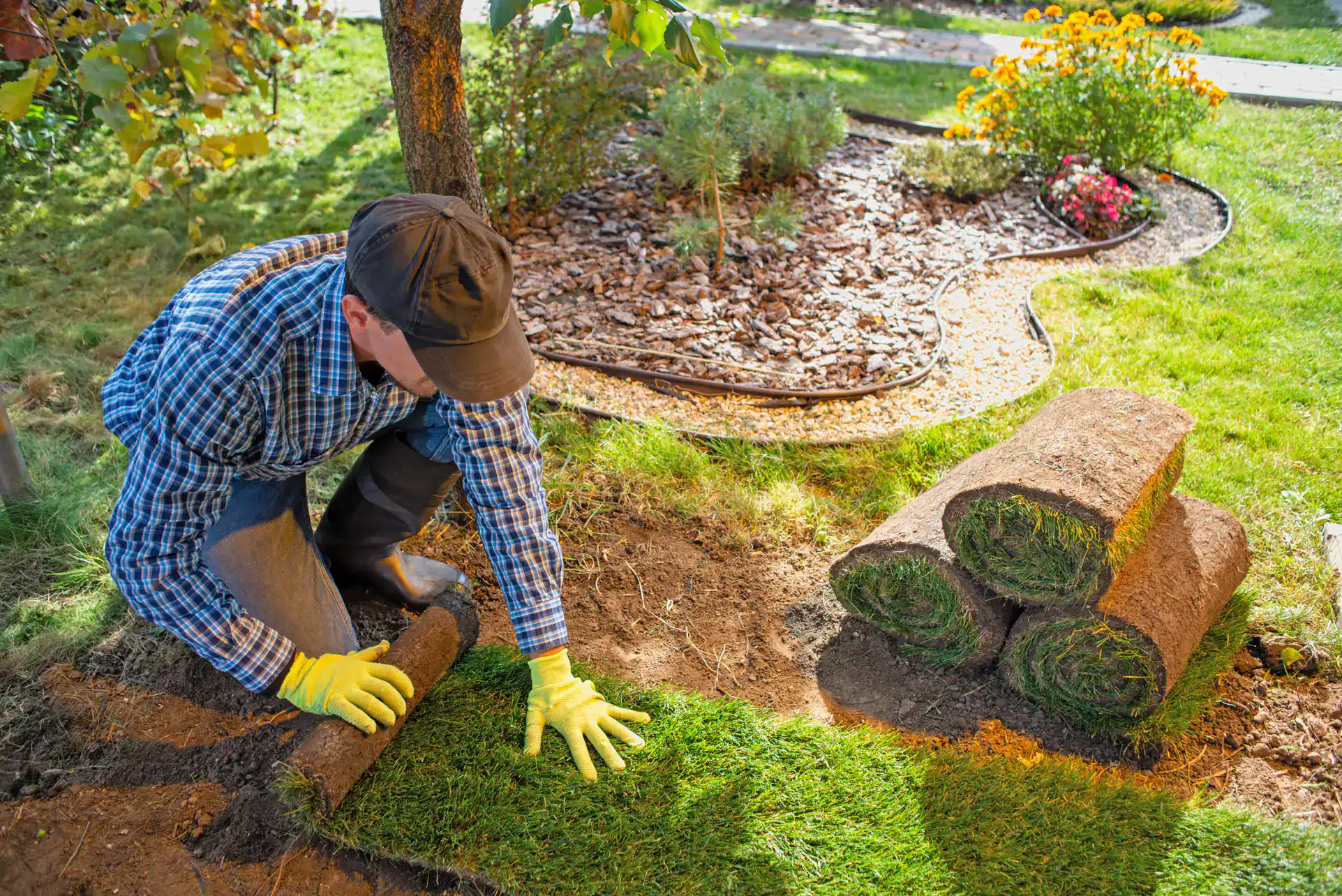
The most durable basement water solutions start outside. Regrading the yard so the ground slopes away from the foundation — industry guidance calls for at least a half-inch drop per foot for the first ten feet — is often the single most effective thing you can do to reduce water pressure against the walls. It sounds simple, but it requires removing and resetting soil, sometimes adjusting landscaping features, and ensuring the new grade holds over time without eroding.
French drains are the next layer. A properly engineered French drain is a perforated pipe set in a gravel-filled trench, installed at the right depth and slope to intercept groundwater before it reaches the foundation. In Suffolk County’s coastal communities, where the water table can be just a few feet below the surface, the placement and depth of that drain matters enormously. Get it wrong and you’ve dug up the yard for nothing.
Retaining walls play a role too, particularly on properties with any slope. A wall that’s built without drainage behind it can trap water and actually increase the pressure against the foundation it was meant to protect. When the masonry, the grading, and the drainage system are all designed together — by the same contractor who understands how they interact — the result is a system that works as a whole rather than a collection of fixes that don’t quite line up.
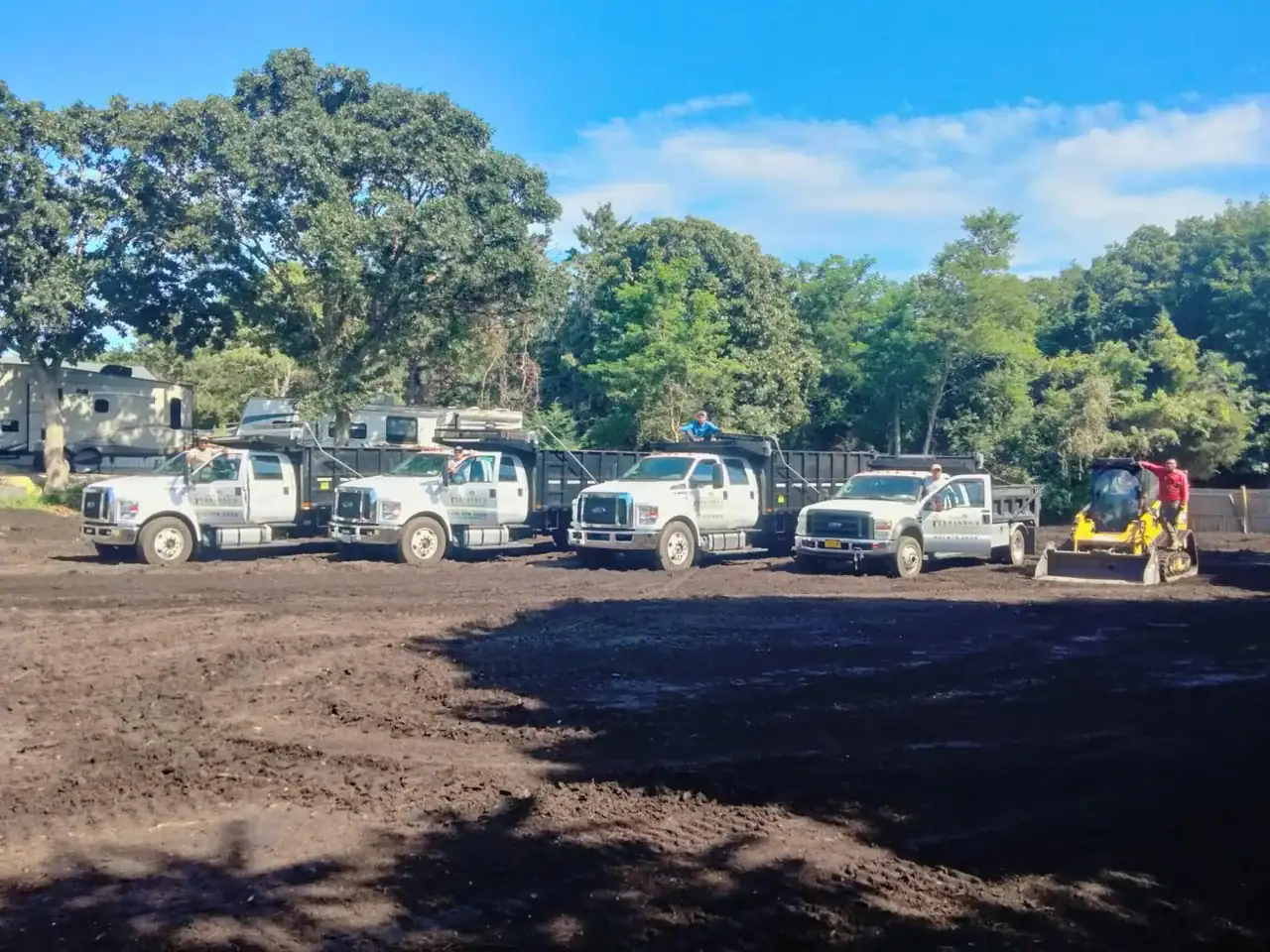
This integrated approach is something we’ve been refining for over 20 years working on properties throughout the Hamptons. The coastal conditions here — sandy soil, tidal water table influences near the bays, strict local building codes, and the environmental sensitivity of building over Long Island’s sole-source aquifer — require a contractor who knows this specific landscape. A drainage solution designed for a property in Westchester or New Jersey may not translate to a property in Quogue or Hampton Bays.
Frequently Asked Questions About Basement Water Problems in Suffolk County, NY
Can a sump pump alone fix a high water table basement problem?
A sump pump is an important part of the solution, but it’s not the whole answer. It removes water that has already entered the basement — it doesn’t stop water from getting in or address the pressure that’s driving it through the walls and floor. In Suffolk County, where the water table can rise several feet during a prolonged wet period or after a storm surge near the South Shore bays, an undersized or improperly positioned sump pump will run constantly and still leave you with water. The pump needs to be part of a complete drainage system, not a standalone fix. Battery backup is also essential here — power outages during nor’easters and summer storms are common enough that a pump without backup is a real liability.
How do I know if my basement flooding is a water table issue or a surface drainage issue?
The timing and location of the water are your best clues. If water appears during a heavy rain and clears up quickly once the storm passes, surface drainage is likely the primary culprit — gutters, downspouts, yard grading, or soil that’s directing runoff toward the foundation. If water shows up a day or two after heavy rain, or stays present for an extended period after the storm, or comes up through the floor rather than through the walls, the water table is almost certainly involved. In communities like Southampton and East Hampton, both issues can be happening at the same time because of how close the water table sits to the surface.
Do I need a permit for drainage work in Suffolk County?
In most cases, yes. Grading changes, French drain installation, and any work that affects stormwater flow typically require permits from the local building department — and in Suffolk County, those departments pay close attention to work that could affect neighboring properties or environmentally sensitive areas. Working with us means the permit process is handled correctly from the start, which protects you from code violations and makes the completed work easier to document if you ever sell the property.
Why does my basement smell musty even when there’s no visible water?
Moisture doesn’t have to be visible to cause problems. High humidity in a basement with a water table issue creates the conditions mold needs to grow — and mold can establish itself within 24 to 48 hours of a moisture event. That musty smell is almost always mold or mildew, and once it’s in the walls or under the floor, remediation is a separate cost on top of the drainage work. Acting on a water problem before it reaches that stage is almost always less expensive than addressing it after.
Ready to Stop Managing the Problem and Actually Fix It?
A wet basement in Suffolk County isn’t a fluke, and it’s not something that resolves on its own. The water table here is a permanent feature of the landscape — it rises every wet season, it spikes after every major storm, and it will keep testing your foundation for as long as you own the property. The question isn’t whether to address it. It’s whether to address it now or after the damage gets worse.
What makes the difference is a contractor who assesses the whole picture — exterior drainage, grading, the foundation itself — and builds a system designed for how your specific property sits in this specific landscape. Not a generic fix. Not a sump pump dropped in without a diagnosis.
We’ve been doing this work in Southampton, East Hampton, Bridgehampton, and the surrounding East End communities for over 20 years. Every project comes with a 1-Year Warranty on labor and materials, and we work one job at a time — which means your property gets our full attention until the work is done and done right. If you’re ready to have a real conversation about what’s happening in your basement, give us a call at (631) 678-5629.